About the Edo-Tokyo Traditional Performing Arts Festival
ABOUT US
The Edo Tokyo Traditional Performing Arts Festival, which will begin in 2025, will inherit the Tokyo Metropolitan Arts Festival, which has been popular for over half a century, and will be reborn as a festival specializing in traditional Japanese performing arts such as Noh theater, Japanese dance, traditional Japanese music, vaudeville performances, and folk performing arts.From full-scale stage performances to easy-to-participate, hands-on workshops, it will be enjoyable for a wide range of generations, from children to adults.
Inquiries about the Edo Tokyo Traditional Performing Arts Festival
Edo Tokyo Traditional Performing Arts Festival Executive Committee Secretariat
This moment of art is truly a precious experience.
In this single chant, I feel as if I can hear the ancient principles.
See, art reflects a person's soul.
I'd love to be a comedian as cool as that someday.
I wonder what kind of beautiful world tonight's dance will show us.
The time spent performing arts is an irreplaceable luxury.
This moment of art is truly a precious experience.
In this single chant, I feel as if I can hear the ancient principles.
See, art reflects a person's soul.
I'd love to be a comedian as cool as that someday.
I wonder what kind of beautiful world tonight's dance will show us.
The time spent performing arts is an irreplaceable luxury.
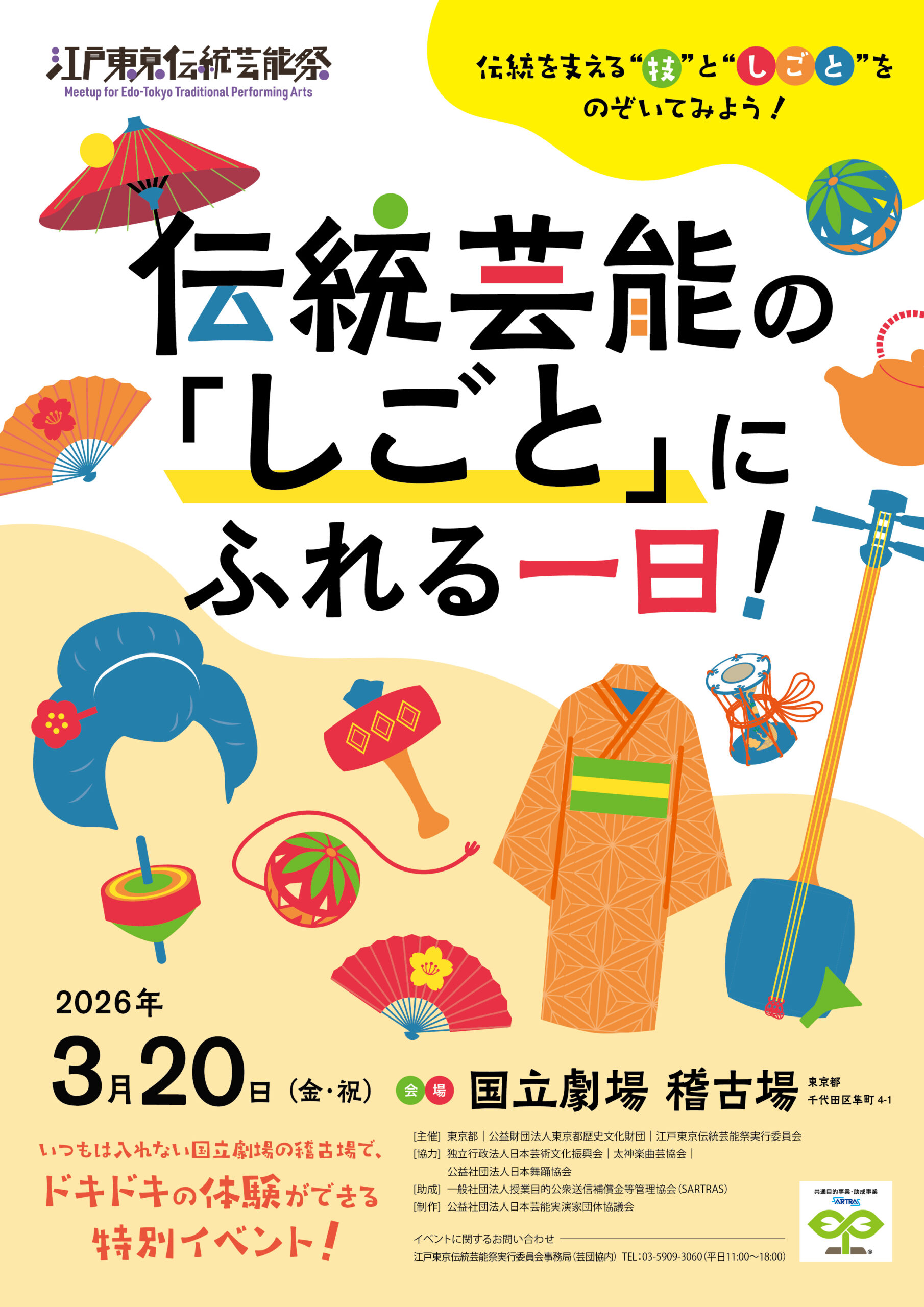
A day to experience the work of traditional performing arts!
This special event will give you an exciting experience in the rehearsal room of the National Theatre, which is usually off-limits to the public! Take a peek at the "skills" and "jobs" that support traditional performing arts!
This special event will give you an exciting experience in the rehearsal room of the National Theatre, which is usually off-limits to the public! In addition to watching traditional Japanese dance right before your eyes and trying your hand at Daikagura, you can also enjoy an introduction to the "jobs" and tools that support traditional Japanese dance, as well as a shamisen experience. It's a day where you can experience both traditional performing arts and behind the scenes! Don't miss it!
Friday, March 20, 2026 (National Holiday) First session: 13:00 Start | 12:30 Registration Second session: 15:00 Start | 14:30 Registration Experience Corner: 14:00-15:00 *For each session, you can choose between a Daikagura experience or a traditional Japanese dance performance *Each session lasts approximately 1 hour
Venue
National Theatre rehearsal room
Fee
[1 session] 500 yen per child
Precautions
・This event is aimed at elementary and junior high school students. Applications for adults only are not accepted. ・Stairs are required at this venue. We regret to inform you that applications are limited to those who can climb and descend stairs on their own. ・One parent may observe per child. ・Please wear socks in the rehearsal room (including parents). ・You can only apply for either the Daikagura experience or the Japanese dance viewing for each session. Applications for the same performance cannot be made for both sessions. ・The same content will be presented for both the first and second sessions.
About Appreciation of Japanese Dance
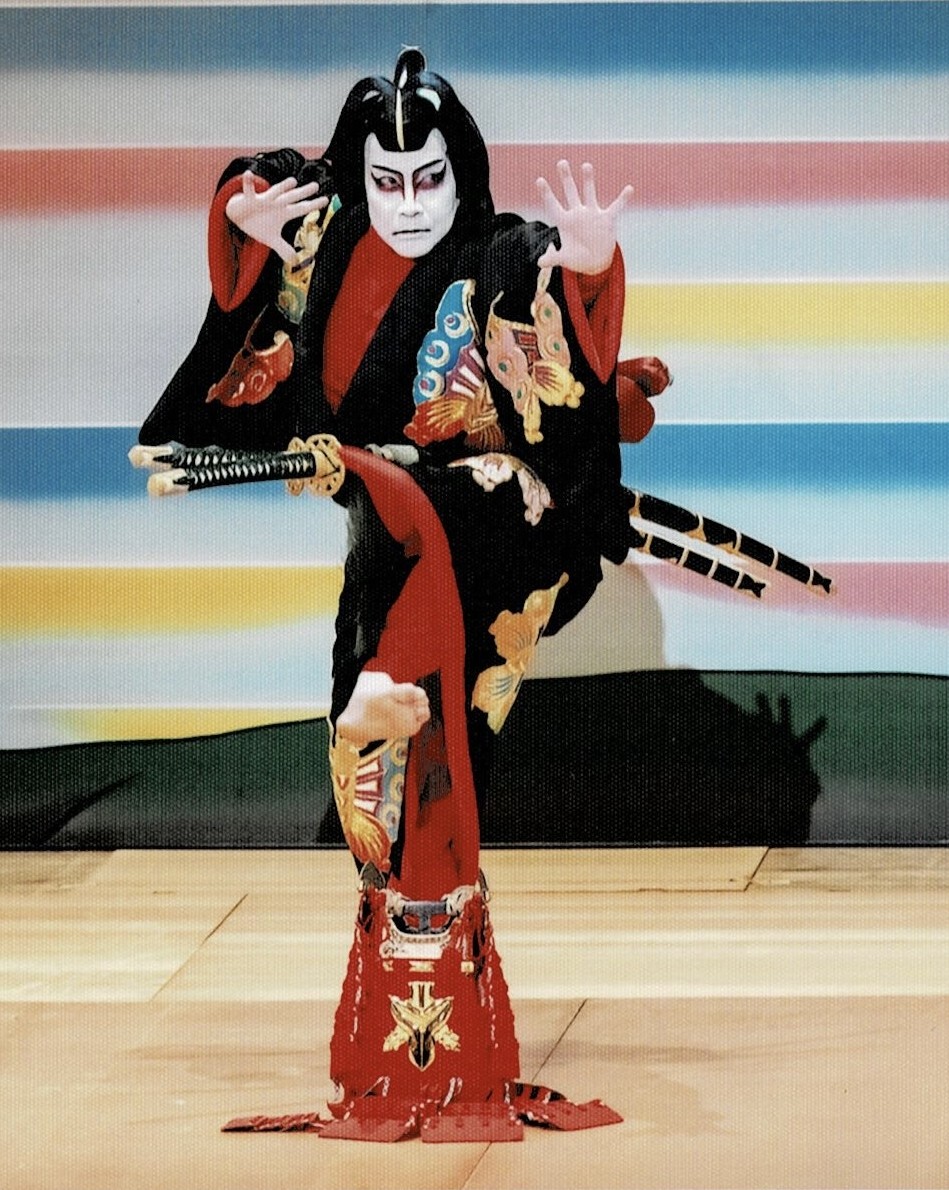
Japanese dance is a performing art that evolved from Kabuki. In this course, in addition to appreciating Japanese dance, we will introduce the work of Japanese dancers and the work that supports it, such as the costumes, wigs, and props.
Appreciation of Japanese dance: "Goro of the Rain"
This piece depicts Soga no Goro Tokimune walking through the spring rain to his lover. Soga no Goro is a heroic figure who is said to have avenged his father's death together with his brother Juro. This popular piece features an appealing dance that expresses Goro's sexiness before he met his lover, as well as his fierce and dynamic temperament.
Performers
Nishikawa Senjuro
He began his apprenticeship at the age of 9 to the Nishikawa School. After graduating from Nihon University College of Art, he trained as an apprentice under Nishikawa Senzo, the 10th head of the Nishikawa School. Currently, he performs at the National Theater and the Japanese Dance Association, and is also actively involved in promoting Japanese dance through touring school performances.
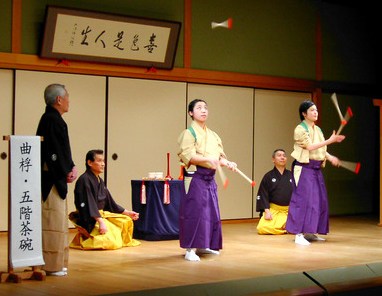
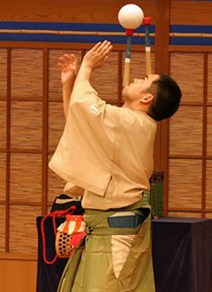
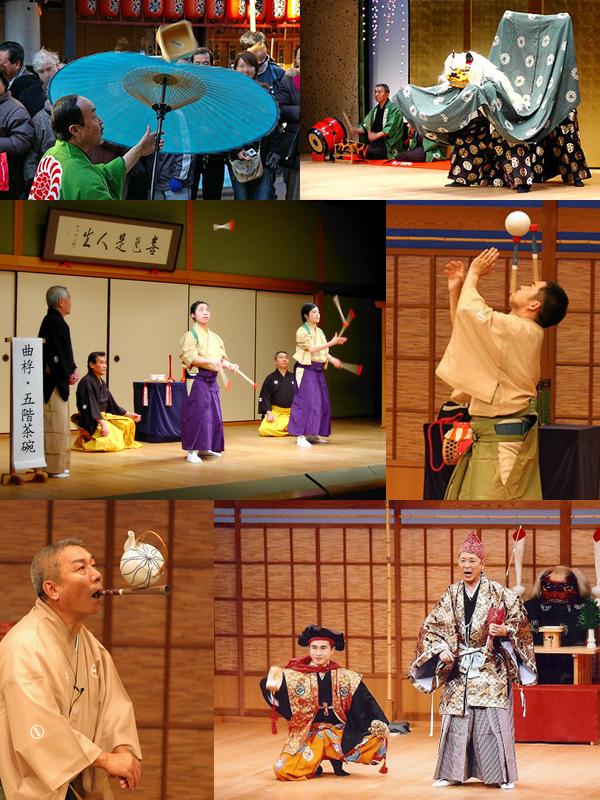
Daikagura is a performing art that was established in the Edo period when lion dance and acrobatics were combined with faith in Ise Shrine and other places. In this class, you will experience the acrobatics known as "nagemono" and "tatemono" from among the various arts of Daikagura.
Throwing objects provided by Daishin Acrobatics Association
Stage performance provided by Daishin Kyokugei Association
Lecturer
Daishin Acrobatics Association
This is a voluntary organization whose purpose is to preserve and pass on the traditional performing art of Daikagura and to train successors. It is mainly made up of performers of lion dance, acrobatics, spinning tops, etc., and they appear at various vaudeville theaters, on television, in hotels and inns, and at various entertainment events.
There will be a corner where you can get up close and personal with the props, costumes, and wigs used in Japanese dance. There will also be a corner where you can actually try out playing the Nagauta shamisen, the musical instrument used in Japanese dance and Kabuki!
Lecturer
Tobaya Satoyu
Born into a family where both his grandfather and father were Living National Treasures of Kabuki Nagauta, he performs both in Japan and overseas, and is also active in promoting the art. He is a lecturer at the National Theatre Training Center.
Ticket inquiries: Votre Ticket Center 03-5355-1280 (weekdays 10:00-18:00)
Related Business
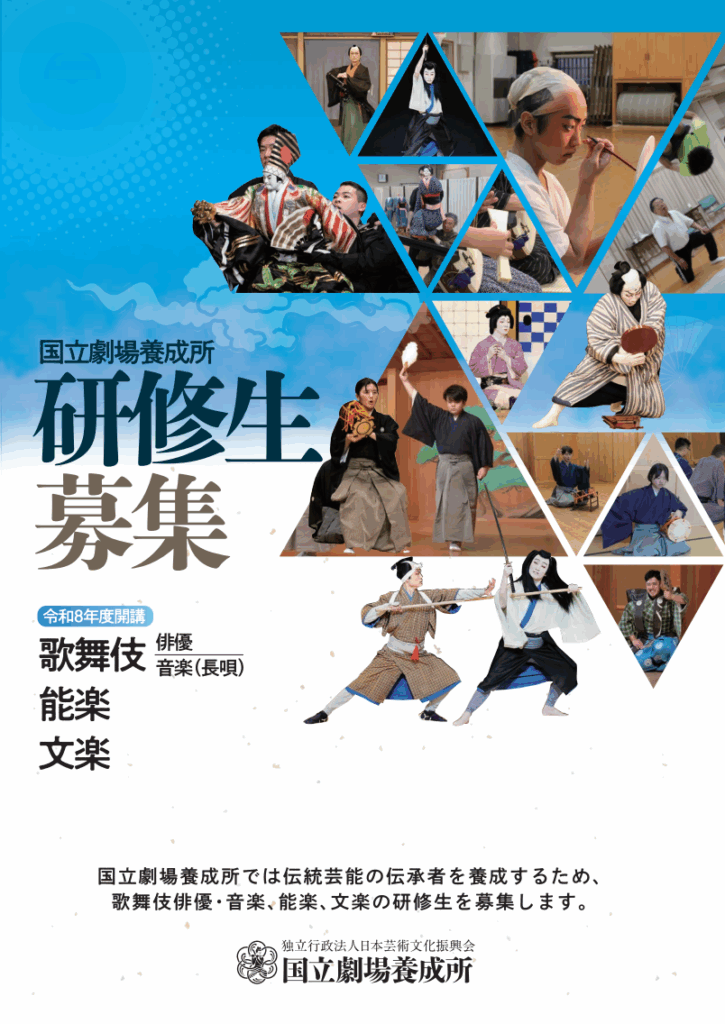
The National Theatre Training Institute is currently recruiting trainees. For details, please see the National Theatre Training Institute official website.
Organized by: Tokyo Metropolitan Government | Tokyo Metropolitan Foundation for History and Culture | Edo Tokyo Traditional Performing Arts Festival Executive Committee In cooperation with: Japan Arts Council | Daishin Kyokugei Association | Japanese Dance Association Supported by: Society for the Administration of Compensation for Public Transmission for Educational Purposes (SARTRAS) Produced by: Japan Council of Performing Arts Organizations