dance

What does Japanese dance practice involve? The relationship between master and disciple hones the movement and the space between the two

Written and provided by: Satomi Abe (dance critic) |
Photographs by: Kota Sugawara | Stage photos provided by: Japanese Dance Association (public corporation)

Key points of this article!

When you hear about Japanese dance lessons, many people might imagine, "Do we just sit quietly in kimonos and repeat forms?"
However, in reality, the teacher demonstrates the moves and the dancer quickly enters the world of the piece . There is a dynamic side to it.
How are the choreography taught? What is the practice schedule? Are there musical scores? And what is the atmosphere like in the teacher-student relationship?
Let's take a peek into the reality of a Japanese dance practice room.

What is Japanese dance training like?
Is it different from ballet?

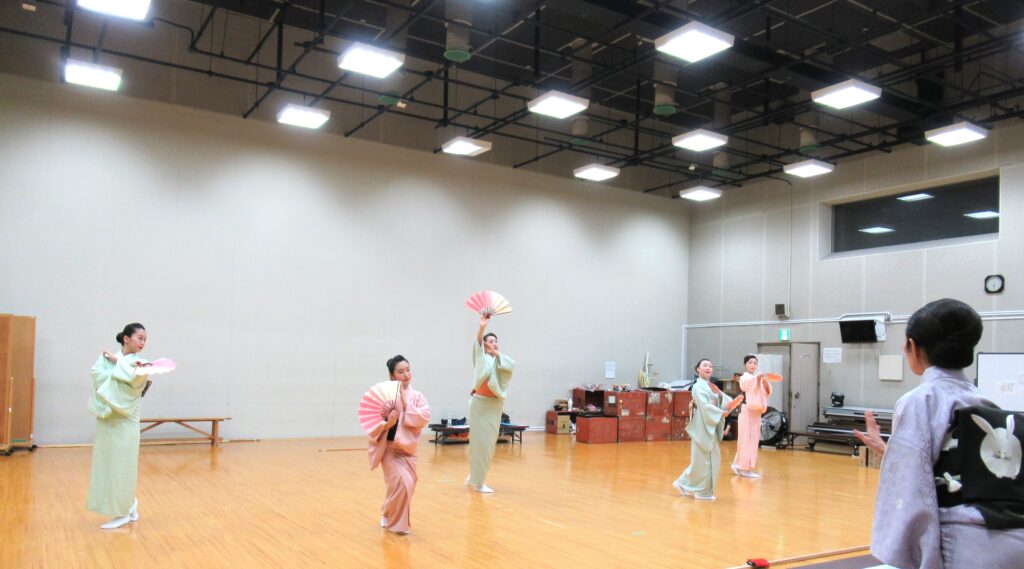
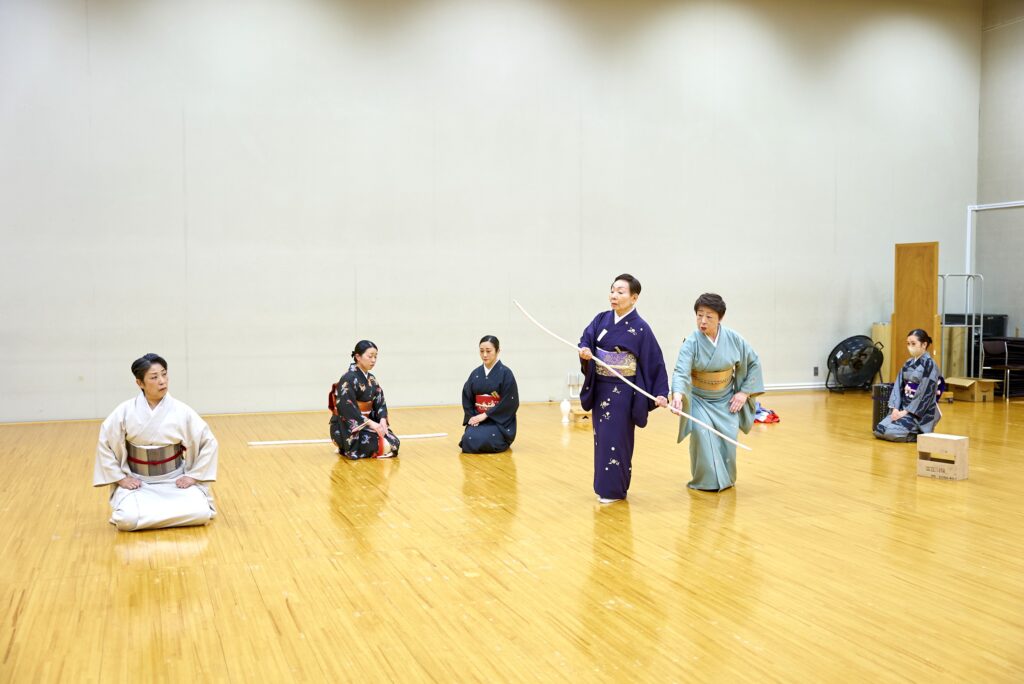
Nihon buyo (traditional Japanese dance) lessons are generally conducted one-on-one between teacher and student. In the rehearsal room, the teacher demonstrates the movements, and the student progresses by watching, imitating, and being corrected. Depending on the rehearsal room, the piece, and the teacher's approach, a teaching method known as "mirror practice" may be used. The teacher and student stand facing each other, and the teacher demonstrates the original choreography, deliberately mirroring it. For example, the teacher might demonstrate with the left hand where the right hand should be raised. The student then learns the movements by tracing them. Nihon buyo (traditional
Japanese dance) lessons differ significantly from ballet in that they do not necessarily follow a "rehearsal of basic forms before moving on to the piece" order. Ballet includes barre lessons, which allow students to master the basic forms before moving on to the piece. In contrast, in Nihon buyo (traditional Japanese dance), it is not uncommon for students to start a piece from scratch, starting with music. This is because classical pieces "embed" the fundamentals—walking style, standing posture, eye contact, fan handling, and timing—in a single piece. The piece itself is a teaching material, and the more you repeat it, the more the basics become ingrained in your body. Also, in ballet lessons, you check yourself in the mirror while adjusting your movements, but one of the characteristics of Japanese dance is that mirrors are not usually used in practice.

Practice schedule:
Pre-performance and practice day flow

The frequency of practice differs greatly between those learning as a hobby and professional dancers. Hobbyists will likely practice once a week or several times a month, building up their skills over a long period of time. Professionals, on the other hand, will solidify, refine, and perfect their choreography in a short period of time in preparation for the performance.
In recent years, professional dancers have increasingly been sharing choreography via video. This is a major change, as opposed to the situation in the past where choreography could only be learned in the rehearsal studio, and dancers can now prepare by practicing independently. As a result, dancers can now refine their choreography after just a few practice sessions, and the pace of preparation for the performance has increased.

How do you memorize it?
Are there dance scores?

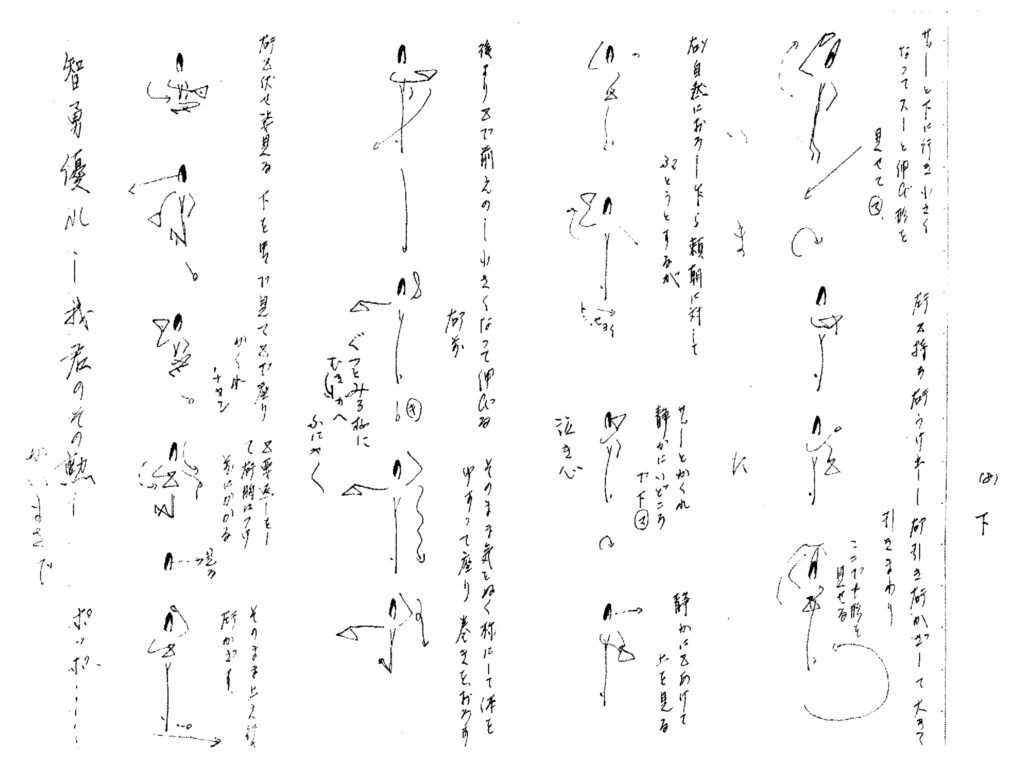
In Nihon Buyo, there is no standardized choreography score. While the concept of dance notation exists, it is not widely adopted as a common standard, and methods vary depending on the school, teacher, and individual. This is why choreography is passed down through the body. By watching the teacher's dance, students absorb not only the form but also the meaning and spirit. They transfer the teacher's technique to their own bodies. This is the unique system of transmission in Nihon Buyo.
Simply "following the same choreography" may seem simple, but in reality, it takes time. This is because choreography is not just a movement, but also the words of a character and a depiction of a scene. Raising a hand, turning a face, opening a fan. Each of these movements has meaning, just like lines or narration in a play.

Memories of the master-disciple relationship:
Between strictness and intimacy

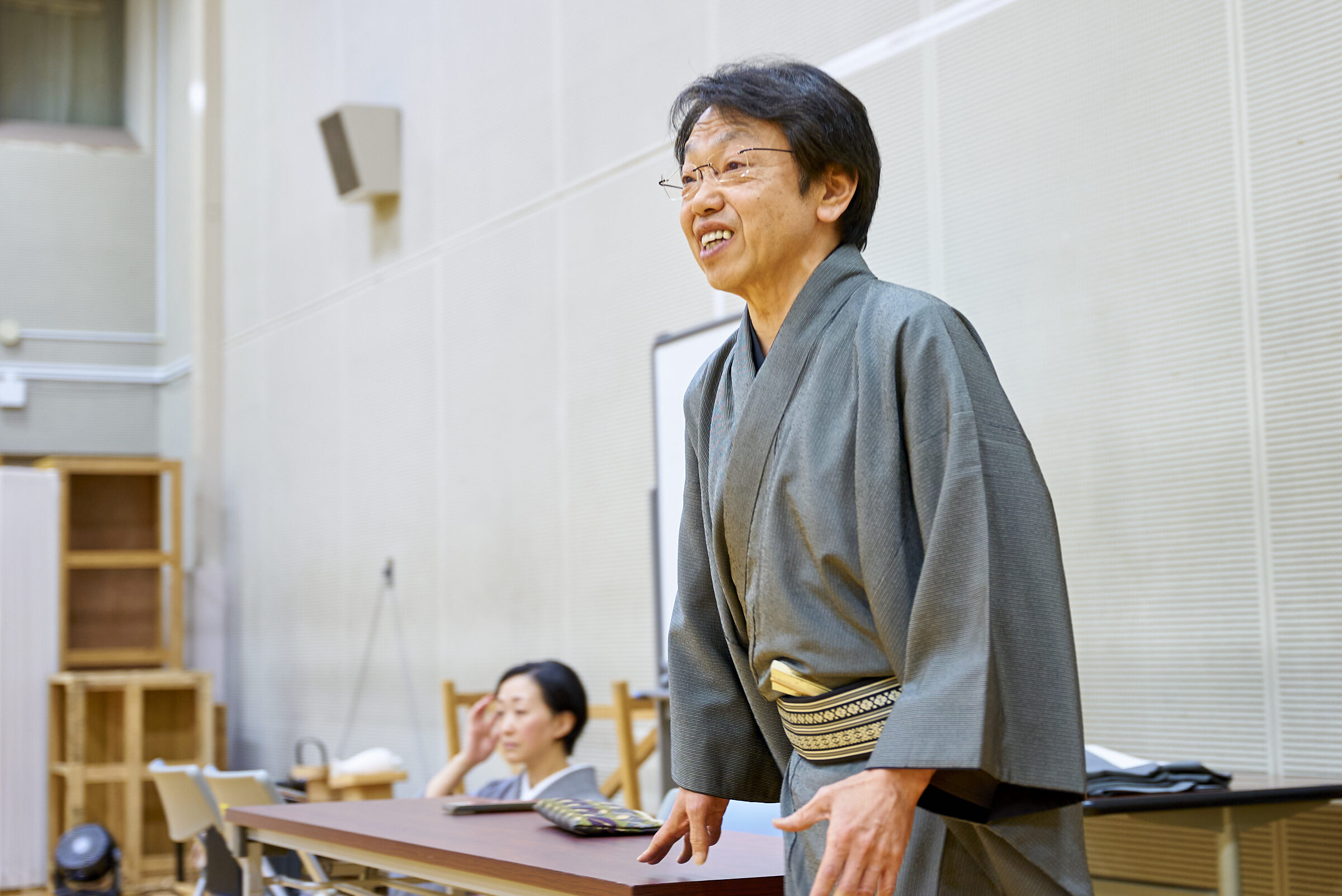
The relationship between master and disciple in Japanese dance is characterized by a unique sense of distance. In the past, teachers would sometimes teach while playing the shamisen and singing. There
are unfunny yet realistic stories of how a poor learner would be hit by a shamisen plectrum.
In some pieces, even the opening choreography of "coming out of the palanquin" could take days to master. Standing slowly, shifting one's center of gravity, and shifting one's gaze can be exhausting enough to leave one's legs unsettled. The quieter the movement, the more precise the body and mental concentration required. And if a master says, "Crows are white," one must accept it. This is the world of dance, often described with metaphors like these. While this is less common today, a master is the beginning of one's support; one begins learning because one likes that master, and there is also the joy of inheriting his or her style and spirit. Over time, a family-like affection and closeness develops between master and disciple. This relationship is one in which strictness and warmth coexist. That is the allure of practice.

What is
the history of Japanese dance training From Kabuki to lessons and the birth of professionals

The roots of Japanese dance training date back to the Edo period. As people began to express a desire to dance the pieces performed on the Kabuki stage, practice spaces were established and a culture of learning, including etiquette, developed. Eventually, it spread as part of the emotional education of the children of wealthy families. Then, in the Meiji period, Japanese dance became independent from Kabuki, and professional Japanese dancers were born. Furthermore, admiration for dancers who shone on stage became a motivation for people to take up the art, and Japanese dance entered a period of prosperity

Creating new works ——

Creating a new work takes an enormous amount of time. First, the dramaturgy (structure) is worked out, the lyrics are written, a piece of music is created based on the lyrics, and then the choreography is added. In Japanese dance, "choreography" is like lines or narration in a play. After the choreography is added, the expression, or the way of dancing, is refined. This process determines the depth of the work. Even if the choreography is the same, if the timing or progression changes, the projected landscape will change

Differences from Western dance
and the "beauty of space"

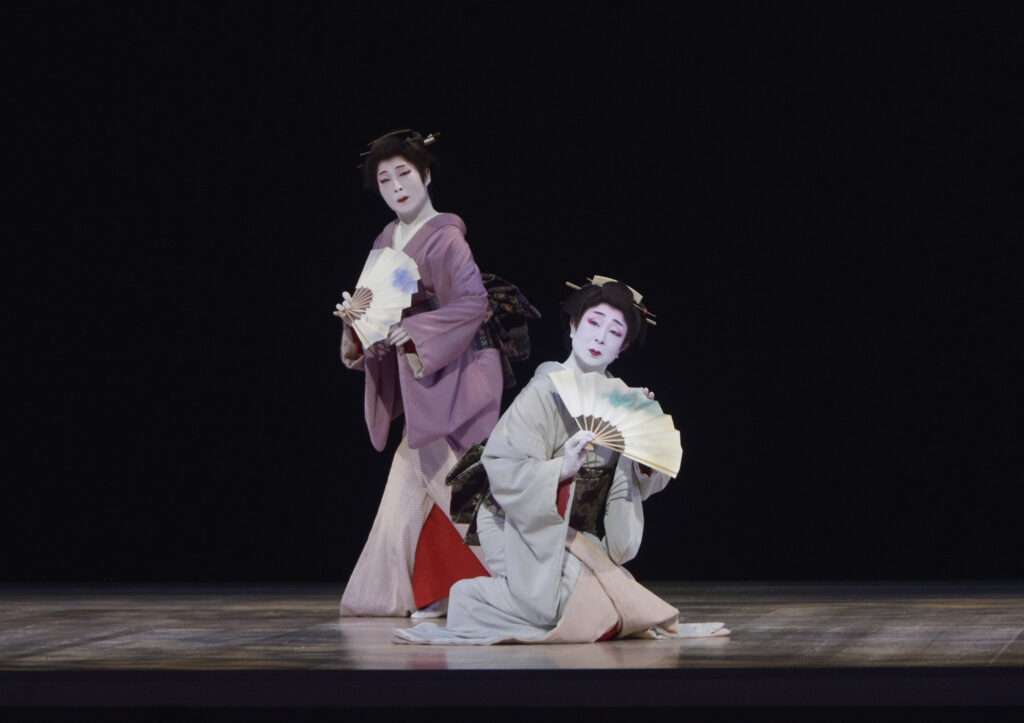
While ballet strictly pursues "ideal shapes and angles," Japanese dance places emphasis on "portraying a landscape." For example, there is no single correct angle for the movement of looking at the moon. It is complete as long as the audience is able to understand that the dancer is "looking at the moon," and it is this margin of interpretation that leads to the variation, individuality, and charm of each dancer

Transcending tradition and modern
styles, making the most of differences

In the past, the individuality of each school was so distinct that it was immediately recognizable. Today, collaborations that transcend school boundaries are on the rise, but accurately conveying the essential differences between each school and the importance of the classics remains an important issue. What can change and what must remain unchanged. Continuing to find that balance in the rehearsal hall will help nurture the next generation of Japanese dance

The stage is the culmination of practice

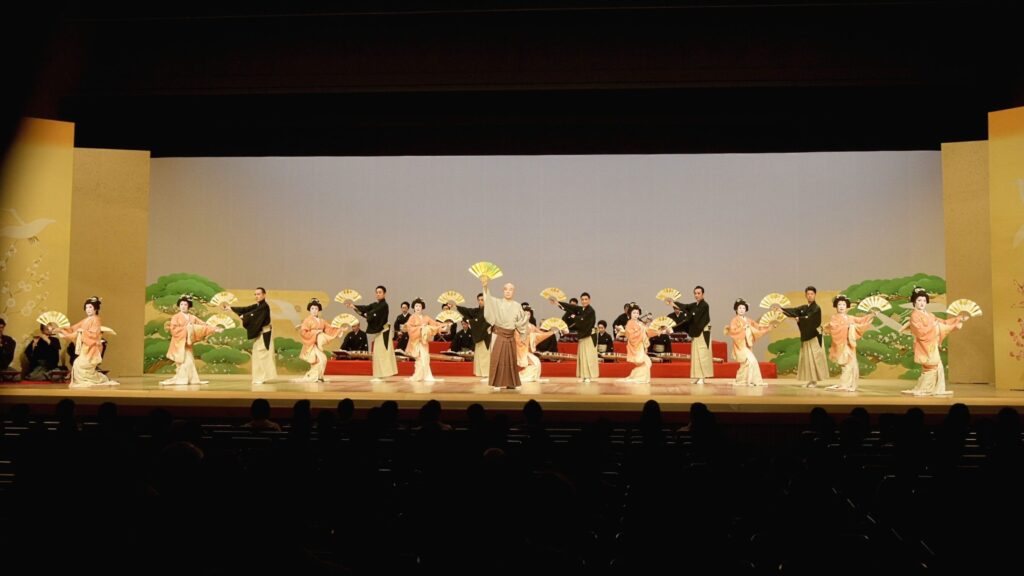
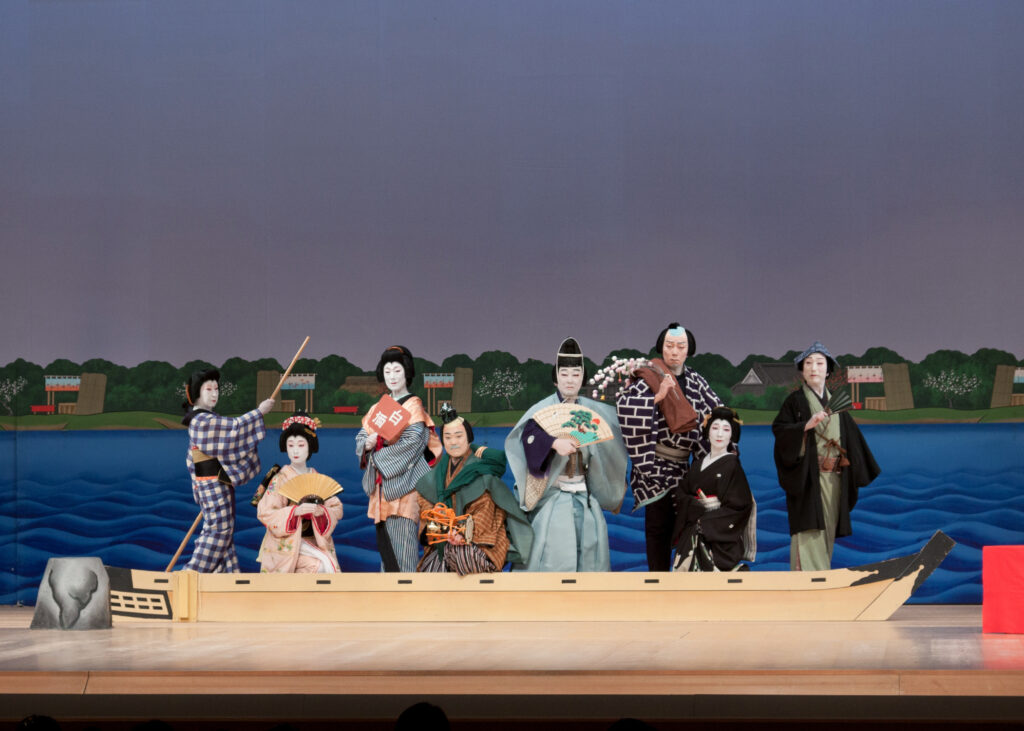
As you can see, Japanese dance practice is not just a time to memorize the choreography. It is a time to hone the body, senses, and words in order to paint a landscape. As symbolized by mirror practice, students use the teacher's body as a "reflection" to create their own stage appearance, and this accumulation is condensed into a single moment on stage. You can see the results of these lessons for yourself at Japanese Dance Association performances and other events. Come to the theater and experience the landscapes depicted by Japanese dance!

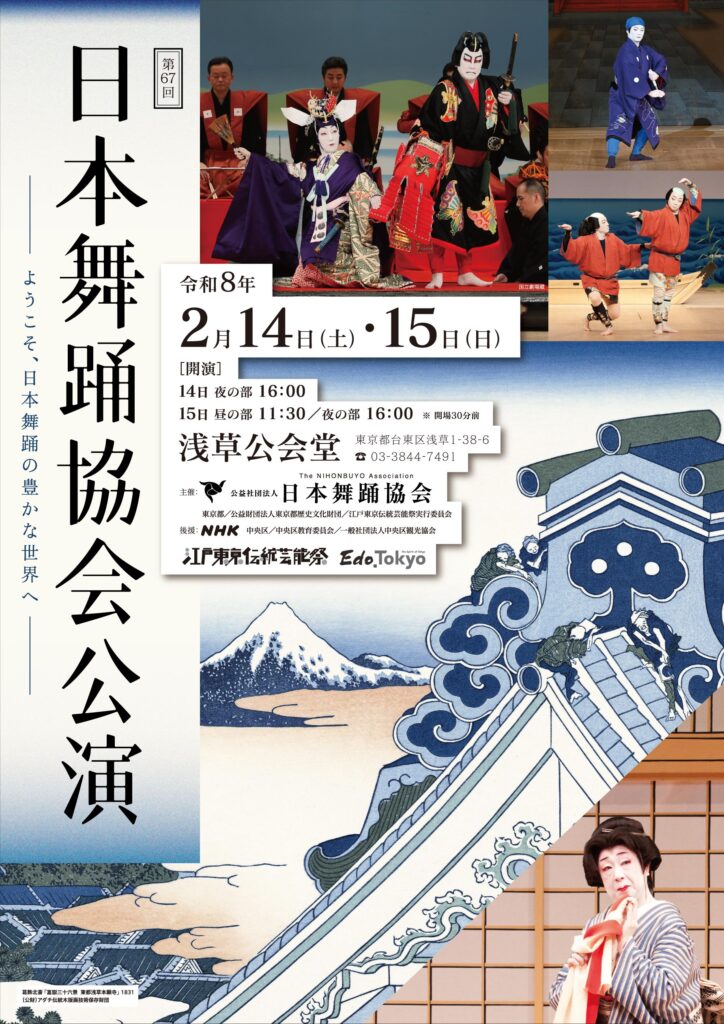
The 67th Japanese Dance Association Performance

Held at Asakusa Public Hall on Saturday and Sunday, February 14th and 15th, 2026!

Over two days, you can enjoy

a wide variety of performances unique to Japanese dance, from popular classical dance to modern and contemporary creative dance, and even Kamigata dance From veterans to young artists in the Japanese dance world,
leading dancers from various schools will perform together.

Come to the theater and enjoy the rich charm of Japanese dance, which has been vibrantly passed down to the present day

Satomi Abe

While working as a company employee, he became fascinated with the world of Japanese dance, and studied Kabuki and other dances in earnest at university and graduate school.
Currently, he aims to be a "bridge" connecting the world of classics with the modern world through lectures and commentary writing. He
writes a column in the Tokyo Shimbun newspaper, "Dancing in Flowers," and an essay, "Ribbon Dreams," in the monthly magazine "Japanese Dance."
Web: Japan Arts Council (National Theatre) Cultural Digital Library. He has written a theatrical arts teaching material, "Kabuki Dance," and others.

A glimpse into the charms of Shinnai-bushi, Nagauta, and Japanese dance!
A live report from the Edo Tokyo Traditional Performing Arts Festival pre-event

About this column
plan
  • Sponsored Events
Genre
  • Japanese dance
subject
  • For beginners
dance