About the Edo-Tokyo Traditional Performing Arts Festival
ABOUT US
The Edo Tokyo Traditional Performing Arts Festival, which will begin in 2025, will inherit the Tokyo Metropolitan Arts Festival, which has been popular for over half a century, and will be reborn as a festival specializing in traditional Japanese performing arts such as Noh theater, Japanese dance, traditional Japanese music, vaudeville performances, and folk performing arts.From full-scale stage performances to easy-to-participate, hands-on workshops, it will be enjoyable for a wide range of generations, from children to adults.
Inquiries about the Edo Tokyo Traditional Performing Arts Festival
Edo Tokyo Traditional Performing Arts Festival Executive Committee Secretariat
This moment of art is truly a precious experience.
In this single chant, I feel as if I can hear the ancient principles.
See, art reflects a person's soul.
I'd love to be a comedian as cool as that someday.
I wonder what kind of beautiful world tonight's dance will show us.
The time spent performing arts is an irreplaceable luxury.
This moment of art is truly a precious experience.
In this single chant, I feel as if I can hear the ancient principles.
See, art reflects a person's soul.
I'd love to be a comedian as cool as that someday.
I wonder what kind of beautiful world tonight's dance will show us.
The time spent performing arts is an irreplaceable luxury.
2026.02.20
Sponsored Events
word
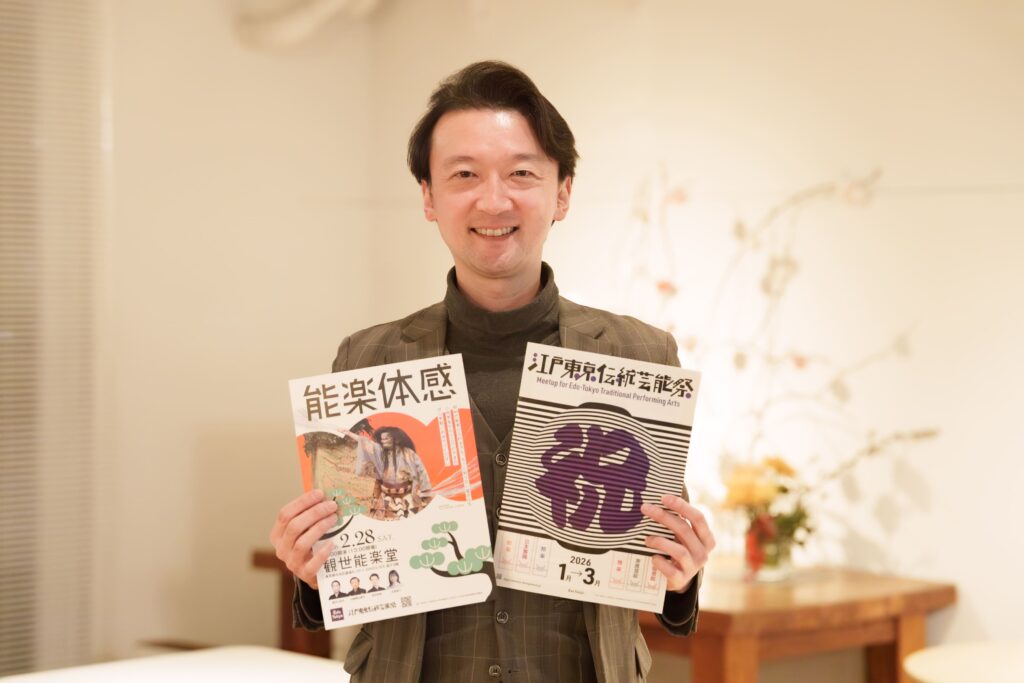
Noh actor Takeda Munenori talks about the charm of Noh and recommends experiencing Noh that can be enjoyed by everyone, from beginners to experienced performers
Interviewer/Editor: Watanabe Yoko | Photography: Iida Koji
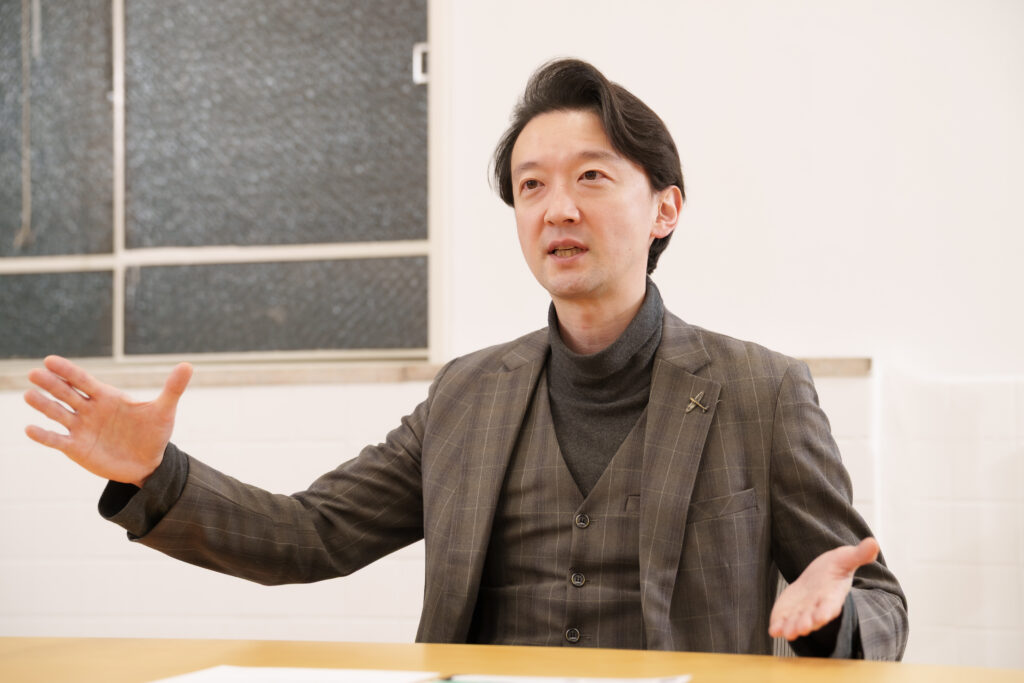
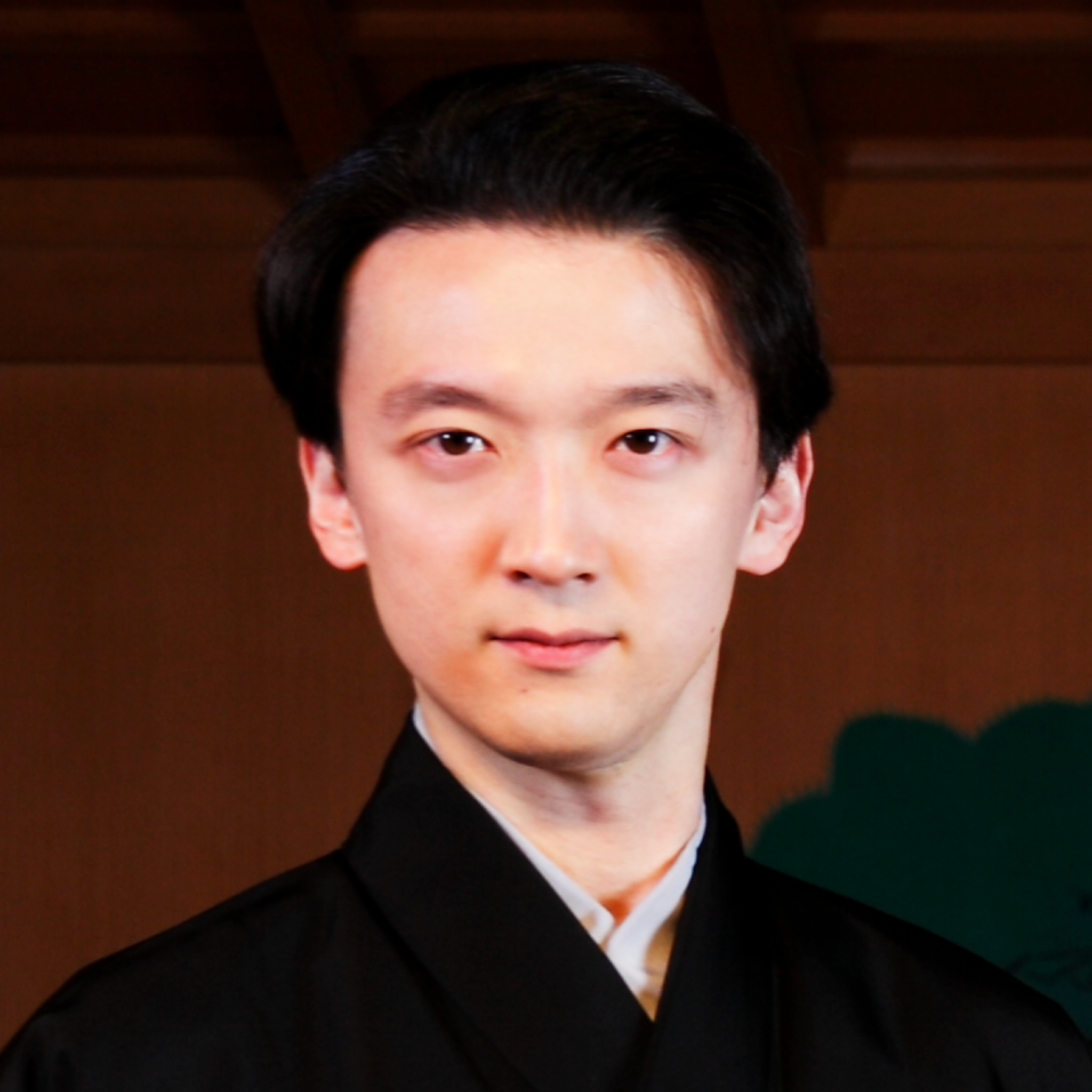
Noh actor Takeda Munenori
Takeda Munenori is a leading figure in the Kanze school of Noh, a performing arts that has a history spanning more than 600 years. He performs on stage approximately 100 times a year, and has given over 1,000 Noh lectures in Japan and overseas. He is also passionate about promoting Noh to beginners, producing the "Noh Experience" event, which allows people to enjoy Noh with all five senses. We take a closer look at Takeda's thoughts on Noh, his training, and the highlights of the "Noh Experience" event! We present a comprehensive interview packed with Takeda's thoughts on Noh.
Noh is fascinating because it has no end! A lifelong challenge
-- In addition to giving 100 performances a year, you are also working hard to promote Noh through over 1,000 lectures. What do you find appealing about Noh?
Takeda Munenori (hereafter,Munenori): For me, the appeal of Noh is so profound that it's difficult to put into words. But the best part is that there's always a role to challenge yourself with throughout your life. My father turned 78 this year, and even at 73 or 74, he still had a role he tried for the first time. "Sekidera Komachi" is considered the pinnacle of Noh, and the fact that there are heights to reach no matter how old you are is one of the reasons I chose to pursue this path. Of course, there's endless enjoyment for the audience, too. For first-time viewers, I encourage them to first experience the beauty of the sound and the sight, as if bathed in a "flood of beauty." Then, as they gradually become accustomed to the performance, they begin to appreciate the joy of imagining an invisible world within themselves. A scene may emerge, like, "I'm in the ocean now," or they may sense the presence of many people behind a single actor. Being able to actively complete the story is one of the profound depths of Noh.
of movement, sound, and physical sensation .
-- In your time as a teacher, what changes have you noticed over the years in the "teach- ing trends" in the Noh world?
Munenori: In Noh lessons, I encourage students to begin with the physical enjoyment of moving their bodies and using their voices. When they actually try "suriashi," they are surprised by how difficult it is, or realize that they can't produce as much voice as they thought they could. I encourage them to begin with the experience of experiencing these phenomena. I believe that they can immerse themselves deeply in the story afterward. It's important for students to first experience the joy of immersing themselves in the role. The first thing that overwhelms those who experience Noh for the first time is the volume of my voice. Everyone is shocked by its volume, saying, "Wow, that's how loud it is!" Furthermore, while Noh may at first appear to have a tranquil image, it is actually full of intense, powerful dances, requiring the muscular strength of the entire body, which is surprising. Musicians say they discover new ways of capturing notes and the resonance of overtones that differ from those on a musical staff. Those familiar with martial arts often respond with interest to the way I shift my center of gravity and my footwork, which, while similar to their own sport, are different. This realization is something you can never understand by listening to it, but only by trying it yourself. And once you have furthered your studies and gained a deeper understanding of Noh, you may finally realize just how difficult it is.
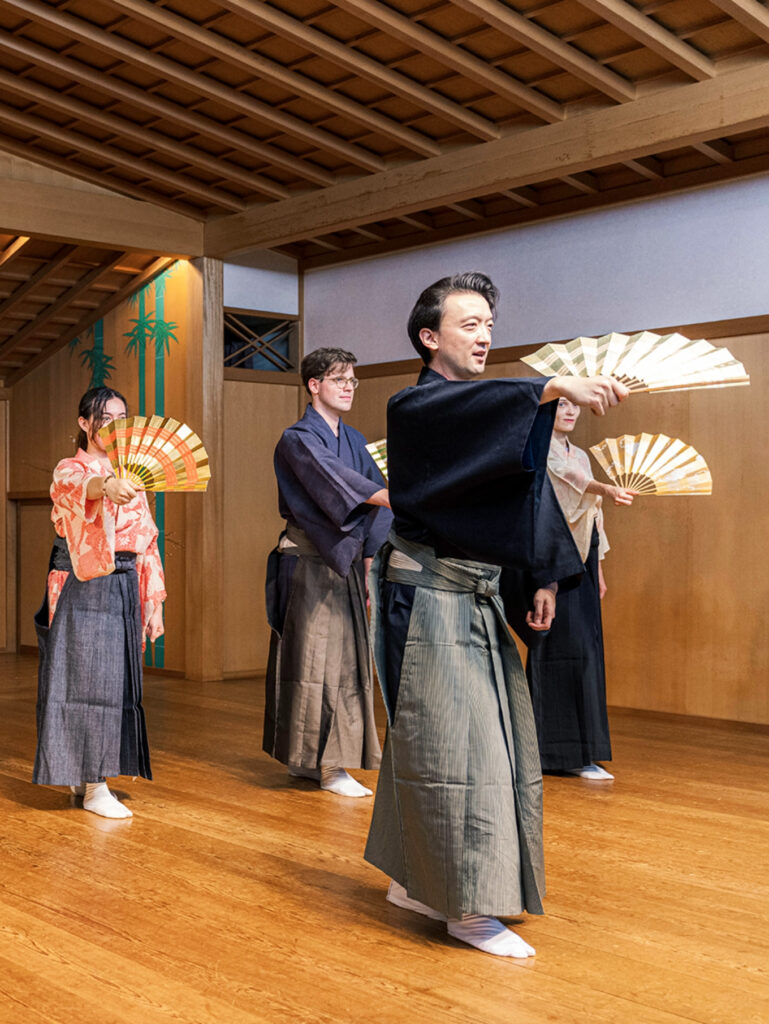
Scenes from the lesson
Making full use of smartphones! Evolving lessons—
-- Compared to when you were training, are there any differences in the motivations and attitudes of those who are starting to learn now?
Munenori: Personally, I feel that today's lessons have become much more thorough than they were in the past. While the "watch and learn" style from the master was the norm in the past, theoretical explanations are increasingly being given these days. Since lessons are taught individually, rather than in large groups as in the past, I feel that this allows for more in-depth instruction that best suits each individual. The unique tension of having a master in the studio is something that cannot be replaced by practicing at home. The Japanese word for "training" (kikeiko) literally means "to study the past," and the true essence of training is to accurately recall and repeat what the master taught you. For this reason, I actively advocate for the full use of smartphones and other devices to record and film performances. Apparently, there were strict masters in the past who even forbade recording, but if you're studying Noh in this day and age, there's no reason not to make effective use of convenient tools. That said, rather than relying on video for peace of mind, I encourage you to record not only your teacher but also yourself, using it as a tool to confirm that you are performing in line with your master's teachings. Recently, we have seen an increase in people, from young people to retired people, who have a clear motivation to take up Noh. We even receive applications from overseas saying, "I would like to take lessons when I come to Japan." It makes me very happy and grateful to see such enthusiasm to experience Noh. Whether they are professionals or amateurs, the attitude remains the same: to surpass what they were yesterday, one step at a time.
--What do you think is the power of the unique tension and atmosphere in a rehearsal room that cannot be replaced by video or practicing at home?
Munenori: A Noh performance is like a jazz session, where each performer brings their own unique skills to the table. Depending on the performer's interpretation and the atmosphere, the performance time can vary by more than 20 minutes, but that's what makes Noh so fascinating. I'm also actively promoting Noh, hoping to share this once-in-a-lifetime charm with more people. While I was born into a family of Noh performers, I deliberately distanced myself from Noh for a time in my 20s, studying theater at university. Looking back, the experiences I gained during that time have been invaluable and have influenced my current artistic expression. My father never told me to take over Noh, but perhaps this acted as a silent pressure, making me feel like I had no choice. I'm sometimes asked questions like, "Can you become a Noh performer if you're not born into a Noh family?" and "Even if you do become a Noh performer, will your opportunities be limited?" The answer to both questions is "No." Regardless of family lineage, there is a path to success at the forefront of Noh, depending on your own efforts. Among the shite actors of the Kanze school, there are many who, like me, play leading roles on stage multiple times a year, even though their parents have completely different professions. I want to reassure everyone that, whether you come from a family of Noh actors or not, there is a clear path ahead of you as long as you spare no effort to integrate into the world of Noh.
"Noh Experience" - in the extraordinary space of a Noh theater
--Please tell us about the "Noh Experience" program
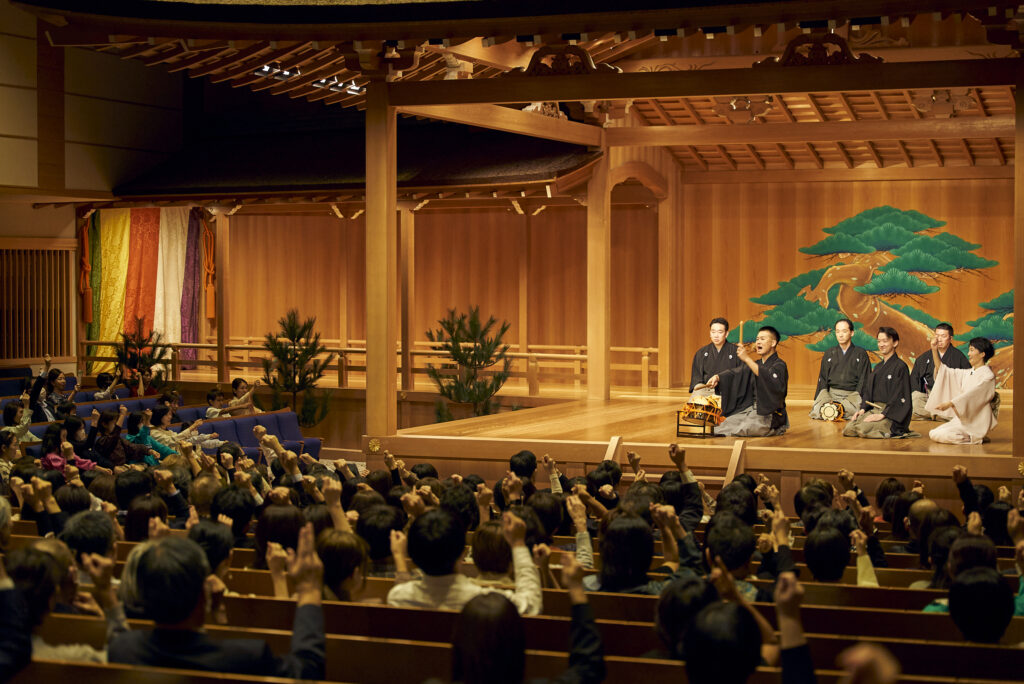
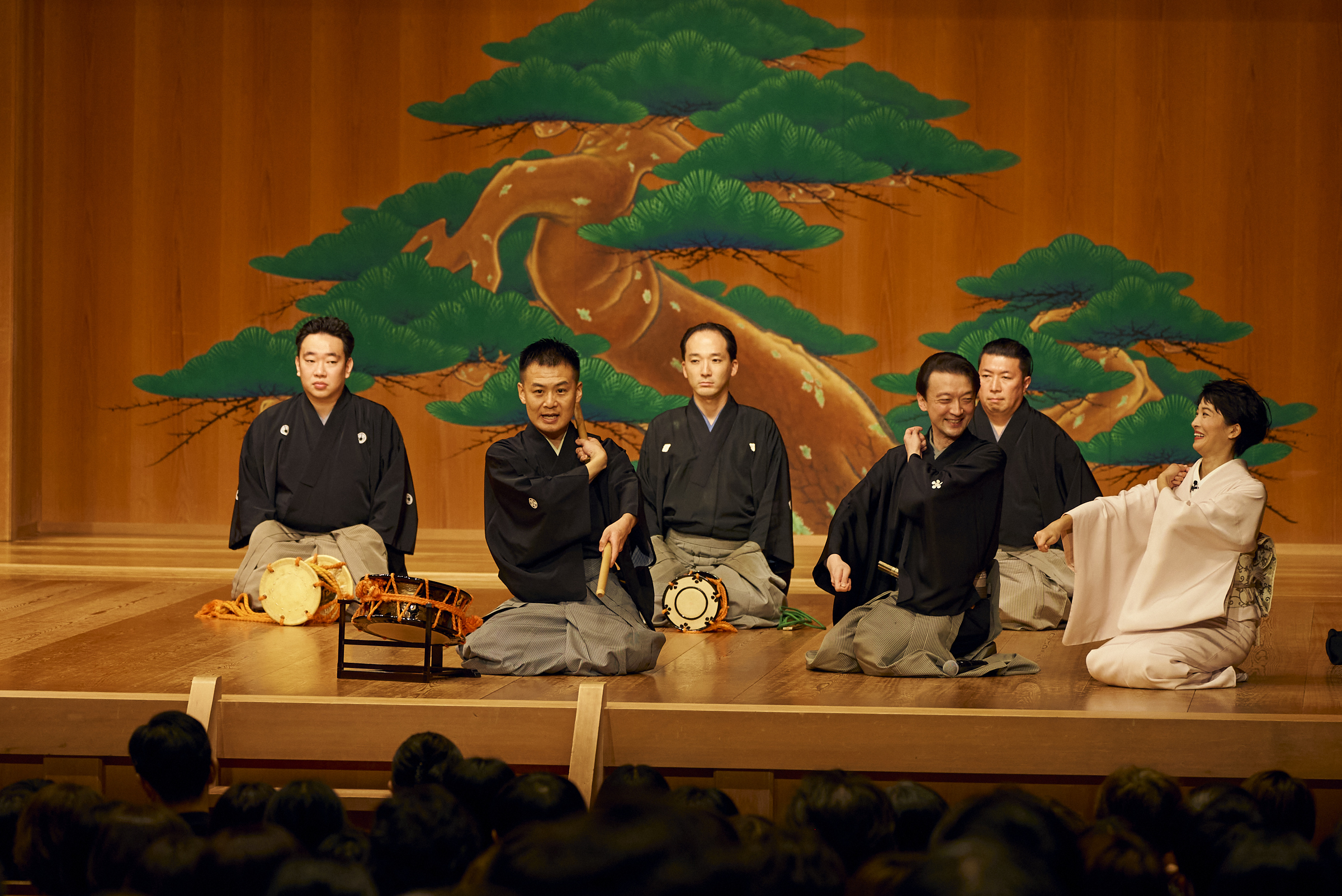
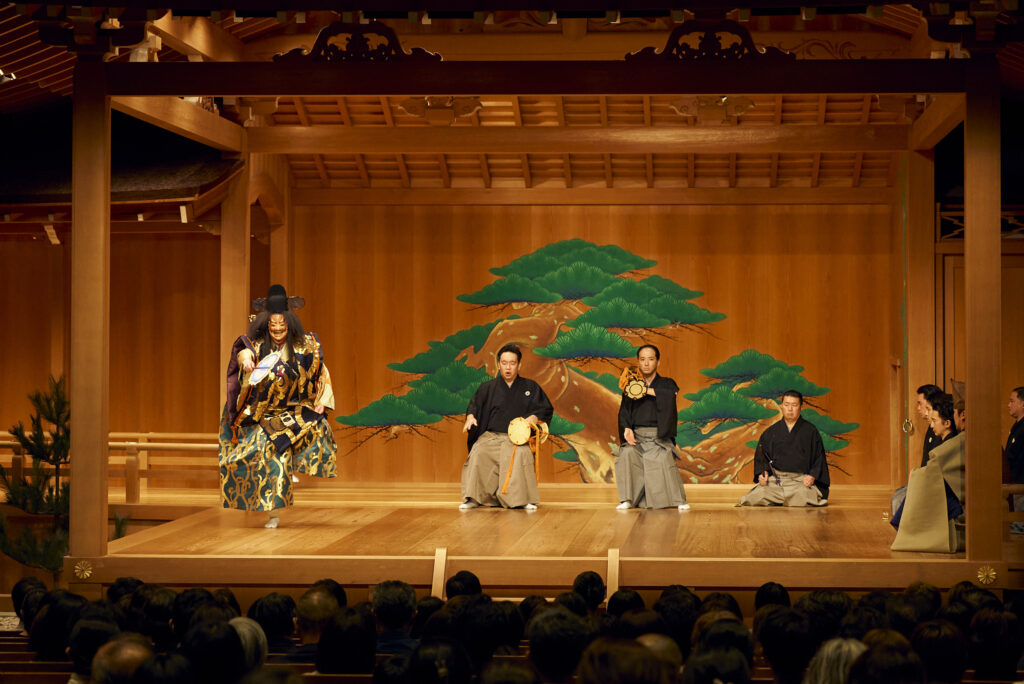
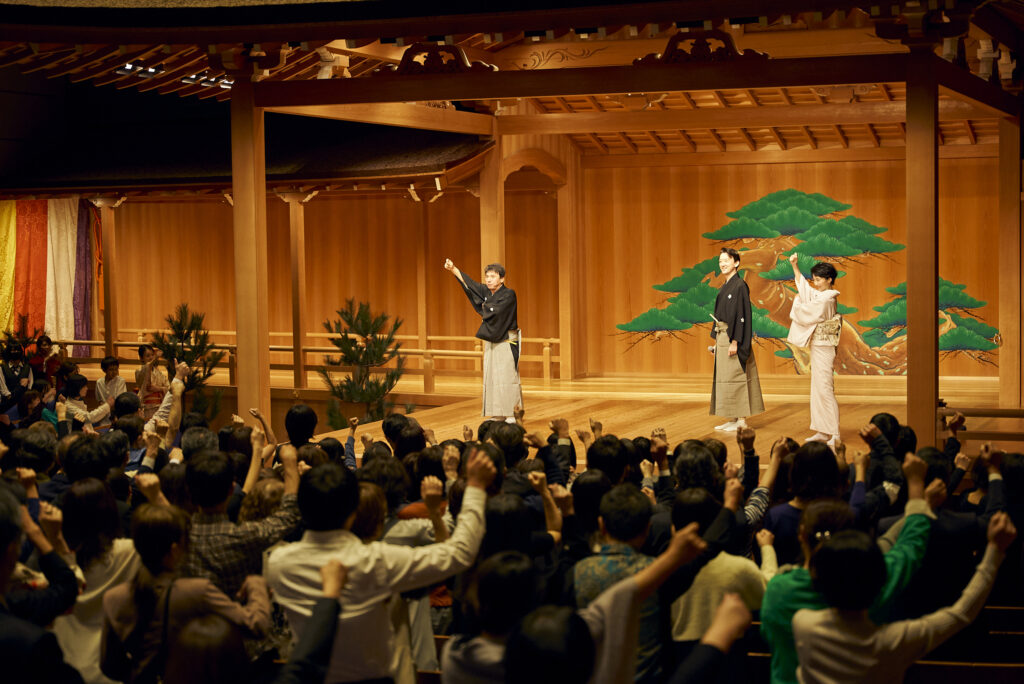
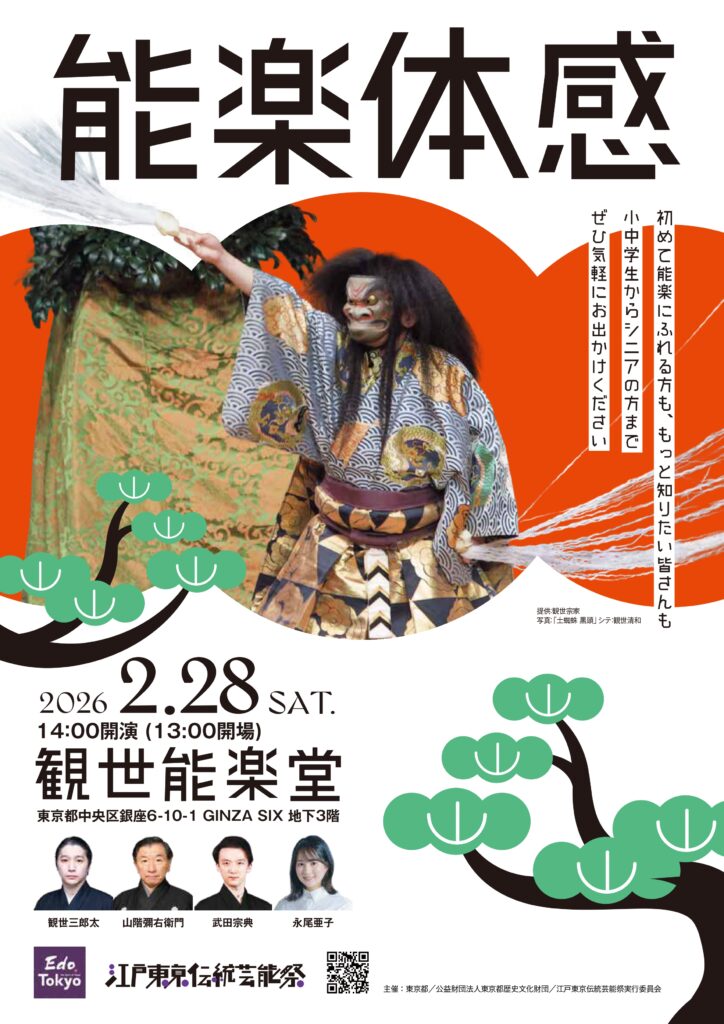
Munenori: The "Noh Experience" program at the Kanze Noh Theater in Ginza is a condensed, approximately two-hour program that combines three steps: explanation, experience, and viewing of Noh. A key feature of this event is that it is not conducted solely by Noh performers, but instead features an MC who acts as the facilitator. The MC takes the beginner's perspective and represents the audience, answering questions and sharing their thoughts. This simulated experience allows for a deeper understanding of the world of Noh. It is enjoyable for a wide range of audiences, from elementary school students to seniors, but children in particular will not find it boring. As an example, in this performance of "Tsuchigumo," we will carefully select some of the most dynamic and spectacular scenes in Noh, such as the scene featuring the thousand-striped threads. Since this program emphasizes physical experience, audience members will not only sit still and listen, but will also vocalize and move their bodies. This is the "fascination of Noh, understood through physical senses."
-- Why did you choose the word "touch" instead of "experience"? What was your intention behind choosing this word? What thoughts did you put into it?
Munenori: The word "experience" was chosen because we wanted to capture the essence of fast-paced development and dense content. For example, in the Noh performance, we pursued a modern presentation style, allowing attendees to appreciate the highlights of the performance. Furthermore, in our "Noh vs. Kyogen: Comparison of Movements" project, we aimed to allow attendees to see the differences in posture and movement between Noh and Kyogen in ways they hadn't imagined, so that they could enjoy it not only as an educational experience but also as entertainment. This event, which emphasizes the sense of creating a space together with the audience rather than a one-way lecture, has been extremely well-received in past events. This time, the extraordinary space of the Noh theater will make it an even more special experience. I personally recommend this program with confidence. The Noh stage is a world of serious competition, sometimes performed without rehearsal, but the true thrill of this event lies in the moment when the genuine tension that can only be generated on the spot spreads to the audience. I hope you will be able to experience the profound world and allure of Noh.
Do you improvise based on the atmosphere of the moment? A lively atmosphere created together with the audience—
--What are the important things and themes you want to focus on in the "Noh Experience"?
Munenori: While advance preparation is certainly important for the "Noh Experience," we also place great importance on the atmosphere at the actual venue. Therefore, even if we've carefully prepared something, it's not uncommon for us to adapt the content flexibly to the atmosphere of the venue. Rather than being rigid, we aim to share the lively feeling that can only be created in that moment by improvising to match the audience's reactions. In a previous roundtable discussion, the other participants asked questions that were completely different from those discussed during the initial meeting. However, this sparked a lively conversation and greatly improved the atmosphere in the venue. This sense of "moving the atmosphere" is also connected to the sense of "gauging the other person's breathing," which is important in practice. Many children participate in these "Noh Experience" events, and not only are they invited by their parents, but they often request to participate, inspired by the techniques of thread and sword handling. In today's world, children discover their own interests through videos and other media, but we hope that experiencing the real thing in person at the venue will lead to new discoveries. To that end, we would like to take our customers' reactions seriously and create a flexible environment this time as well.
A unique programthat serves as both an introduction to Noh and a deeper exploration .
--Please give a message to those who will be attending the "Noh Experience" event
Munenori: I have performed in numerous productions, but I would especially recommend the "Noh Experience" program to those experiencing Noh for the first time. The prestigious Kanze Noh Theater offers a lower barrier to entry and allows you to experience the real thing. The past two performances have been extremely well-received, and I'm confident that everyone who attends will leave having a great time. I'm sure your perception of Noh will be completely transformed and you'll find new interests. The program is packed with unique experiences and performances you won't find anywhere else, so even those already familiar with Noh will likely discover something new. The doors to traditional performing arts are more open than we think. I hope to develop this event as an important gateway for the continuation of Noh into the future, so please take this opportunity to visit the venue and discover new charms of Noh.
Noh experience
Held on Saturday, February 28, 2026 at the Kanze Noh Theater!
This program allows you to experience the charm of Nohgaku from multiple angles, including experiencing the musical accompaniment, chanting, and Noh and Kyogen movements from the audience seats, as well as watching the Noh performance If you're new to Japan's traditional performing art, Nohgaku, please feel free to come along!
He is a leading actor in the Kanze school of Noh. He graduated from Waseda University's School of Letters, Arts and Sciences, with a major in theater. He was born as the eldest son of Takeda Munekazu and studied under his father and the 26th head of the Kanze school, Kanze Kiyokazu. He is a holder of the comprehensive designation of an Important Intangible Cultural Property. In addition to performing on stage approximately 100 times a year, he has given over 1,000 Noh lectures in Japan and abroad. Since 2008, he has run the Noh experience lecture "Utai Salon." In 2017, he launched the independent performance group "Takeda Munenobu-kai." He is a director of the Kanze Association and a member of the Nohgaku Association.