About the Edo-Tokyo Traditional Performing Arts Festival
ABOUT US
The Edo Tokyo Traditional Performing Arts Festival, which will begin in 2025, will inherit the Tokyo Metropolitan Arts Festival, which has been popular for over half a century, and will be reborn as a festival specializing in traditional Japanese performing arts such as Noh theater, Japanese dance, traditional Japanese music, vaudeville performances, and folk performing arts.From full-scale stage performances to easy-to-participate, hands-on workshops, it will be enjoyable for a wide range of generations, from children to adults.
Inquiries about the Edo Tokyo Traditional Performing Arts Festival
Edo Tokyo Traditional Performing Arts Festival Executive Committee Secretariat
This moment of art is truly a precious experience.
In this single chant, I feel as if I can hear the ancient principles.
See, art reflects a person's soul.
I'd love to be a comedian as cool as that someday.
I wonder what kind of beautiful world tonight's dance will show us.
The time spent performing arts is an irreplaceable luxury.
This moment of art is truly a precious experience.
In this single chant, I feel as if I can hear the ancient principles.
See, art reflects a person's soul.
I'd love to be a comedian as cool as that someday.
I wonder what kind of beautiful world tonight's dance will show us.
The time spent performing arts is an irreplaceable luxury.
2026.03.13
Sponsored Events
performance
The "Present" of Japanese Dance, Dancing in Asakusa—A Two-Day Flower Festival Transcending Schools: The 67th Japan Dance Association Performance
Written by: Satomi Abe (Dance Critic) | Photos by: Video Photo Saito Co., Ltd
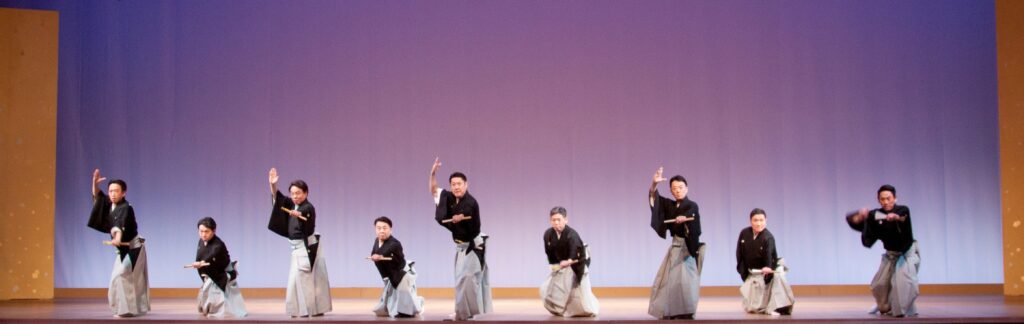
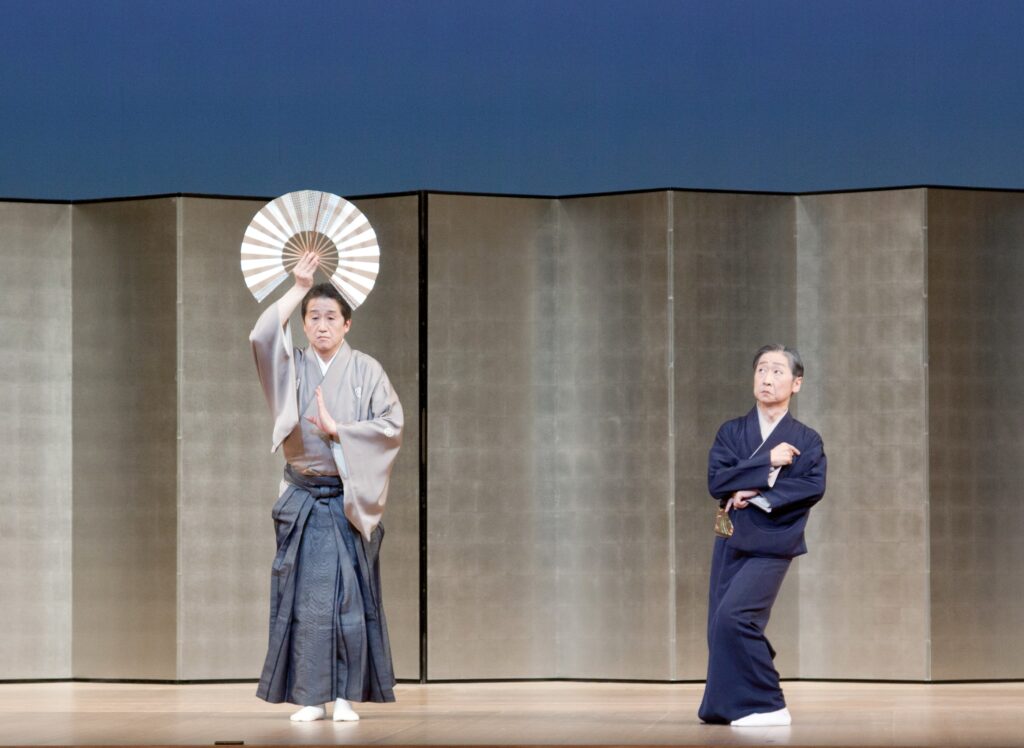
"Okehazama" - Evening performance on the 14th
From the art and beauty of traditional Japanese dance, a new competition of "Snow, Moon, and Flowers," to group dances and the jiuta (traditional Japanese song) "Kodojoji"
In this performance, leading dancers from various schools collaborated to present a diverse range of Japanese dance pieces over two days. The venue was Asakusa Public Hall. After navigating through the bustling streets filled with inbound tourists, wearing rented kimonos and struggling to find my way to the venue, I found myself in a tranquil oasis amidst the city's hustle and bustle, a time to gaze upon the "Japanese body" rising on stage
A colorful lineup — the diversity of Japanese dance —
Japanese classical dance is a relatively late-developing art form among classical performing arts. Since the Meiji era, it has developed independently from Kabuki, aiming to create new dances for a new era. Because of this background, the content of Japanese classical dance is incredibly broad. There are Kabuki dances inherited from its parent art form, Kabuki, works based on Noh and Kyogen, and new works embodying the creative spirit of the modern era. Under the same name of "Japanese classical dance," layers of different artistic worlds coexist. In this performance, multiple lineages were presented side by side. In this report, we will focus on "Su-odori," one of the forms in which the skill of the dancer is most clearly revealed
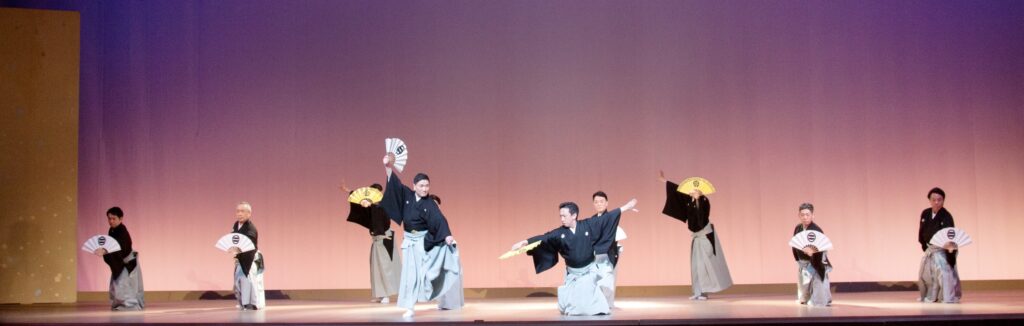
Okehazama
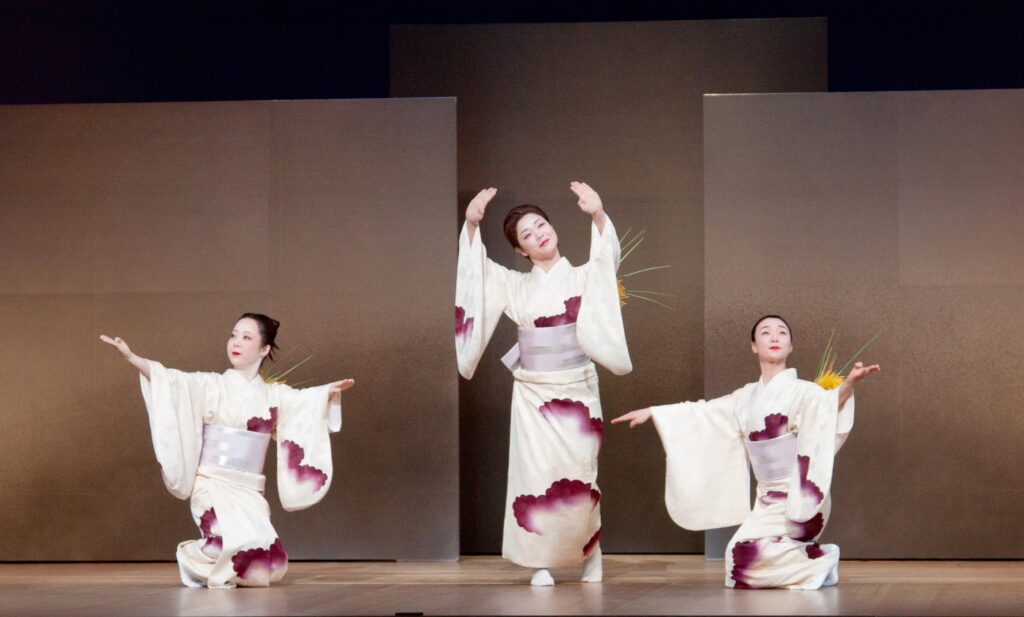
"Snow, Moon, and Flowers" - Matinee performance on the 15th (Star: "Starry Night")
Pure Dance — What emerges when the essentials are stripped away —
"Su-odori" refers to a style of dance where the dancer wears a simple kimono without the costume of a specific character. Generally, no large props are used, perhaps only a folding screen. With visual information stripped away, the dancer's body itself speaks for itself. Su-odori can be divided into two categories: works originally created as su-odori, and works originally intended for costumes and props, but where these are deliberately omitted. There is also the genre of jiuta-mai, which, while slightly different in style from "su-odori," shares a common spirit in that it relies on the density of the dance itself to create a scene without relying on embellishments. These constraints of not using costumes or props present a stage condition that directly tests the skill and dignity of the dancer. Small differences in hand angles, weight distribution, footwork timing, and breathing control determine the overall density of the performance
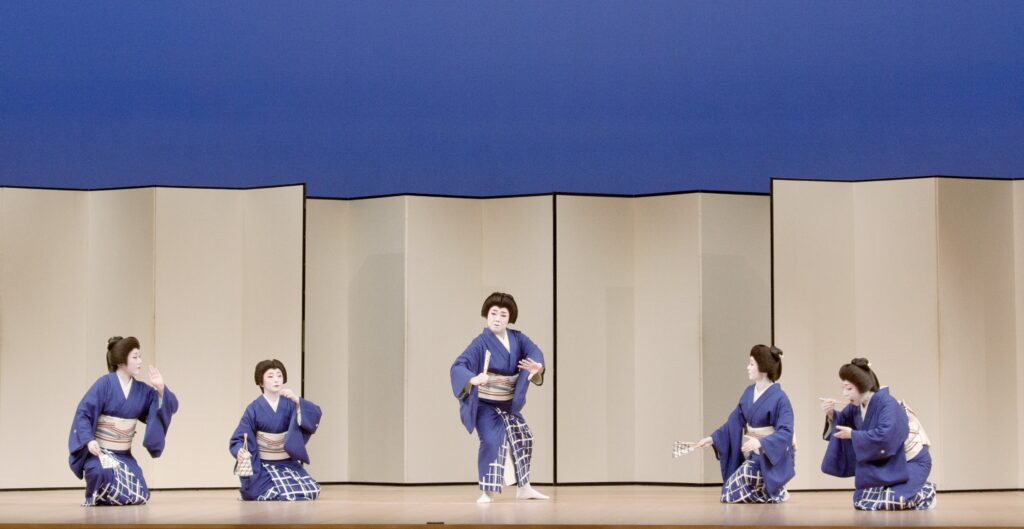
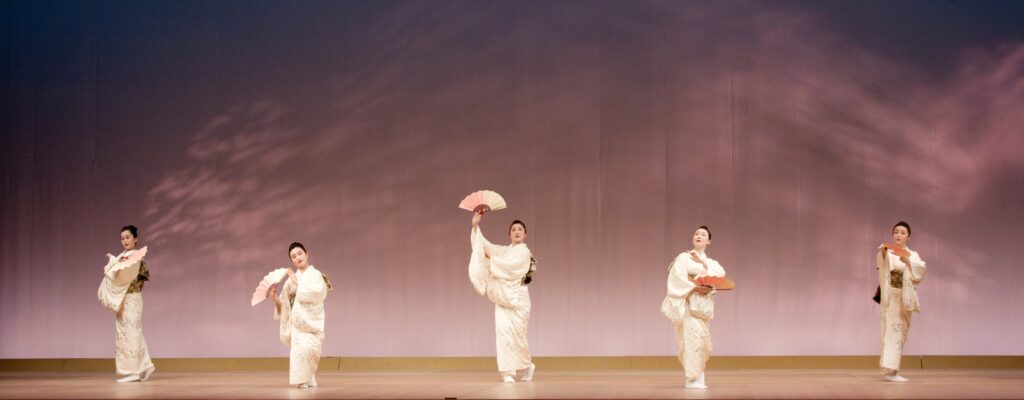
Nagauta (traditional Japanese song) "Asakusa Koyomi"
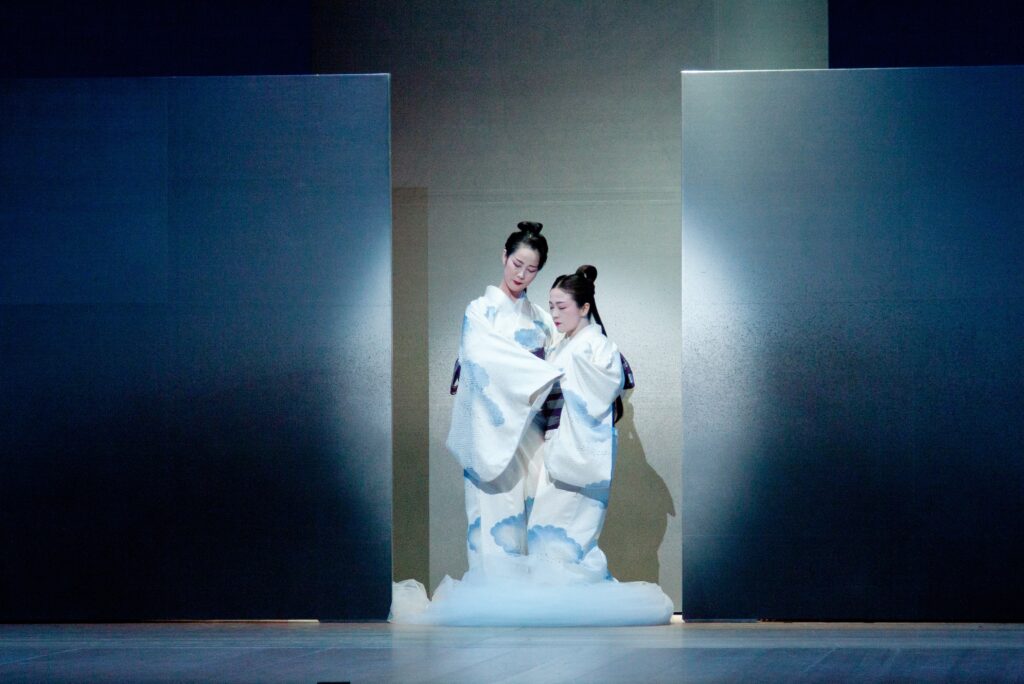
Jiuta “Kodojoji”
Two new works in the "Snow, Moon, and Flowers" series — the same music creates two worlds —
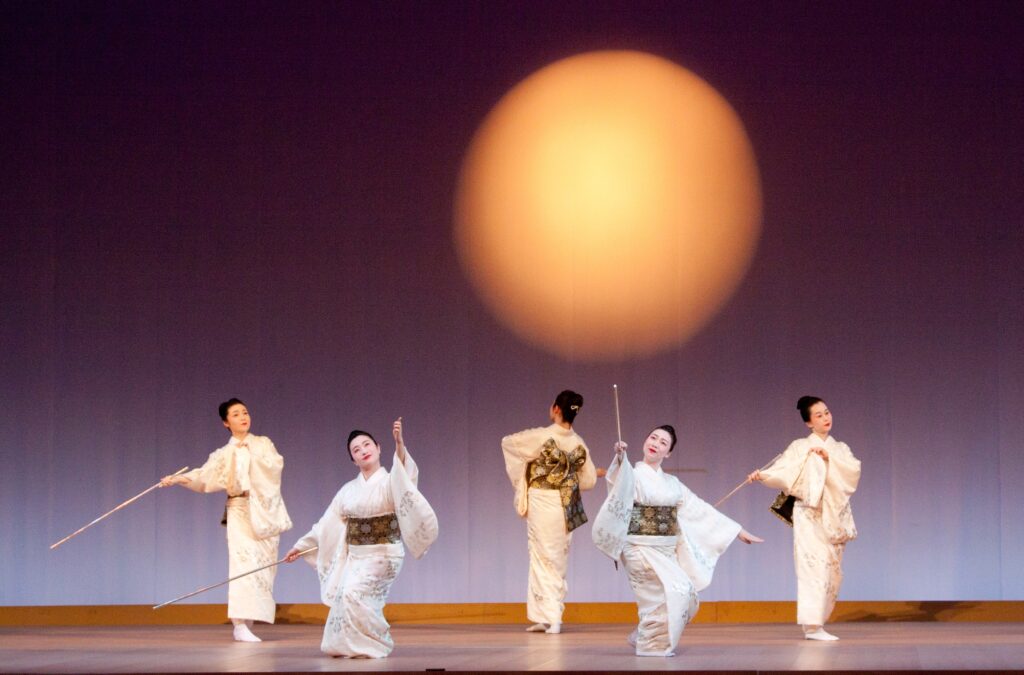
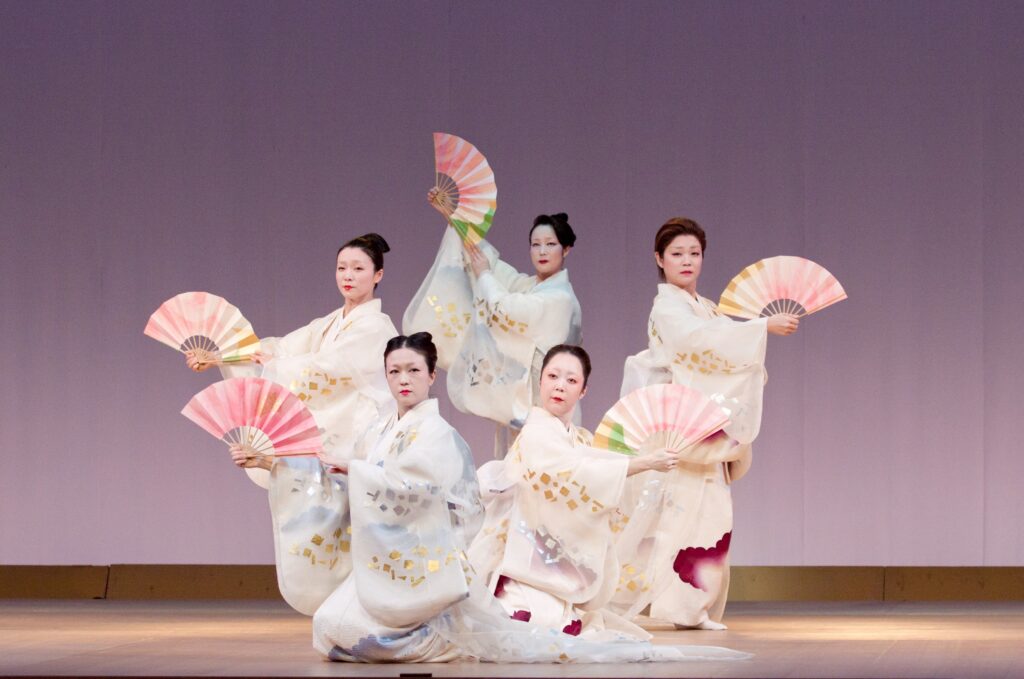
As part of this project, a new choreographic piece, "Setsugetsuka" (Snow, Moon, and Flowers), was placed at the beginning of both the matinee and evening performances on the 15th. While the music is the same, the choreographer and performers are different for each performance. The supervision is by Tokuho Azuma. The music is composed of three songs from the CD "Collection of Japanese Dance Pieces," created as part of the Japan Dance Association's 50th anniversary project: "Sōmon" (Love Song), "Hoshizukiyo" (Starry Night) (lyrics by Madoka Mayuzumi), and "Hisho" (Soaring) (lyrics by Machi Tawara), which were combined to create "Setsugetsuka." The matinee performance features choreography by veteran dancer Sasako Hanayagi. The dancers are young performers (Sae Nishikawa, Senriji Nishikawa, Hinako Nishikawa, Sumisode Hanayagi, and Shoko Matsushima) who are appearing in this series for the first or second time. The evening performance features choreography by young dancer Yoshika Hanayagi. This performance features up-and-coming dancers (Kimiya Azuma, Tokihisa Hanayagi, Marikusa Hanayagi, Sho Fujima, and Mashiro Fujima) who have won the New Year Dance Competition Grand Prize. The lyrics depict the world of "Aimon" as the footsteps of a frozen crane and thin ice, "Hoshizukiyo" as nuts falling on an autumn moonlit night and scarecrows in the rice fields, and "Hisho" as the scattering of flowers being seen as flight, connecting to hope for tomorrow. The daytime and evening performances, even though they were the same song, clearly highlighted two distinct differences. The daytime performance brought abstraction to the forefront, stimulating the audience's imagination. By not defining the outlines of the motifs, the presence of the body resonated as poetry.
"Snow, Moon, and Flowers" - Matinee performance on the 15th (Flower: "Soaring")
On the other hand, the evening performance emphasized storytelling, presenting the world of the work through a visually easy-to-understand progression. It felt as though the differences in the historical backgrounds and paths each choreographer had taken were directly reflected in their "choice of stage language." The same material, through differences in interpretation and composition, created different universes. That intention of the project came across clearly
"Snow, Moon, and Flowers" Evening performance on the 15th (1: Snow "Love Poem" / 2: Stars "Starry Night" / 3: Flowers "Soaring")
Male group dance and female group dance — The "power of the collective" opened up by the modern era —
The group dance format is a technique that was acquired in Japanese dance, including Kabuki dance, in the modern era. By adding group movements to the grammar that had previously focused on individual performance, the stage gained a different kind of power and emotion. Here, I will report on two simple, unadorned group dances: "Okehazama" performed by male dancers and "Asakusa Koyomi" performed by female dancers
Male group dance "Okehazama" — depicting the surging battle with just a fan —
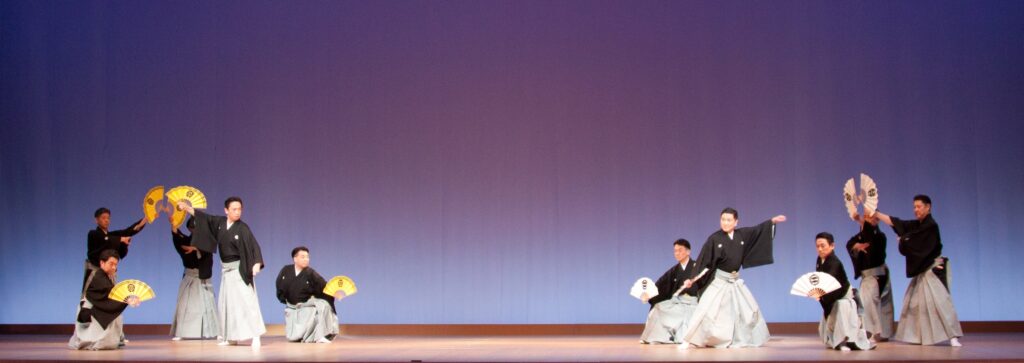
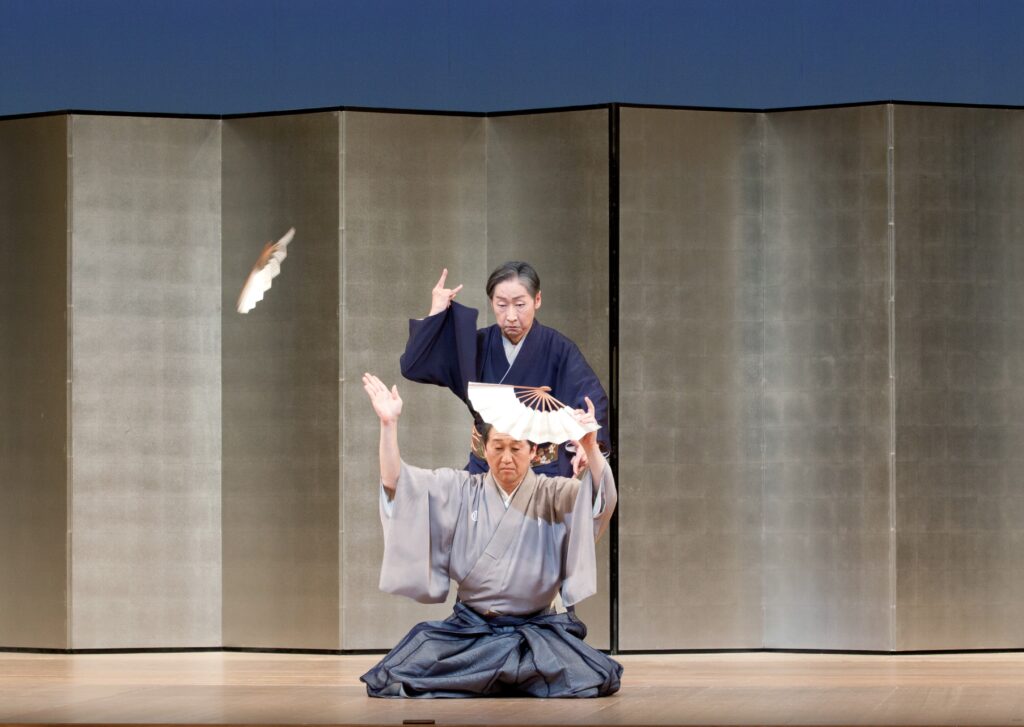
"Okehazama" is based on the famous battle between Imagawa Yoshimoto and Oda Nobunaga. The choreography and performance were handled by "Ko no Kai," a group of male dancers formed across different schools of dance, and featured Izumi Tokuho, Ichiyama Shosen, Saruwaka Seizaburo, Nishikawa Daiki, Nishikawa Sen'ei, Hanayagi Eisuke, Hanayagi Sumizo, Fujima Jin'o, Fujima Shogo, and Wakayanagi Yoshiyuki. First of all, their attire of black crested kimono and hakama reminds us once again that this is the most dignified attire for Japanese men. The only props were fans. A yellow fan bore the Oda crest, and a white fan bore the Imagawa crest, and the performers switched fans according to the scene. The fact that the performers were not "fixed" to one or the other allowed the flexibility unique to unadorned dance to shine through, adding depth to the group's coming together and separating. Another strength of the male group dance is that the power and energy of the movements directly translate to the depiction of the battle. The propulsive force of the mounted warriors, the vivid use of fans, and the changing formations created a visually powerful spectacle, giving the entire stage the feel of a battlefield and resulting in a continuous stream of highlights.
Female group dance "Asakusa Calendar" — A dynamic performance depicting the four seasons of Asakusa —
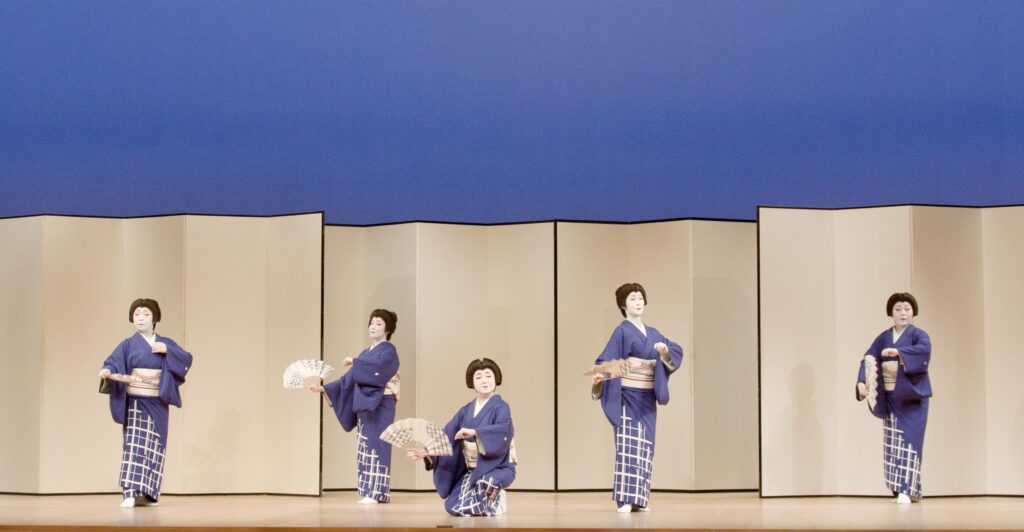
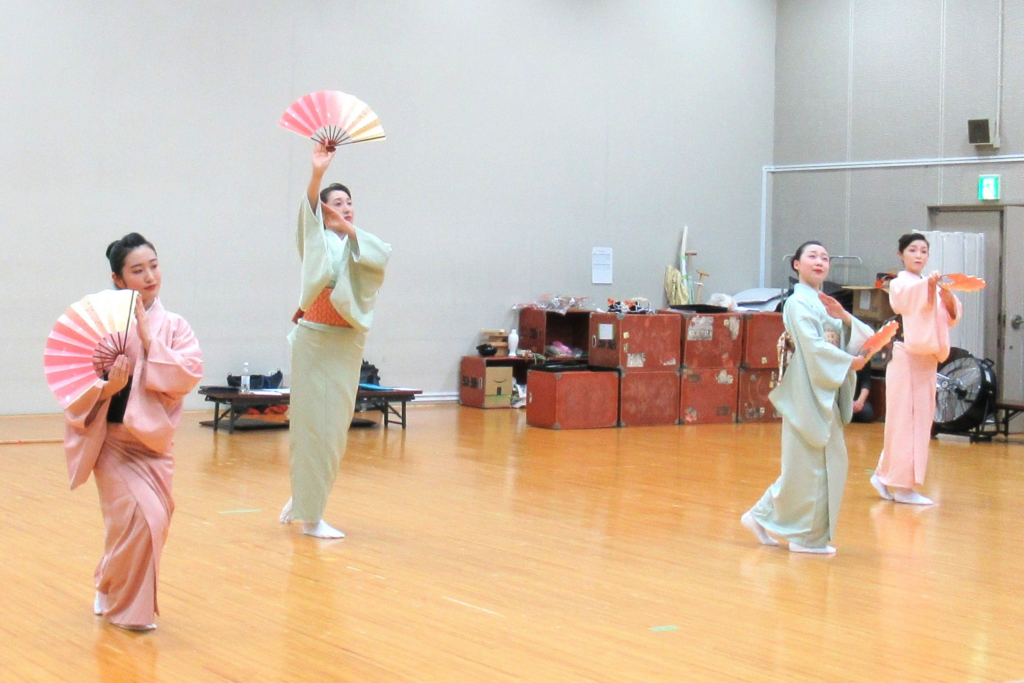
"Asakusa Koyomi" is a work depicting the scenery of Asakusa, the venue for the performance. It is said to have been composed for the completion ceremony of the Kaminari 5656 Hall. The piece is structured to go through the year, starting in summer, and the four seasons of Asakusa appear one after another. It begins with a scene of people gathered for the Sumida River fireworks, and moves to the atmosphere of Yoshiwara in early autumn. Along the way, there is a touch of humor involving a taiko drummer, and a charming scene at the Tori-no-ichi market where a rake is returned to the seller. Eventually, in the snowy season, the elopement of a man and woman with a secret is depicted, and then the mood shifts abruptly to the cheerfulness of the New Year. Mt. Fuji and Mt. Tsukuba, scenes of the first theatrical performance of the year, cherry blossoms, and then the Sanja Matsuri... The female dancers changed roles one after another, sometimes playing male roles, sometimes female roles, and at other times even playing a rake! The performers were female dancers from the Joto Block of the Tokyo branch: Kaneko Umewaka, Komaki Nishikawa, Tensho Hanayagi (the character for "Sho" is written with the characters for "show" and "sheep"), Kotaro Fujima, and Tsuruhi Fujima. The beauty of the performance lay in how they wove together the atmosphere of the characters, seasons, and places with the minimal attire of a traditional Japanese dance.
The traditional Japanese song "Ancient Dojoji"—an old melody breathed new life into by the Showa era, bringing "Dojoji" to life today.
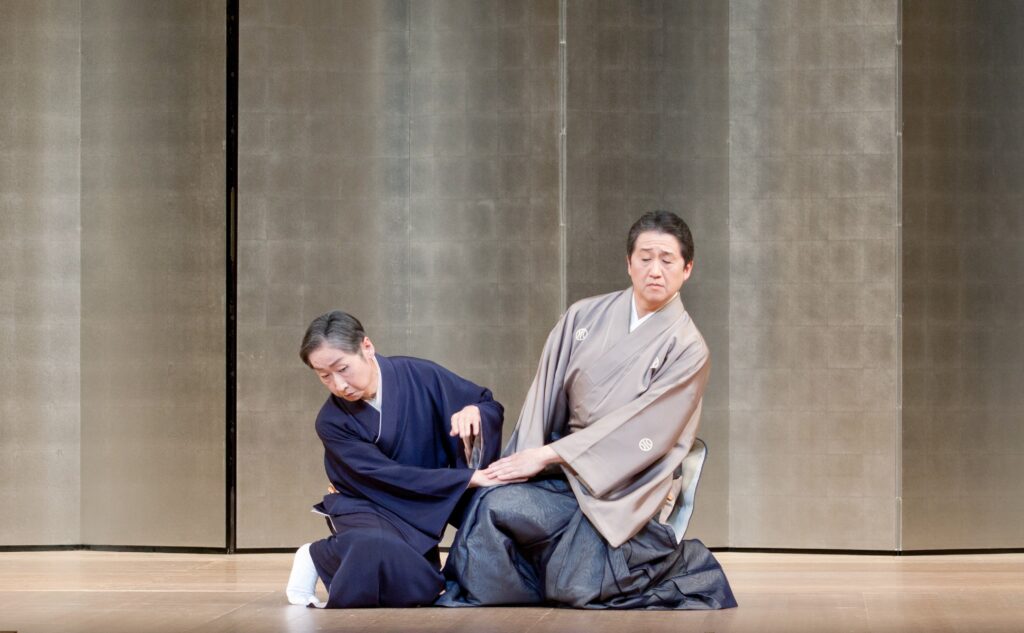
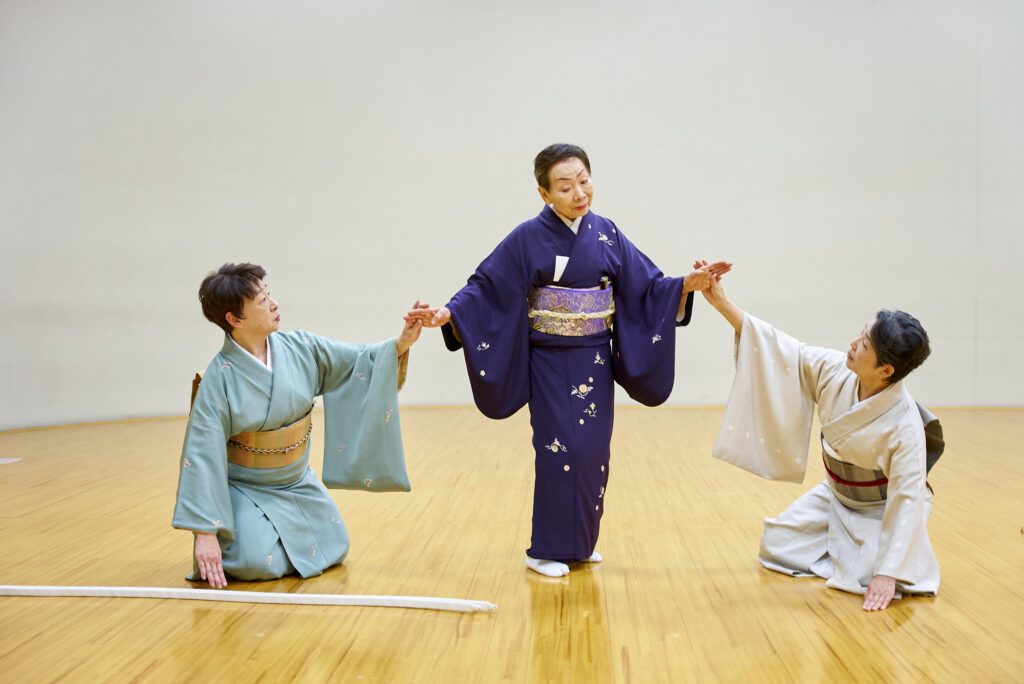
The legend of Dojoji Temple—the story of a girl whose lover ran away, who, in pursuit of him, transformed into a giant serpent and burned him to death along with the bell he hid in—has become widely known and has been incorporated into various performing arts. In Japanese dance, it has formed a major genre known as "Dojoji-mono." The jiuta piece "Ko-Dojoji" is one of the oldest pieces in this genre and is characterized by its depiction of the legend itself. While many works deal with the aftermath, this piece touches upon the core of the story. On the other hand, this old piece only gained contemporary life on stage in 1957. Through the choreography of Yoshimura Yuki, new life was breathed into the classical material, and it has since become a popular piece. In this work, the role of the girl (Yoshimura Koyu) is consistently played by one performer, while the other performer (Yamamura Tomogoro) portrays the girl's father, the mountain ascetic the girl loves, and even the swirling Hidaka River and the pine trees. The daughter's unwavering devotion and the skillful casting of the characters brought the story to life, and the scenes vividly emerged within the minimalist aesthetic—that worldview left a strong impression on me.
Conclusion —A Japanese body rises in the void of Asakusa's hustle and bustle—
In a quiet oasis amidst the hustle and bustle of Asakusa, the graceful movements of people accustomed to wearing kimonos shone with a serene brilliance. The two new works of "Setsugetsuka" demonstrated the diversity of interpretations that can arise from the same material. "Okehazama" and "Asakusa Koyomi" showcased the flexibility of group dance, a modern form of expression. And then there was the exquisite storytelling of "Kodojoji." With ten other performances also featured, the two-day event made it clear that Japanese dance is not only preserved as a "tradition," but is also continuously being renewed through the bodies of the present day.
Satomi Abe
While working as a company employee, he became fascinated with the world of Japanese dance, and studied Kabuki and other dances in earnest at university and graduate school. Currently, he aims to be a "bridge" connecting the world of classics with the modern world through lectures and commentary writing. He writes a column in the Tokyo Shimbun newspaper, "Dancing in Flowers," and an essay, "Ribbon Dreams," in the monthly magazine "Japanese Dance." Web: Japan Arts Council (National Theatre) Cultural Digital Library. He has written a theatrical arts teaching material, "Kabuki Dance," and others.
You might also want to read: ——
What does Japanese dance practice involve? The relationship between master and disciple hones the movement and the space between the two.
Watch and feel the love between parent and child in a live performance of Japanese traditional dance! A female dancer takes on the role of "Kosode Soga"