About the Edo-Tokyo Traditional Performing Arts Festival
ABOUT US
The Edo Tokyo Traditional Performing Arts Festival, which will begin in 2025, will inherit the Tokyo Metropolitan Arts Festival, which has been popular for over half a century, and will be reborn as a festival specializing in traditional Japanese performing arts such as Noh theater, Japanese dance, traditional Japanese music, vaudeville performances, and folk performing arts.From full-scale stage performances to easy-to-participate, hands-on workshops, it will be enjoyable for a wide range of generations, from children to adults.
Inquiries about the Edo Tokyo Traditional Performing Arts Festival
Edo Tokyo Traditional Performing Arts Festival Executive Committee Secretariat
This moment of art is truly a precious experience.
In this single chant, I feel as if I can hear the ancient principles.
See, art reflects a person's soul.
I'd love to be a comedian as cool as that someday.
I wonder what kind of beautiful world tonight's dance will show us.
The time spent performing arts is an irreplaceable luxury.
This moment of art is truly a precious experience.
In this single chant, I feel as if I can hear the ancient principles.
See, art reflects a person's soul.
I'd love to be a comedian as cool as that someday.
I wonder what kind of beautiful world tonight's dance will show us.
The time spent performing arts is an irreplaceable luxury.
2025.10.25
Sponsored Events
performance
It's not difficult! Experience the world of Noh with ease! A live report from the Edo Traditional Performing Arts Festival pre-event
Written by: Nakamura Koyori | Photographed by: Shingu Yumi
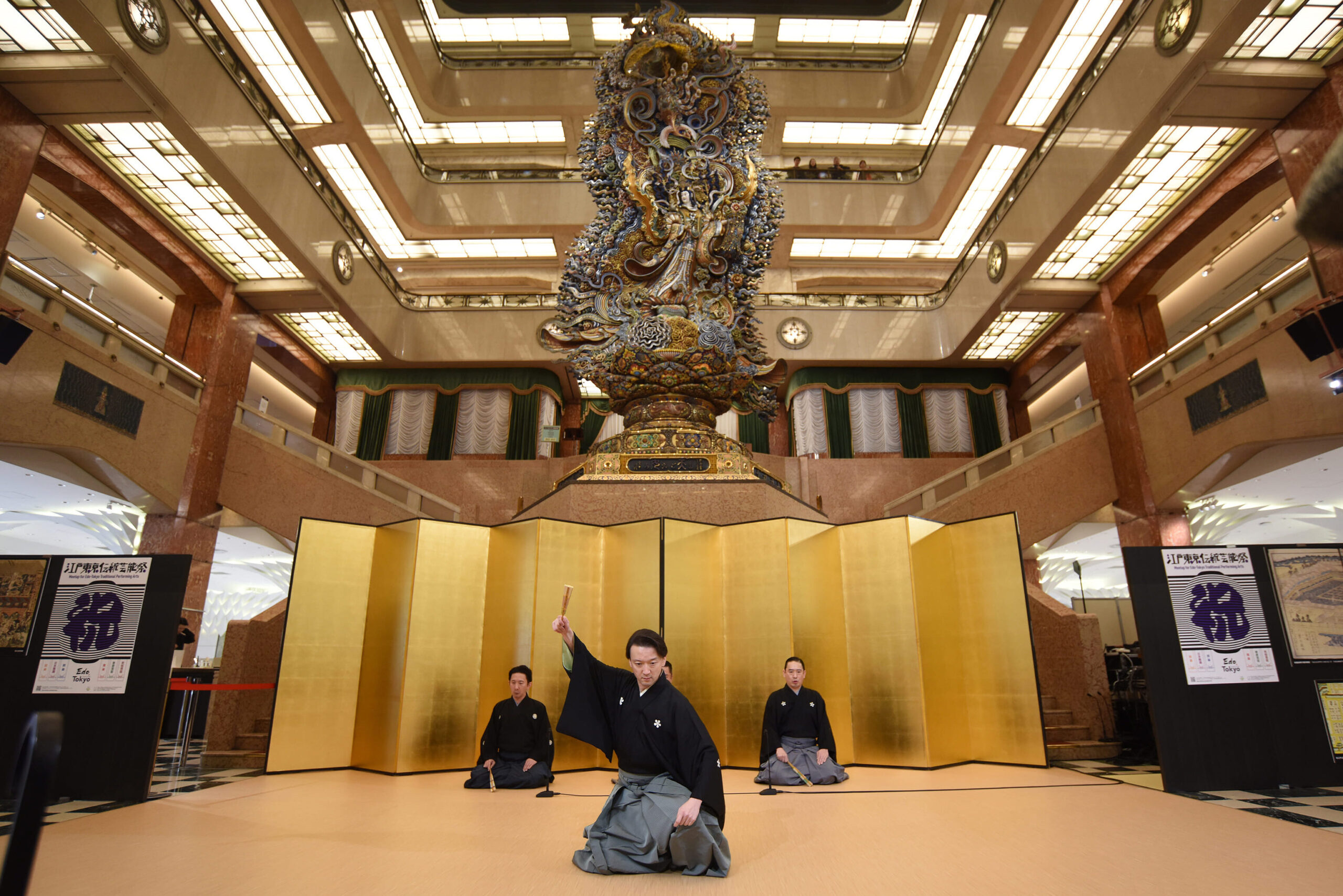
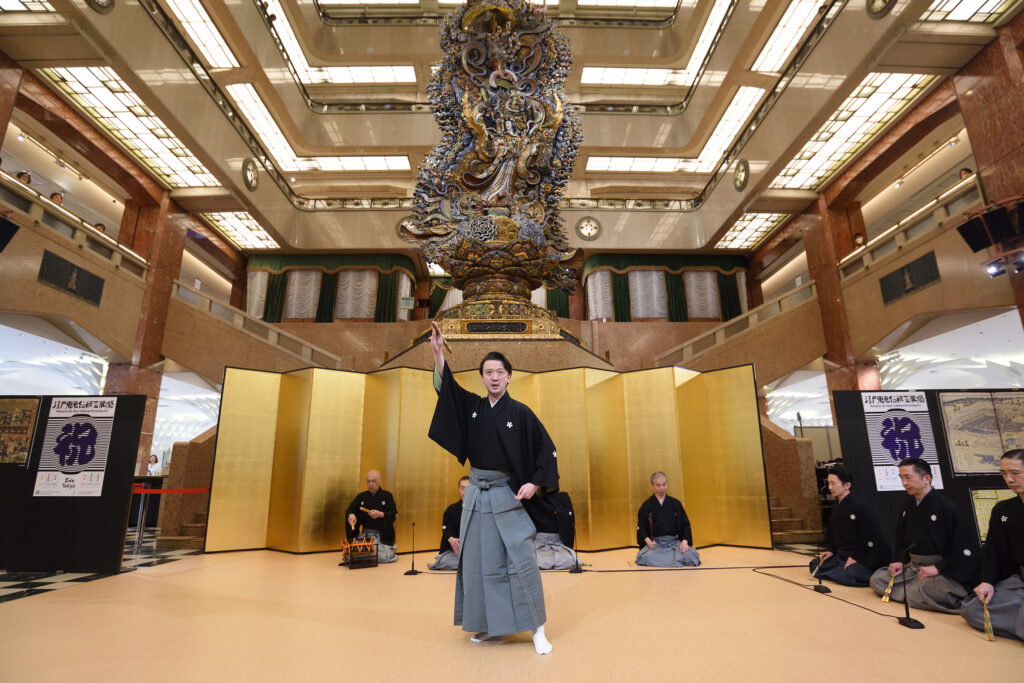
The Edo Tokyo Traditional Performing Arts Festival allows you to experience arts that have been passed down through the ages, including Noh, Kabuki, Japanese dance, traditional Japanese music, Gagaku, vaudeville, and folk performing arts. As a pre-event, the "Flowering Edo Traditional Performing Arts Festival! Let's Get Started!" was held in the central hall of Nihonbashi Mitsukoshi Main Store for three days from Friday, October 24th to Sunday, October 26th. The theme of the second day was "Noh, its charm and history handed down to the present day." We bring you a live report from the event, where you can enjoy explanations of the origins and schools of Noh, as well as spectacular performances!
Is it OK to sleep? Noh is a performance that is meant to be enjoyed in a relaxed atmosphere.
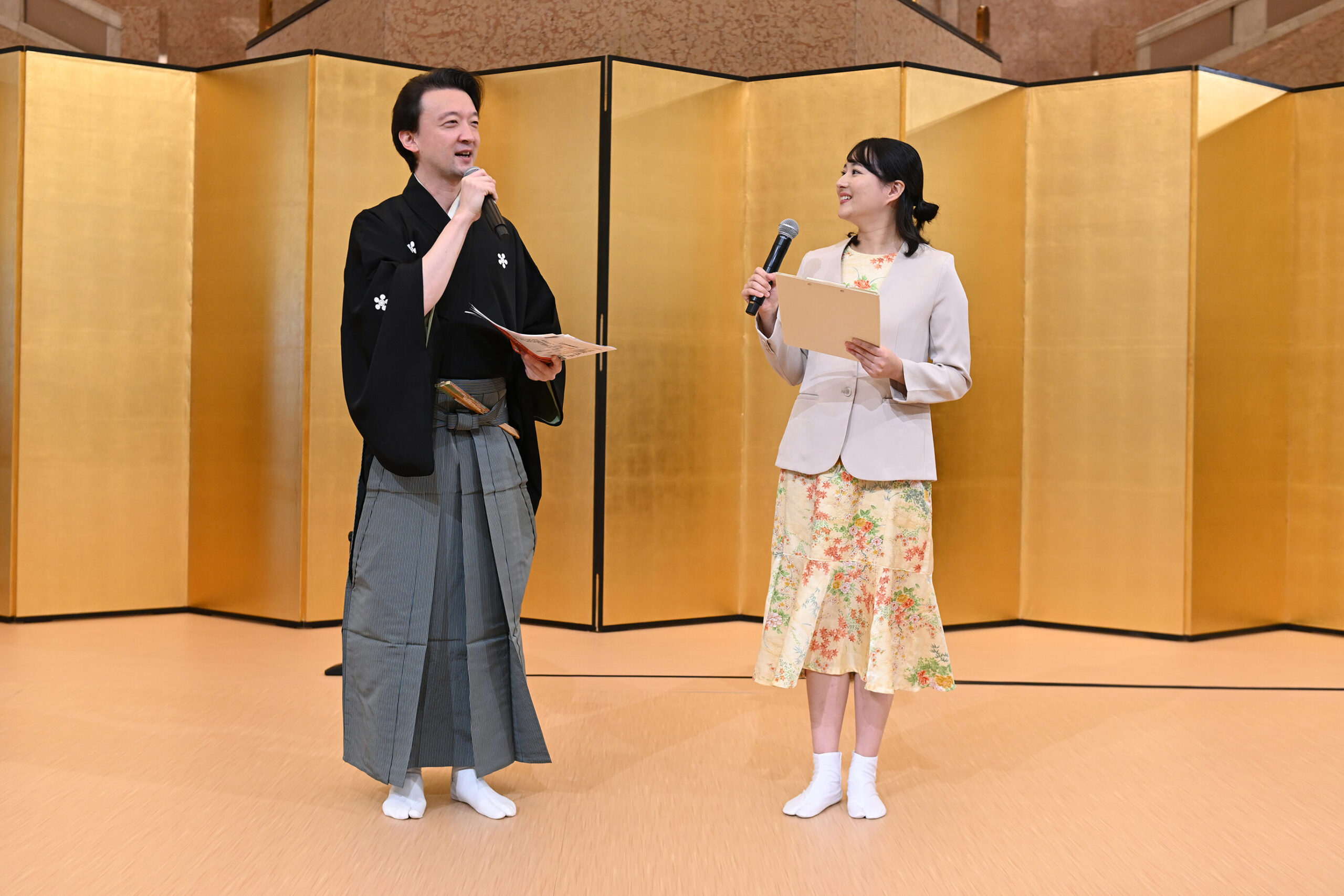
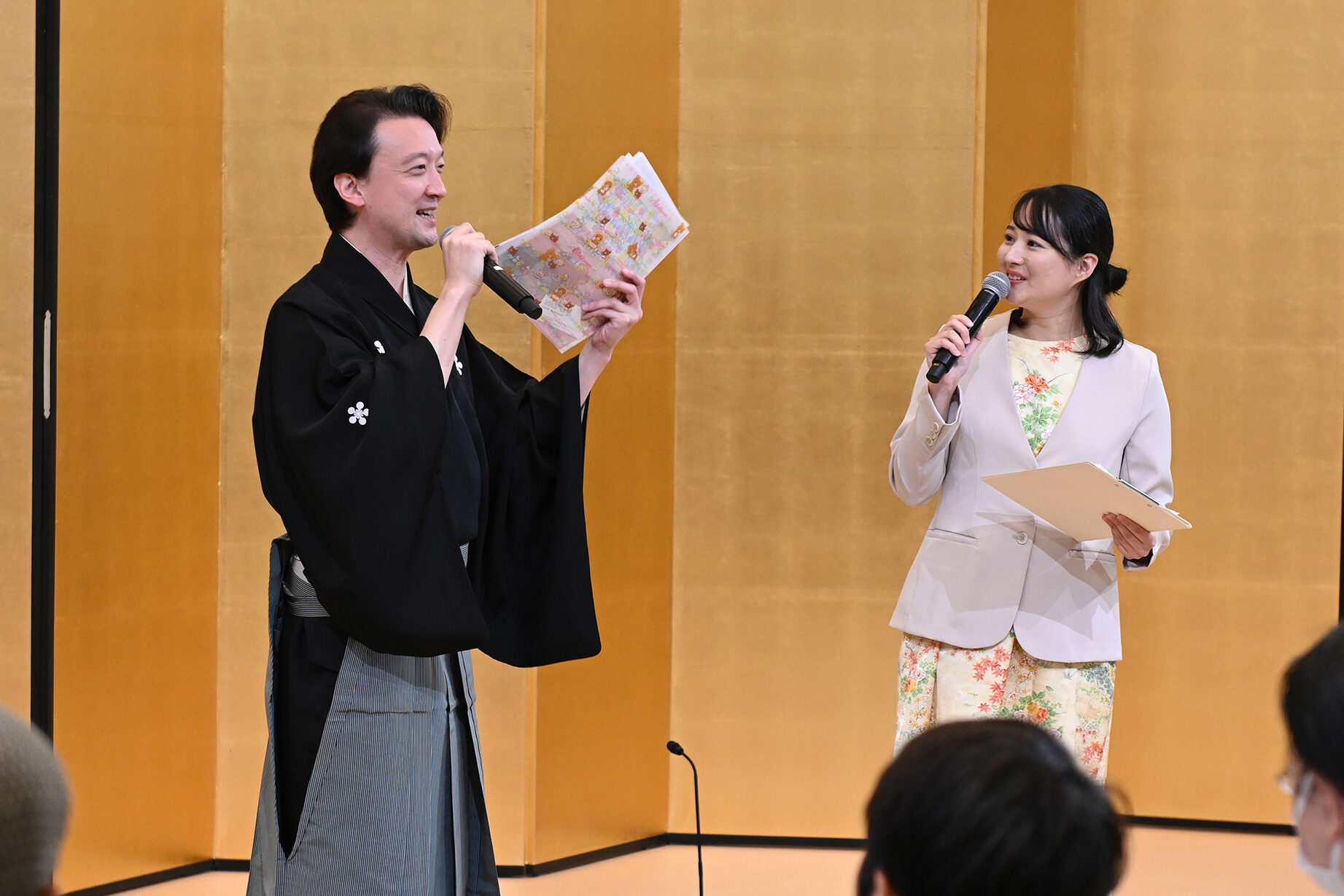
The open-ceiling venue was packed with curious visitors, attracting attention from the audience on the first floor as well as the upper floors. The event began with a talk by Noh performer Takeda Munenori and freelance announcer Nagao Ako. Noh has an image of being difficult. "Many people worry that they won't understand it and might fall asleep while watching... but it's fine if you do," said Takeda.
"Zeami, the founder of Noh, believed that Noh was a performing art that invigorates people's minds and bodies and extends their lifespans. Generally, plays are watched by following the plot, but Noh can be viewed as if you were admiring a beautiful work of art. I think its appeal lies in the fact that it can be conveyed even if you don't understand the meaning." Nagao, who also works at a kimono shop, also pays attention to the Noh costumes. "They give an impression of splendor," he says, to which Takeda nods in agreement. "I think that Noh costumes are particularly gorgeous among the stage costumes used in traditional Japanese performing arts. They are taut, heavy and stiffer than regular kimonos, so it is quite difficult to dance vigorously."
A demonstration where you can experience both stillness and movement right before your eyes.
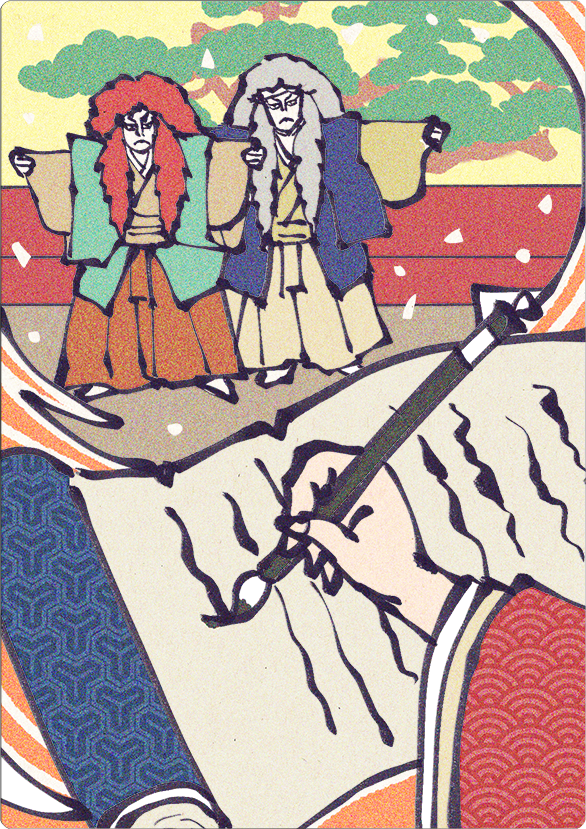
At the venue, there was also a nishiki-e print depicting the "Kanjin Noh" (kanjin noh) performances that were held throughout Edo. "At the time, only feudal lords and shoguns were allowed to see them, but there were occasions a few times a year when they were open to the public, and apparently as many as 5,000 people could watch a single performance," said Takeda. "The songs and lines in Noh are called utai, and learning this as a form of training was very popular during the Edo period. Even today, many people study Noh, and some office workers even practice after work."
Noh was designated as the shogunate's ceremonial music, and feudal lords from each domain were ordered to practice it. This was apparently an attempt to share the common language of Noh chanting and cultivate a common culture. "Vestiges of this tradition remain today. There are five schools of shite (leading actors), but at Shimabara Castle in Nagasaki, the lord favored the Kongo and Kanze schools, so even today there are no studios other than those schools. Similarly, in Kanazawa, Ishikawa Prefecture, there is only the Hosho school." Takeda is a shite actor in the Kanze school, but each school was largely established during the Muromachi period, when Noh was born. Even the newest, the Kita school, was established in the early Edo period. While there are traditional performing arts such as Japanese dance that give rise to numerous new schools, Noh has been passed down for over 400 years through only five schools. "Noh has a long history, and Kabuki and Bunraku puppet theater were developed from it, so it is like a big brother performing art. It also has a unique starting point in that it was performed under the patronage of the shogunate," says Takeda. The words "dressing room" on stage and "program" on television actually originated from Noh. It's surprising to see how many connections and influences Noh has, not only with other traditional performing arts, but also with modern times.
The history of Noh, one of the oldest traditional performing arts
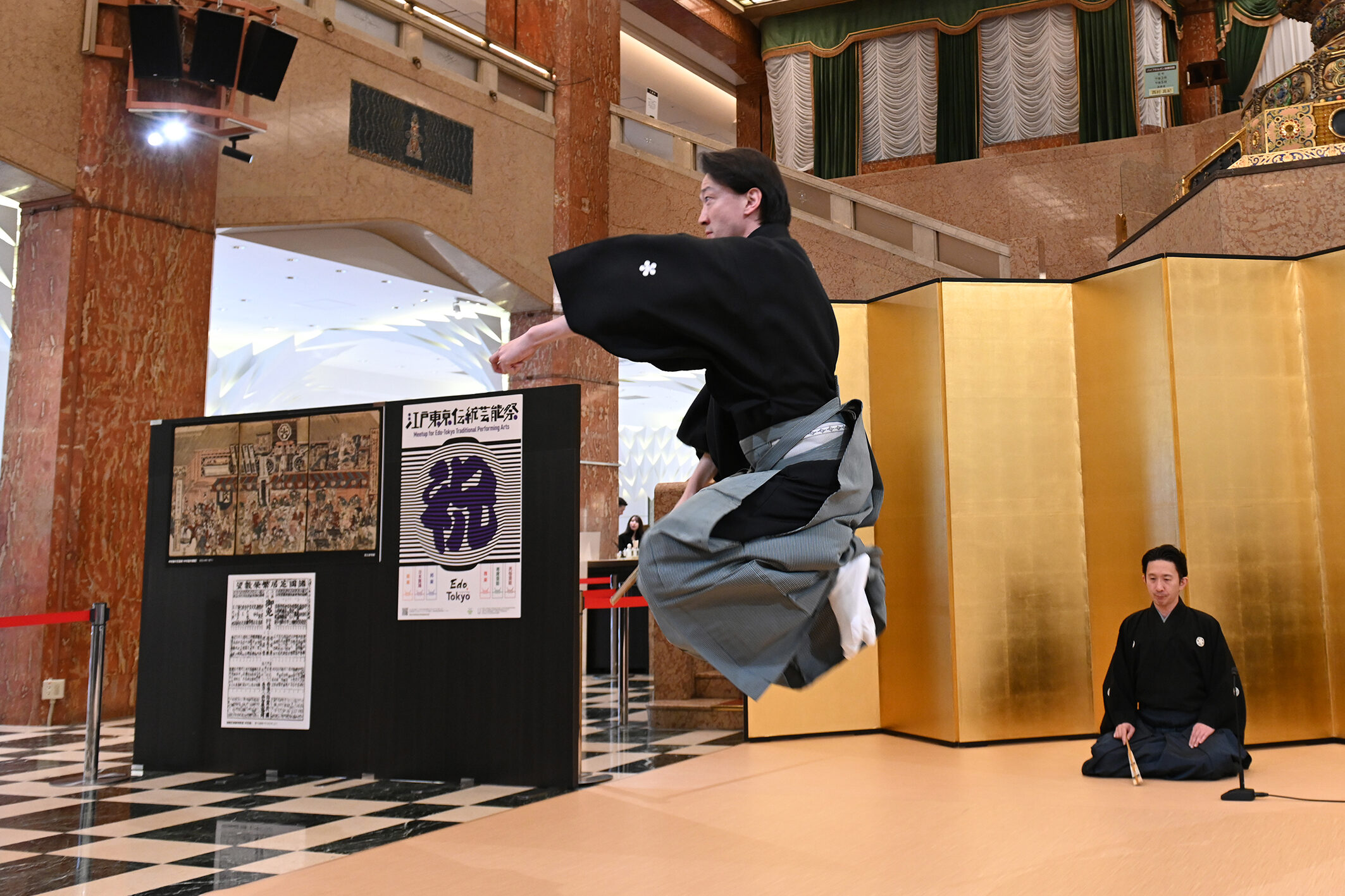
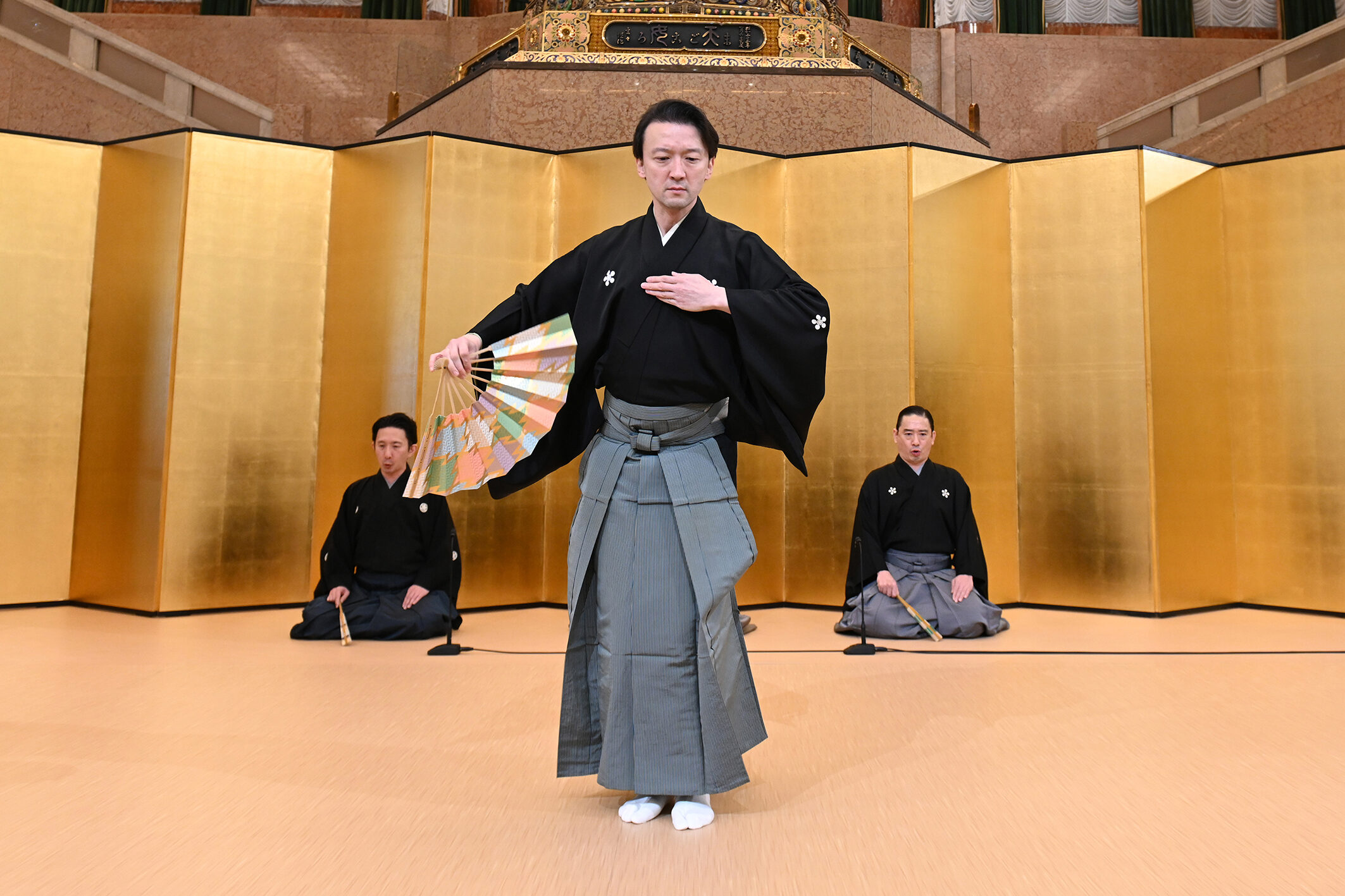
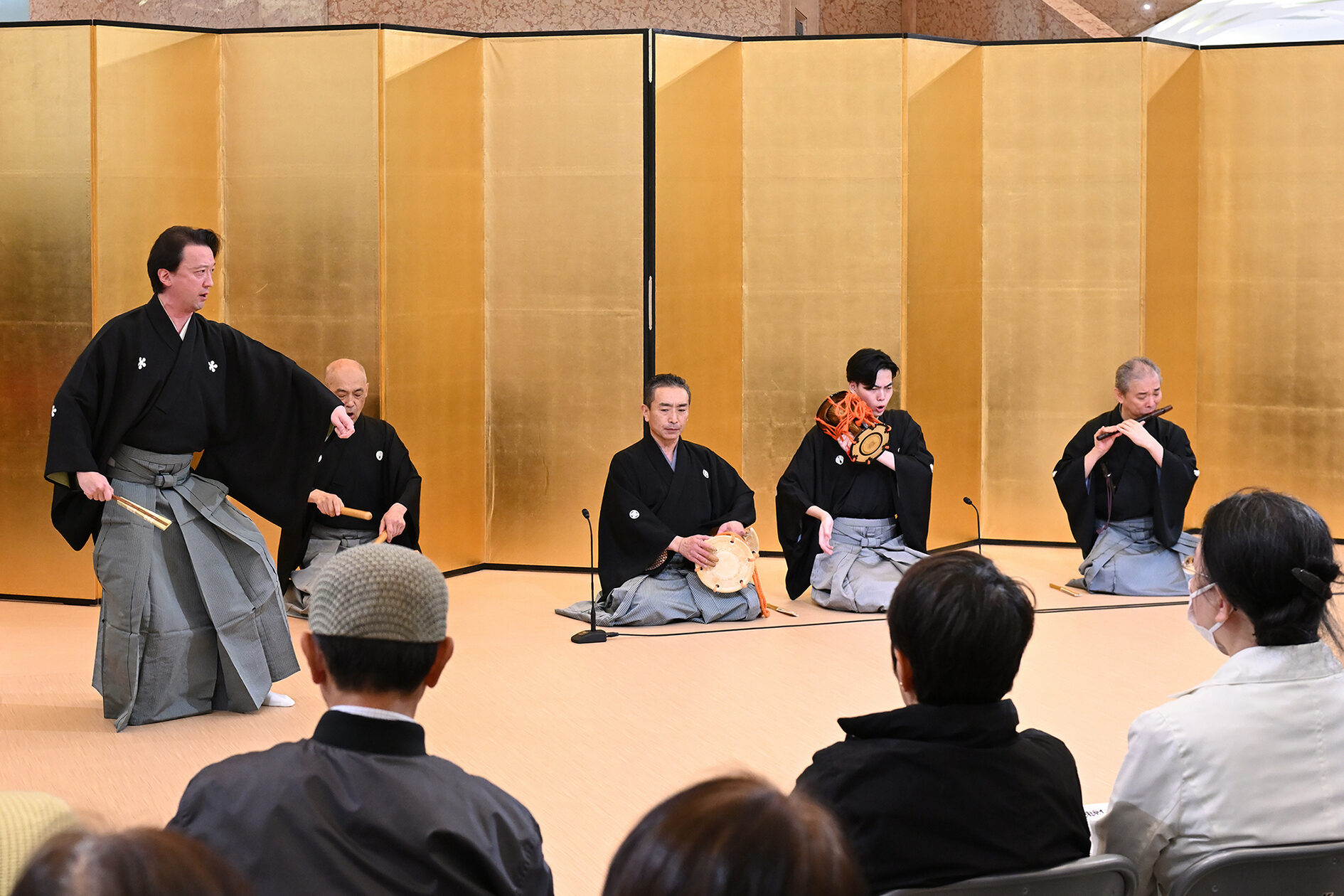
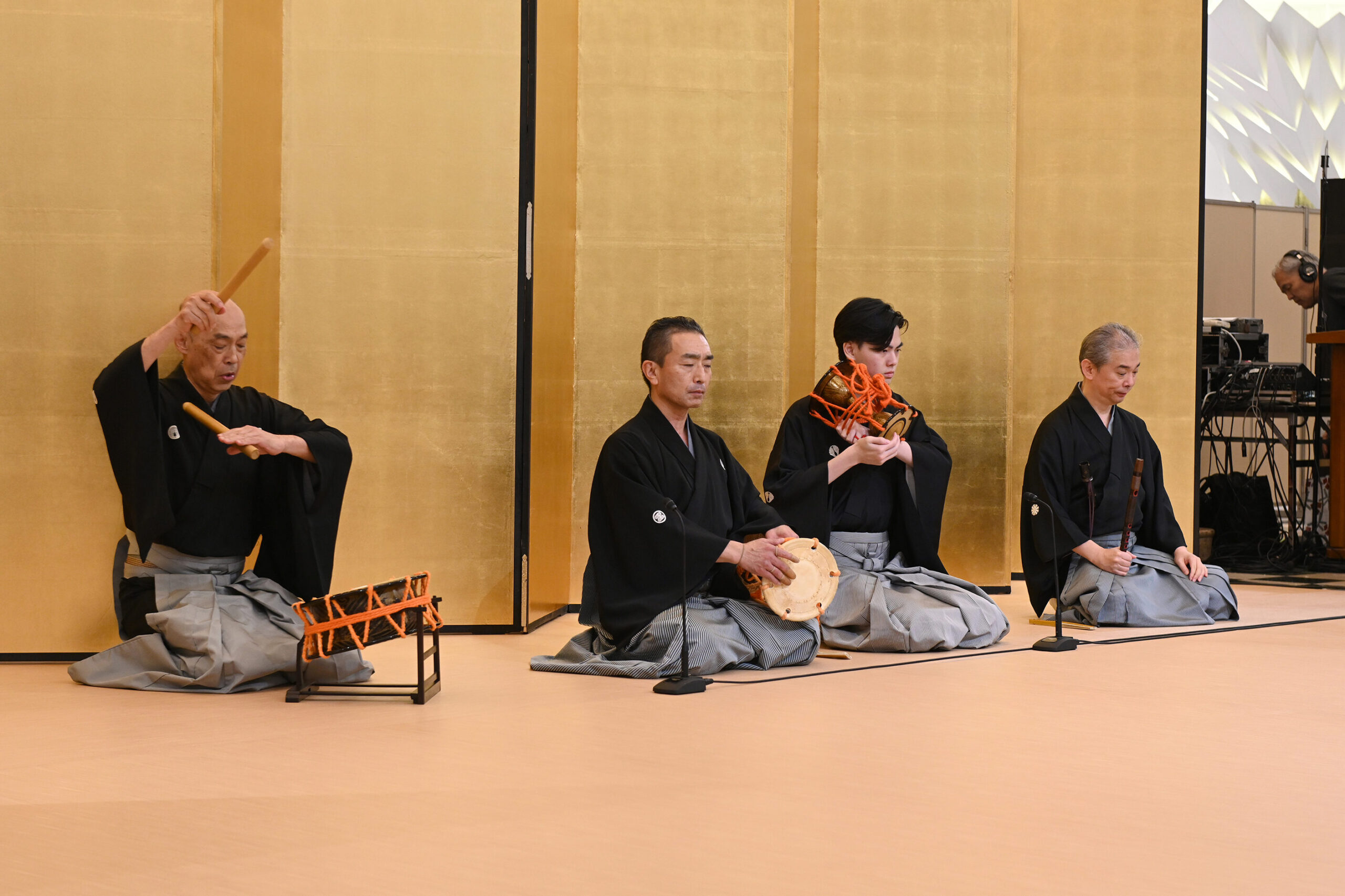
Finally, it was time for a performance! Of the two performances that day, the first was the Shimai "Tama no Dan" and the second was the Maibayashi "Takasago." The Shimai "Tama no Dan" depicts a scene in which a diver dives into the sea to retrieve a jewel stolen by a dragon. The diver, chased by the dragon, cuts open his own stomach to hide the jewel, a terrifying sight that is simple yet powerful. If you use your imagination, the spacious central hall of Nihonbashi Mitsukoshi, with its towering celestial maiden statue, can almost seem like the depths of the ocean.
Additionally, the dance "Takasago" is a dance performed by the powerful god of Sumiyoshi Shrine in Kansai, who calls in good fortune, and is a representative celebratory piece among Noh plays. The lively music was heart-warming, filling the entire large venue with sound and excitement! Nagao was deeply impressed, saying, "I had an image of Noh as being quiet, but it's so passionate!"
A look into the world of Noh: Information on noteworthy performances this spring
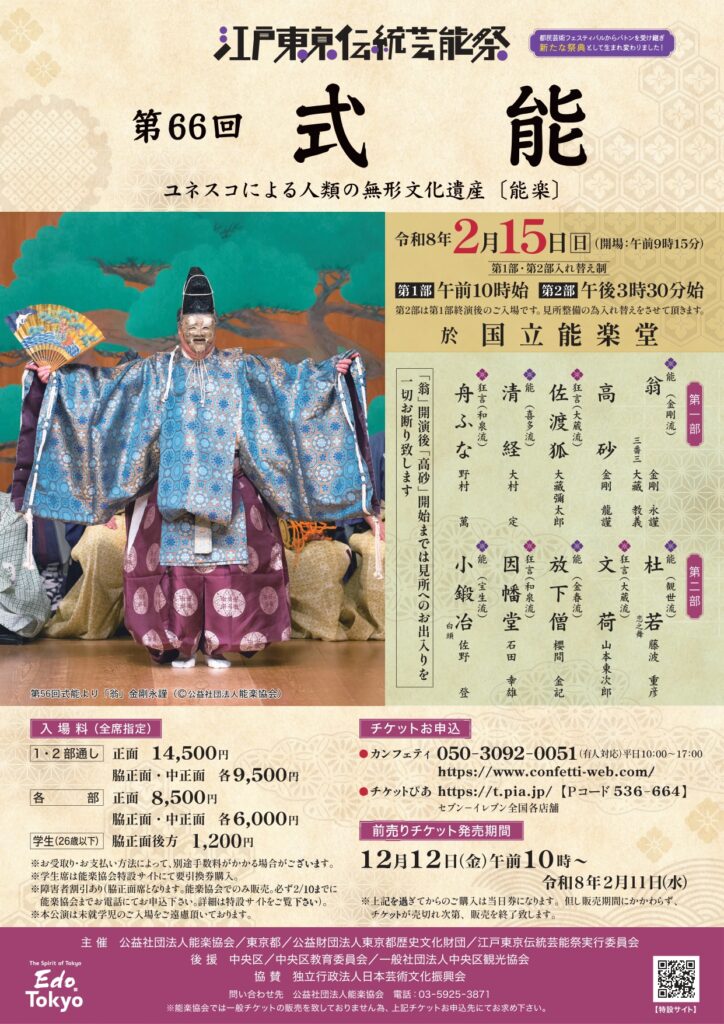
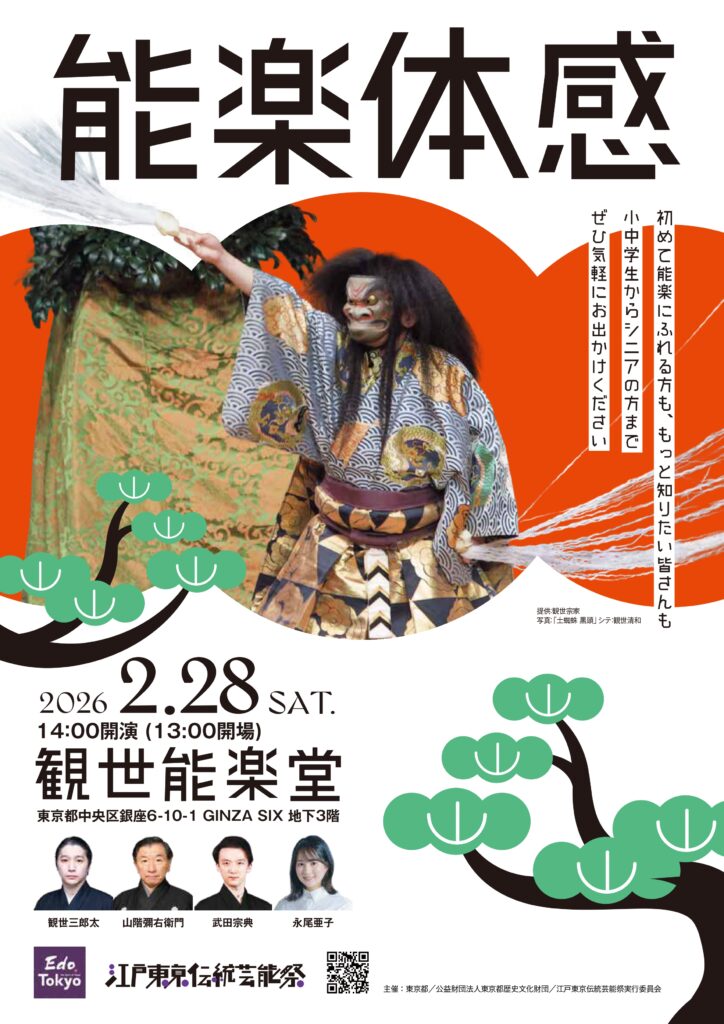
On February 28, 2026, a performance called "Noh Experience" is planned as part of the "Edo Tokyo Traditional Performing Arts Festival." This program allows you to experience the musical accompaniment, chanting, and gestures of Noh and Kyogen, as well as watch a Noh performance. Also, on February 15, 2026, the National Noh Theatre will host the "66th Shiki Noh," a Noh performance that brings together various styles of Noh. In addition to this, there are many performances where explanatory booklets are distributed and audio guides that can be listened to with headphones are available, making it easy for even first-timers to attend. Trying it out just once will lower the barrier to entry and no doubt spark even more interest!
No. 66 Ceremony Noh
Held at the National Noh Theatre on Sunday, February 15, 2026! This special performance brings together various Noh schools to showcase masterpieces of Noh and Kyogen. The two-part performance allows you to enjoy the diverse charms of this classical performing art. We will be presenting a wide range of programs, from festive pieces to works that are full of humanity. This program allows you to experience the depth and richness of Noh in one day.
Held on Saturday, February 28, 2026 at the Kanze Noh Theater!
This program allows you to experience the charm of Nohgaku from multiple angles, including experiencing the musical accompaniment, chanting, and Noh and Kyogen movements from the audience seats, as well as watching the Noh performance If you're new to Japan's traditional performing art, Nohgaku, please feel free to come along!
Born in Tokyo in 1993 and raised in Hokkaido. Writes articles about walking around town and listening to stories of shops in monthly magazines such as "Stroll Master." His hobby of looking at topographical maps and old maps has led him to study Edo culture.