About the Edo-Tokyo Traditional Performing Arts Festival
ABOUT US
The Edo Tokyo Traditional Performing Arts Festival, which will begin in 2025, will inherit the Tokyo Metropolitan Arts Festival, which has been popular for over half a century, and will be reborn as a festival specializing in traditional Japanese performing arts such as Noh theater, Japanese dance, traditional Japanese music, vaudeville performances, and folk performing arts.From full-scale stage performances to easy-to-participate, hands-on workshops, it will be enjoyable for a wide range of generations, from children to adults.
Inquiries about the Edo Tokyo Traditional Performing Arts Festival
Edo Tokyo Traditional Performing Arts Festival Executive Committee Secretariat
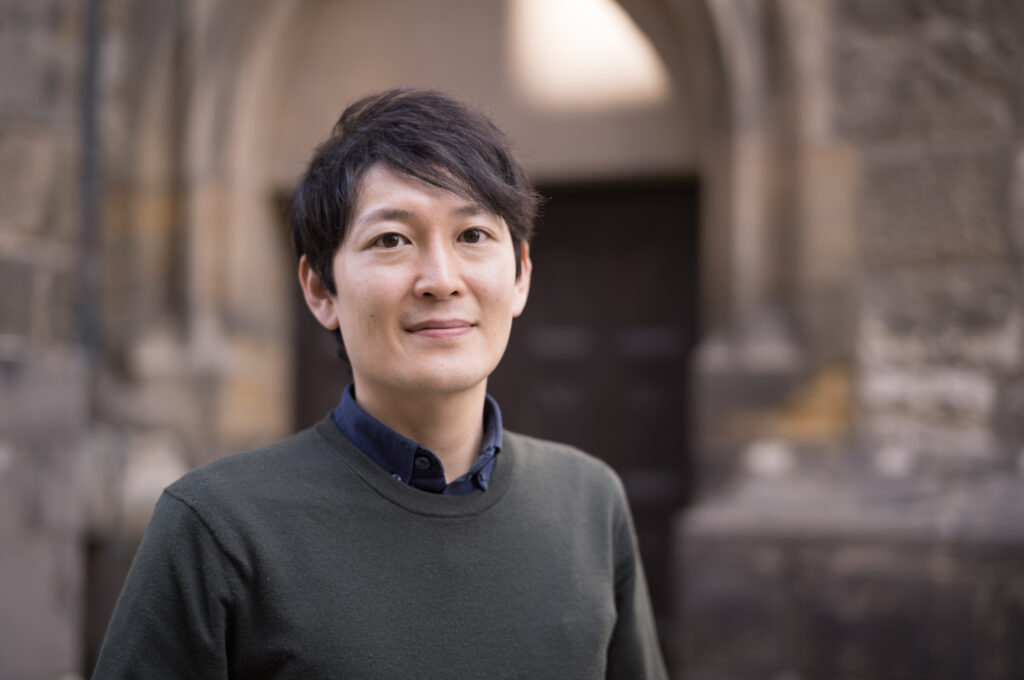
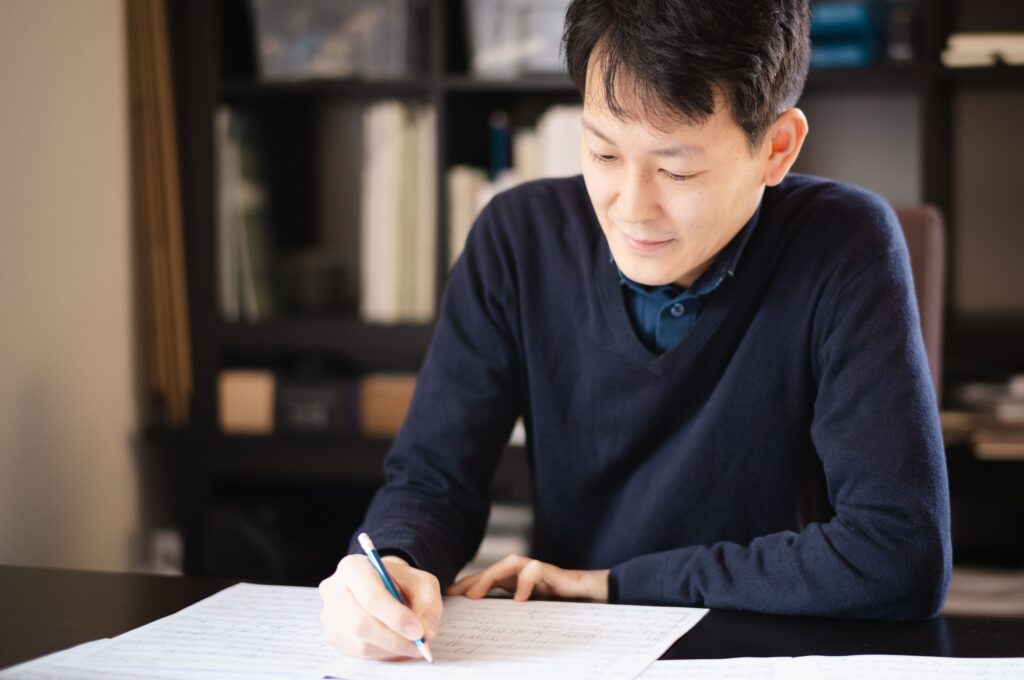
The Edo Tokyo Traditional Performing Arts Festival allows you to experience traditional Japanese arts such as Noh, traditional Japanese music, and traditional Japanese dance. As part of the festival, "Gagaku and Asian Music: A New Exchange of Ancient Instruments" will be held. From classical masterpieces of the Heian period to the premiere of new works by composers active in Europe, this is a fulfilling program that will give you a comprehensive overview of the history of gagaku in one evening. We spoke to Tomoya Yokokawa, composer of the new work "Hoshi-tsumi," about his creative activities in Europe and his thoughts on Japanese culture.
From Japan to Europe —
-- Currently in Germany, you are active in a wide range of fields, including composing and planning and producing concerts introducing Japanese music. This is your first attempt at composing using gagaku instruments. What did you think when you first heard about the commission?
Tomoya Yokokawa (hereafter,Yokokawa): When I was asked to do this, I was so happy I wanted to jump for joy. I had always wanted to write a gagaku piece before I died, so I am truly grateful for this opportunity.
-- For the past few years, we have been promoting a project to promote Japanese performing arts and music culture overseas, and it has long been our wish to have a young composer living overseas involved in this project. That's why we are so pleased that Yokokawa has agreed to compose a new piece for us. We understand that you went to Europe in your early twenties..
Yokokawa: Yes, I graduated from Tokyo Gakugei University in 2011 and worked for a regular company for two years. During that time, I reunited with Yukiko Watanabe, my high school harmony teacher. Watanabe was already studying composition in Graz, Austria. "Yokokawa, if you want to continue composing, you should come to Europe and broaden your horizons." She told me this, and it made me think again about what I really wanted to do. The answer I came up with was, "I want to compose more." So I took the plunge and headed to Europe. I first studied at the University of the Arts in Graz, and then in 2016 I transferred to the University of the Arts in Berlin to study composition. I now work as a freelance composer in Leipzig.
- Did you notice any differences in the creative environments between Europe and Japan?
Yokokawa: That's right. Life in Tokyo was hectic, the space felt cramped, and I felt like my mind was being squeezed, making it difficult to concentrate on my creative work. Berlin is a bit chaotic, but Europe is generally very laid back, there's lots of greenery, and I get the feeling that time flows differently. Also, in Europe you can listen to stimulating concerts at low cost, which was very helpful during my student days. Graz holds a contemporary music workshop called Impuls every two years, and it was easy to get to the Darmstadt Contemporary Music Festival. I think it had a significant impact on my creative work.
Facing "Japan" —
-- The opera "The Golden Demon" was performed for the first time in Graz
Yokokawa: It was a project jointly undertaken by the Graz University of the Arts and the opera house, in which a workshop was held for composition students, and the four works that were ultimately selected were then performed. My work was selected as one of the pieces and was performed in 2018. It is an important work to me. However, the reception of the performance was polarized, with many people saying it was "really good," but the newspaper reviews were not so great... It made me realize how unpredictable contemporary music is.
This opera was based on the novel "The Golden Demon," but I initially intended to write it in German to make it easier for audiences to understand. However, my teacher at the time , Klaus Lang, said to me, "You're Japanese, aren't you? The novel was written in Japanese, and German is a foreign language to you. Can you really turn it into music?" So I decided to focus again on the nuances of the Japanese language, its sounds and rhythms. I studied the structure and theory of Noh (also known as Japanese opera) and composed the piece. I had been interested in Japanese music since my university days in Japan. However, I never had the time to research music theory in such depth. I think this was the perfect time. I have another memory of Professor Klaus Lang. I once wrote a piece based on Japanese calligraphy, and when I showed it to him, he told me this. He asked me sternly whether I truly understood my own culture and whether I was showing any respect for it. This incident made me reevaluate how I approach culture and tradition. I began to constantly question whether I truly understood Japanese culture and whether I was able to incorporate it into my music.
--After that, you started working with shakuhachi and koto players
Yokokawa: Yes. I've launched a performance group called Sogetsusha Ensemble Doppelmont, and we're planning an event that will simultaneously present Japanese and contemporary music. The concert will feature a three-piece ensemble primarily consisting of koto, shamisen, and shakuhachi, performing classical masterpieces alongside commissioned works by contemporary European and Japanese composers. It all started when I met shakuhachi player Reison Kuroda. When the COVID-19 pandemic restricted musicians' activities, Yukiko Watanabe held an online composition academy, where I had the opportunity to collaborate with Kuroda. The shakuhachi only has five holes and can only produce the notes re, fa, so, la, and do. However, meri-kari (the shakuhachi playing technique) allows for the creation of notes in between and allows for the expression of a wide variety of nuances. The shakuhachi's "muraiki" technique, known as "muraiki," has a history of being adapted for the flute. It's a simple instrument, yet incredibly profound. I learned all of this for the first time. This was in 2020, and it had been quite a while since I came to Europe, but I once again felt a strong desire to write using Japanese instruments.
The sealed-off "Japan"--
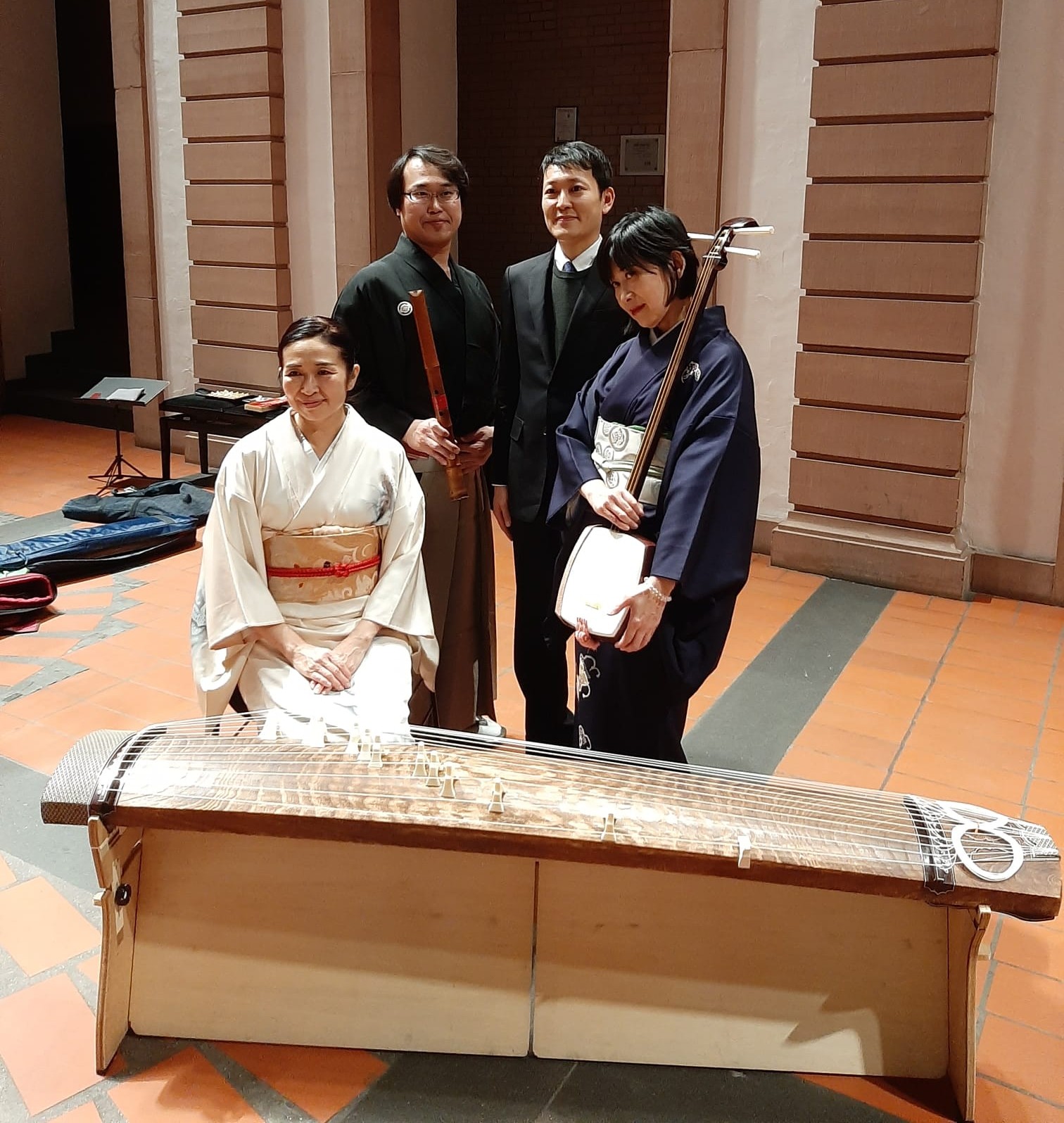
From the 2025 Trier Contemporary Music Festival in Germany. From left: Naoko Kikuchi on koto, Reison Kuroda on shakuhachi, Yokokawa, and Mieko Miyazaki on shamisen.
Yokokawa: My interest in Japanese music began when I heard a concert by Yukiko Watanabe during my university days in Japan. It was a trio piece for koto, voice, and viola. Hearing it was so shocking it felt like I'd been hit over the head. From then on, I became interested in Japanese instruments, took a traditional Japanese music course at university, and attended many Bunraku performances. I also learned the koto. In fact, I'm currently studying the Yamada style of koto again. When I first came to Europe, I thought I wasn't a real professional unless I could write pieces for Western instruments. No one knew about Japanese instruments, and I was worried I'd be seen as a bit of a freak. So, I sort of suppressed the idea. But then, meeting Kuroda-san, I began to think, maybe it's okay for me to write for Japanese instruments, since I'm Japanese. I realized I needed to write pieces that truly combined my aesthetic and music, rather than getting lost in exoticism or Orientalism. I have come to the realization that I need to get to know Japanese music more deeply and work on it more.
--In 2025, you performed concerts in various places with Kikuchi, Kuroda, and shamisen player Miyazaki Mieko (pictured)
Yokokawa: Yes. The speakers change from time to time, but we've also held concerts at the Japan Cultural Institute in Cologne and the Japanese Embassy in Luxembourg. Both were a great success, with sold-out venues, which was a delight. Things have changed a lot since I first came to Europe, and I feel that interest in Japanese culture is on the rise now.
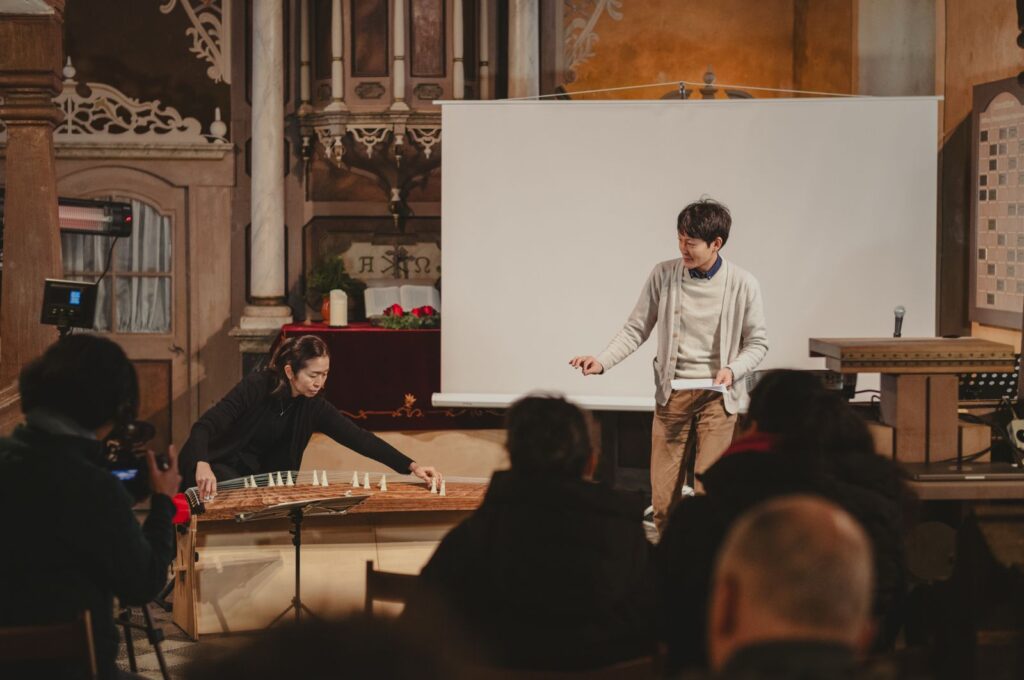
From the 2025 concert. Koto player Naoko Kikuchi and commentary by Yokokawa
However, through the activities of Sougetsusha, I have also come to realize that cross-cultural understanding is quite difficult and not an easy task. Our Japanese culture originated in a completely different place from Europe and has evolved in a different way. In order to listen to and understand this, we need to find some common ground, some entry point, with people from different cultures. For example, asking a contemporary European composer to write a new piece using traditional Japanese instruments could be one useful entry point.
The story behind the creation of this new work will be in the second part of the interview !
Yokokawa Tomoya has come face to face with "Japan" once again in Europe. In the second part, we finally hear about the story behind the birth of his new work, "Hoshi-Gumi." We learn about the unique characteristics of gagaku instruments that differ from Western instruments, and the various difficulties involved in composing. Yokokawa's friendly manner reveals the mysterious act of "making music."
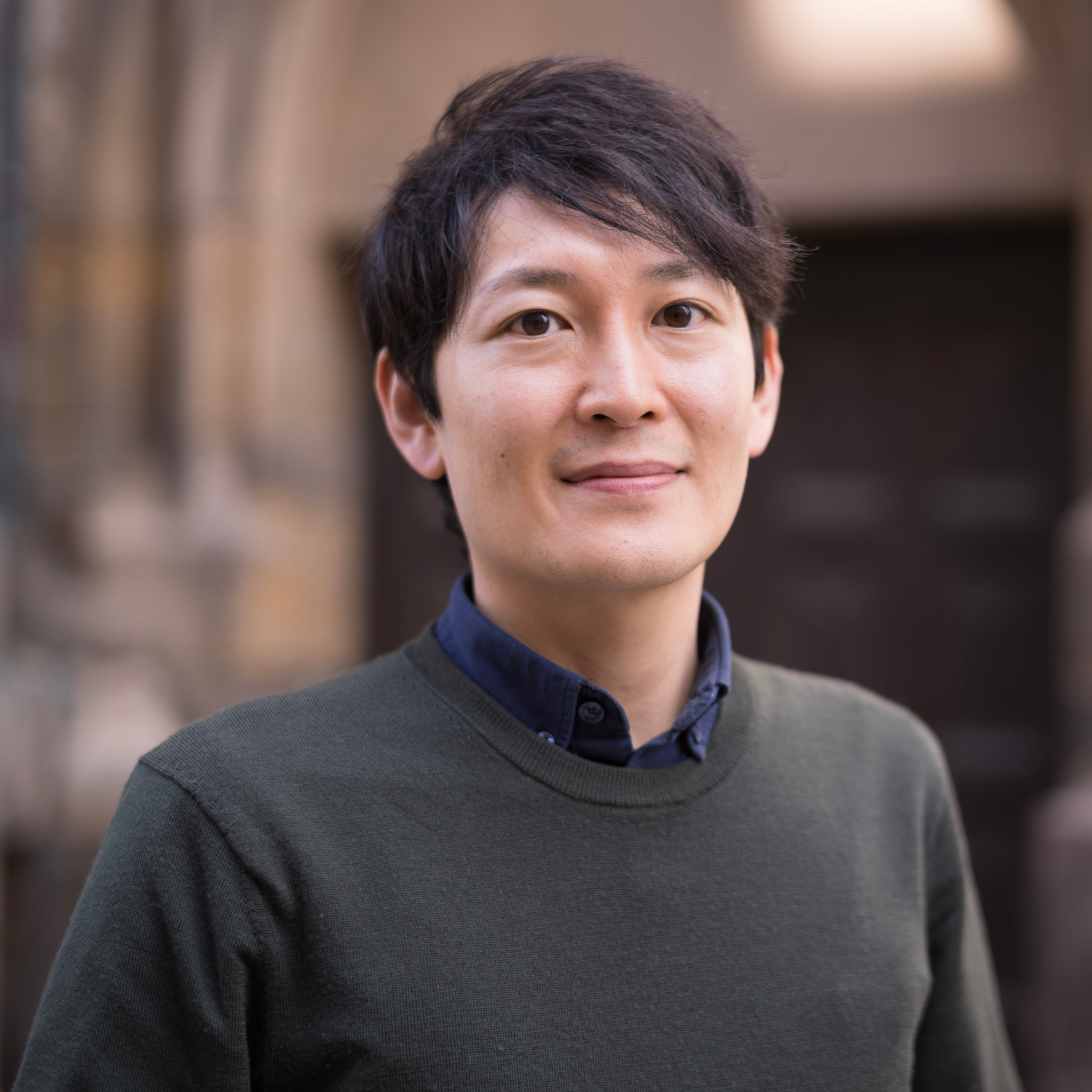
Graduated from Tokyo Gakugei University in 2011. He has studied composition under Elena Mendoza, Klaus Lang, Masahiro Yamauchi, Shioji Kaneda, and Miyuki Shiozaki. In 2013, he traveled to Europe and completed his bachelor's degree at the University of the Arts in Graz with honors and his master's degree at the University of the Arts in Berlin with distinction. He won the international composition competitions Città di Udine (2023) and Torre Della Quarda (2018). He was also a finalist for the Claussen-Simon Composition Award (2023).