About the Edo-Tokyo Traditional Performing Arts Festival
ABOUT US
The Edo Tokyo Traditional Performing Arts Festival, which will begin in 2025, will inherit the Tokyo Metropolitan Arts Festival, which has been popular for over half a century, and will be reborn as a festival specializing in traditional Japanese performing arts such as Noh theater, Japanese dance, traditional Japanese music, vaudeville performances, and folk performing arts.From full-scale stage performances to easy-to-participate, hands-on workshops, it will be enjoyable for a wide range of generations, from children to adults.
Inquiries about the Edo Tokyo Traditional Performing Arts Festival
Edo Tokyo Traditional Performing Arts Festival Executive Committee Secretariat
This moment of art is truly a precious experience.
In this single chant, I feel as if I can hear the ancient principles.
See, art reflects a person's soul.
I'd love to be a comedian as cool as that someday.
I wonder what kind of beautiful world tonight's dance will show us.
The time spent performing arts is an irreplaceable luxury.
This moment of art is truly a precious experience.
In this single chant, I feel as if I can hear the ancient principles.
See, art reflects a person's soul.
I'd love to be a comedian as cool as that someday.
I wonder what kind of beautiful world tonight's dance will show us.
The time spent performing arts is an irreplaceable luxury.
2025.10.24
Sponsored Events
performance
A glimpse into the charms of Shinnai-bushi, Nagauta, and Japanese dance! A live report from the Edo Tokyo Traditional Performing Arts Festival pre-event
Written by: Nakamura Koyori | Photographed by: Shingu Yumi
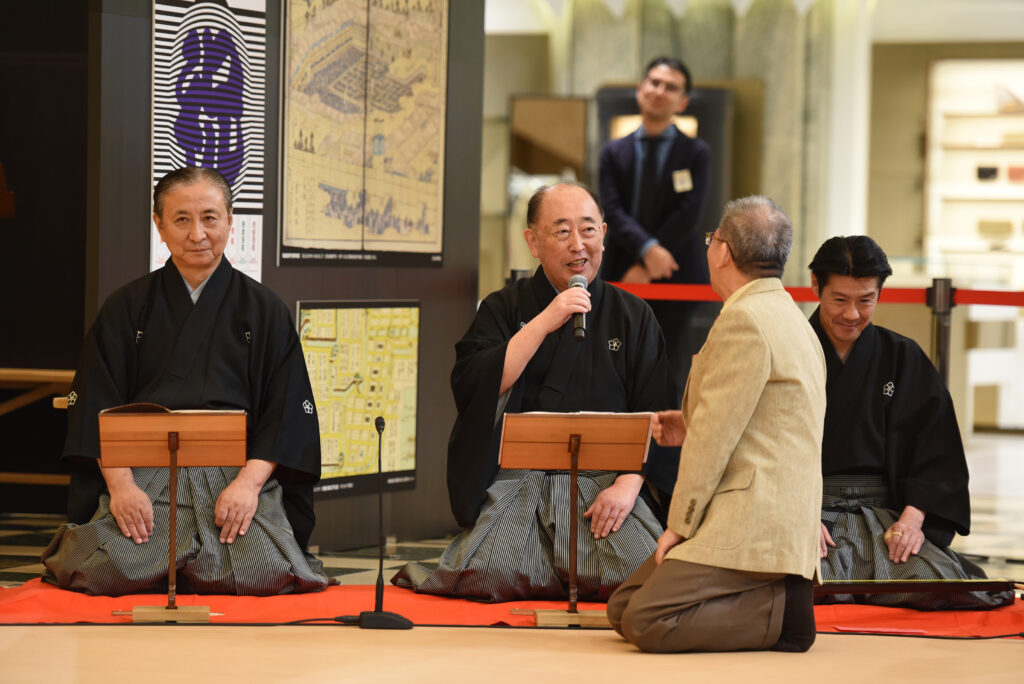
The Edo Tokyo Traditional Performing Arts Festival allows you to experience arts that have been passed down for generations, including Noh, Kabuki, Japanese dance, traditional Japanese music, Gagaku, vaudeville performances, and folk performing arts. As a pre-event, the Flowering Edo Traditional Performing Arts Festival! Let's Get Started!" was held in the central hall of Nihonbashi Mitsukoshi Main Store for three days from Friday, October 24th to Sunday, October 26th. On the first day, a program entitled "The Prosperity of Edo Traditional Music and Dance" was held, introducing Edo traditional music such as Joruri and Nagauta through a mix of demonstrations and talks. We bring you a live report from the event!
Enjoy Shinnai Nagashi as if you were listening to it in the streets of Edo.
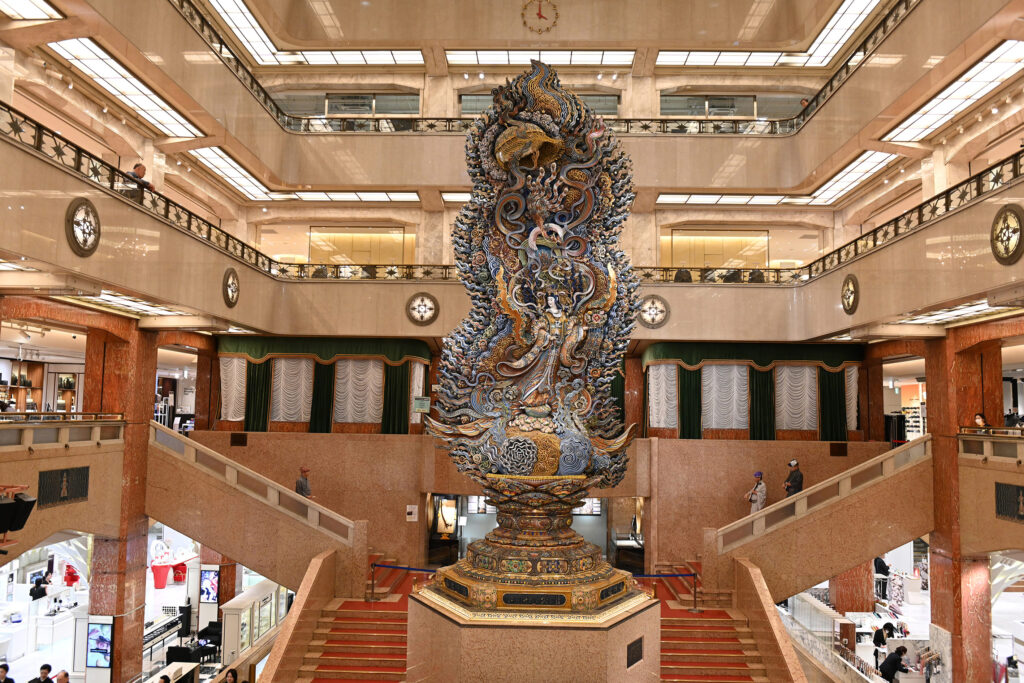
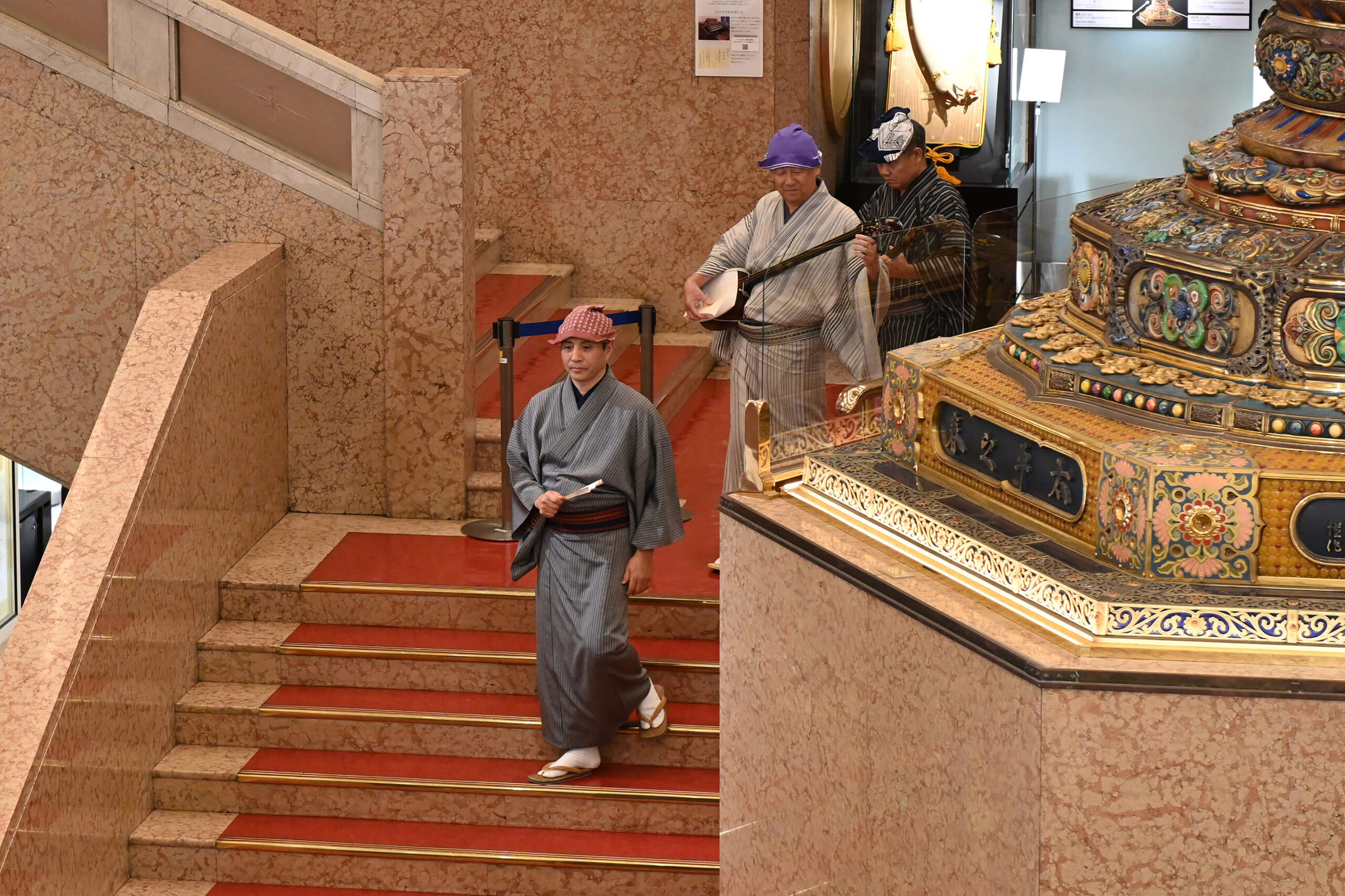
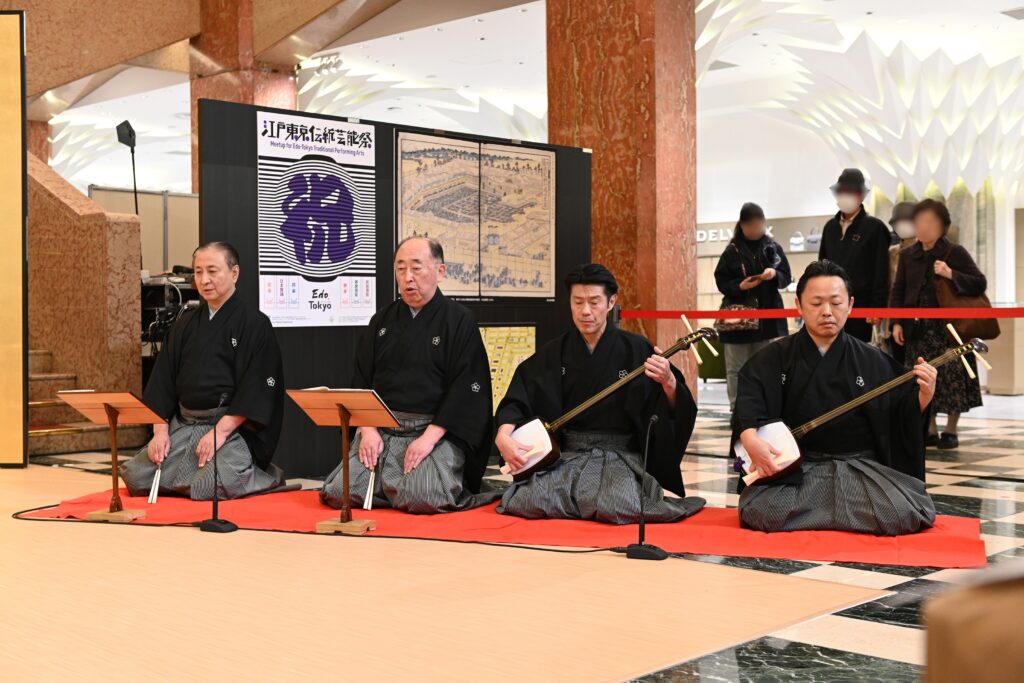
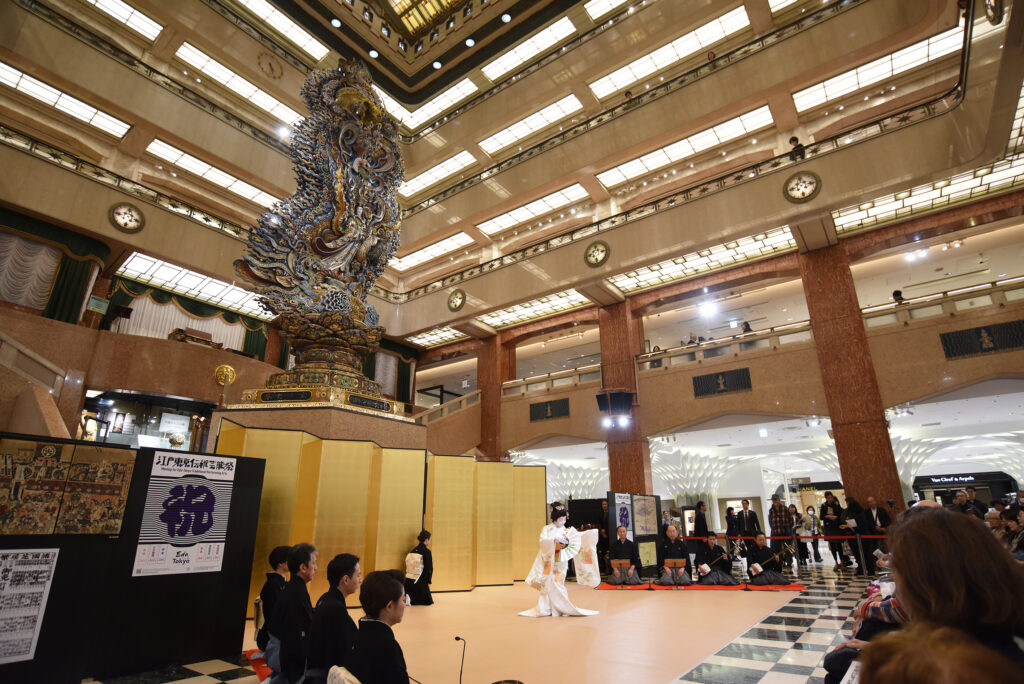
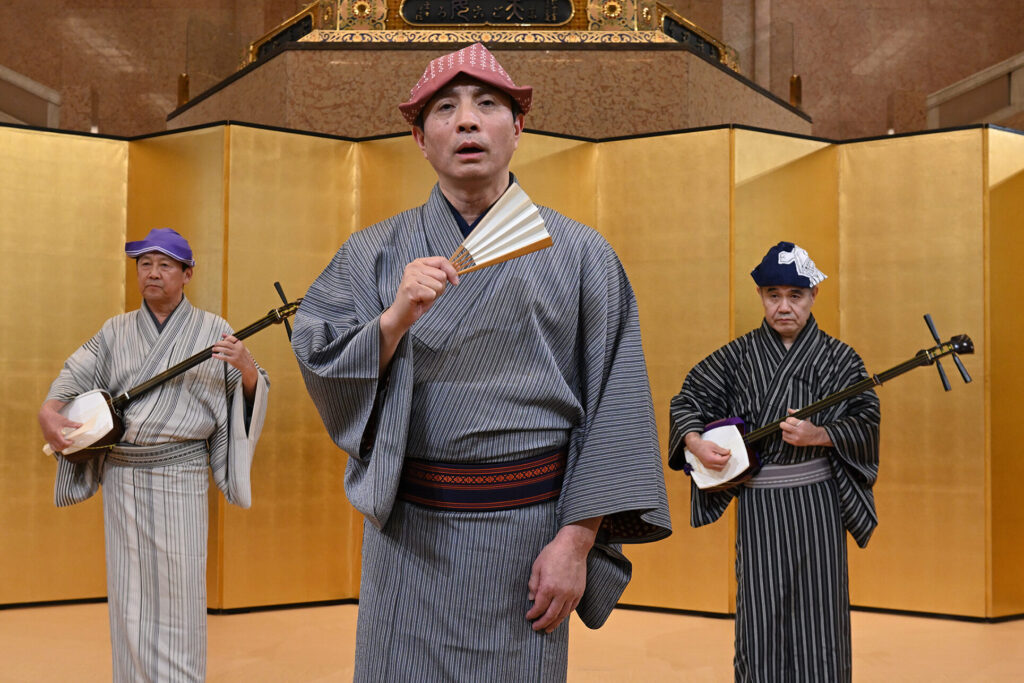
Looking up at the large statue of a heavenly maiden, we enter the central hall, which has an atrium that reaches all the way up to the fifth floor. The sounds of singing and shamisen begin to resonate in the magnificent and luxurious venue. Soon, as classical performing arts commentator Kasai Seiji says, "Please listen to this as if it were the music of an Edo night," a shinnai troupe appears from the stairs! The tayu and the three shamisen players are dressed in kimono and wear hand towels in the Yoshiwara-kaburi style on their heads.
Shinnai-bushi, a type of Joruri storytelling accompanied by shamisen, was performed in the Edo period while walking around town. "Nowadays, we are invited to perform at parties and sometimes even rent out teahouses for performances," said tayu (court conductor) Okamoto Miyanosuke. A distinctive feature of this style is the use of a smaller plectrum (kobachi) than the standard shamisen plectrum. The piece performed was "Rancho - Omiya Kuzetsu." It depicts a scene in which the handsome Rancho falls in love with Konoito, only to be complained about by his wife, Omiya. The plaintive melody of the narrative, accompanied by the gentle sound of the shamisen, creates a delicate and moving sound. The entire audience listened intently.
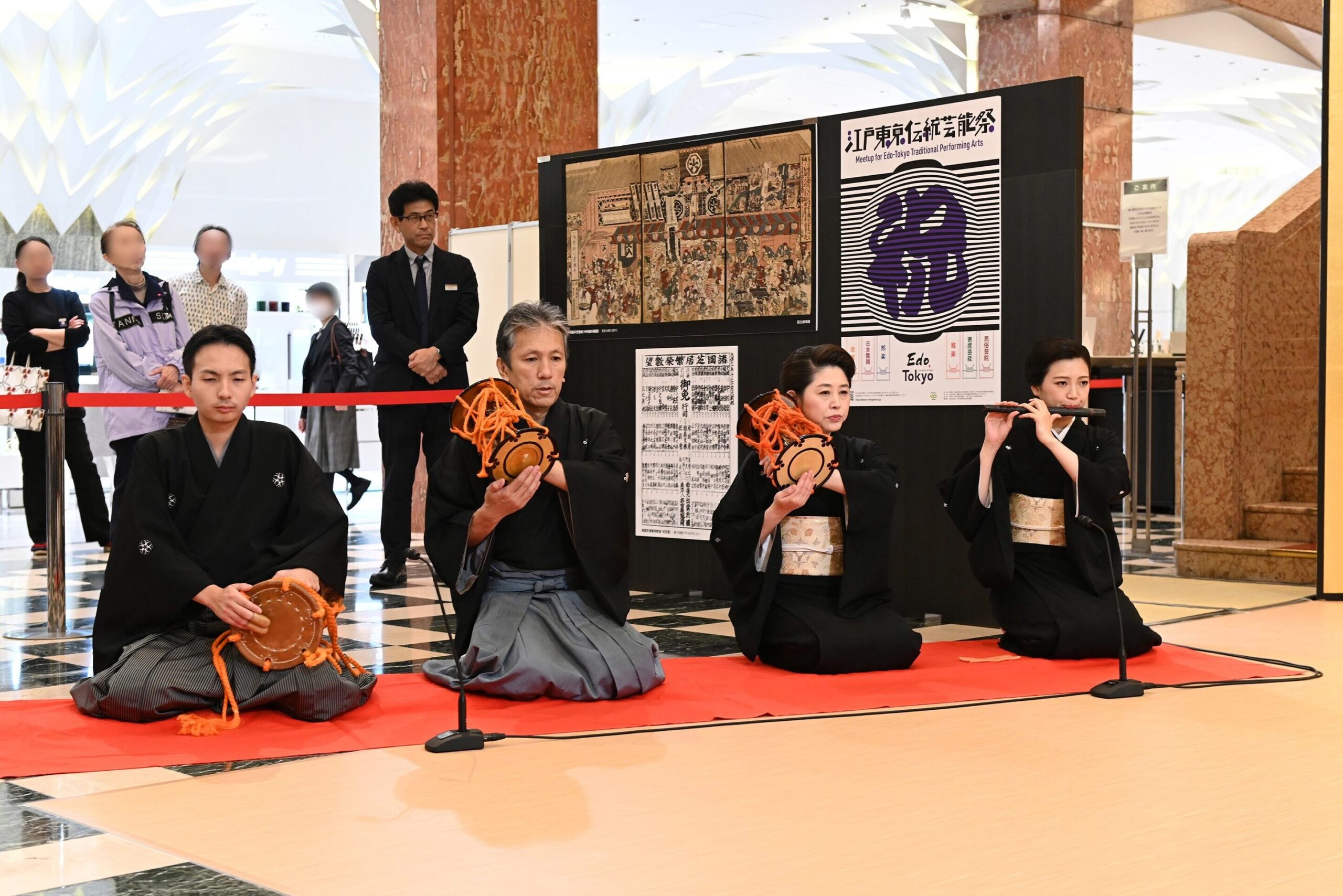
They also performed Nagauta, which became popular as Kabuki music.
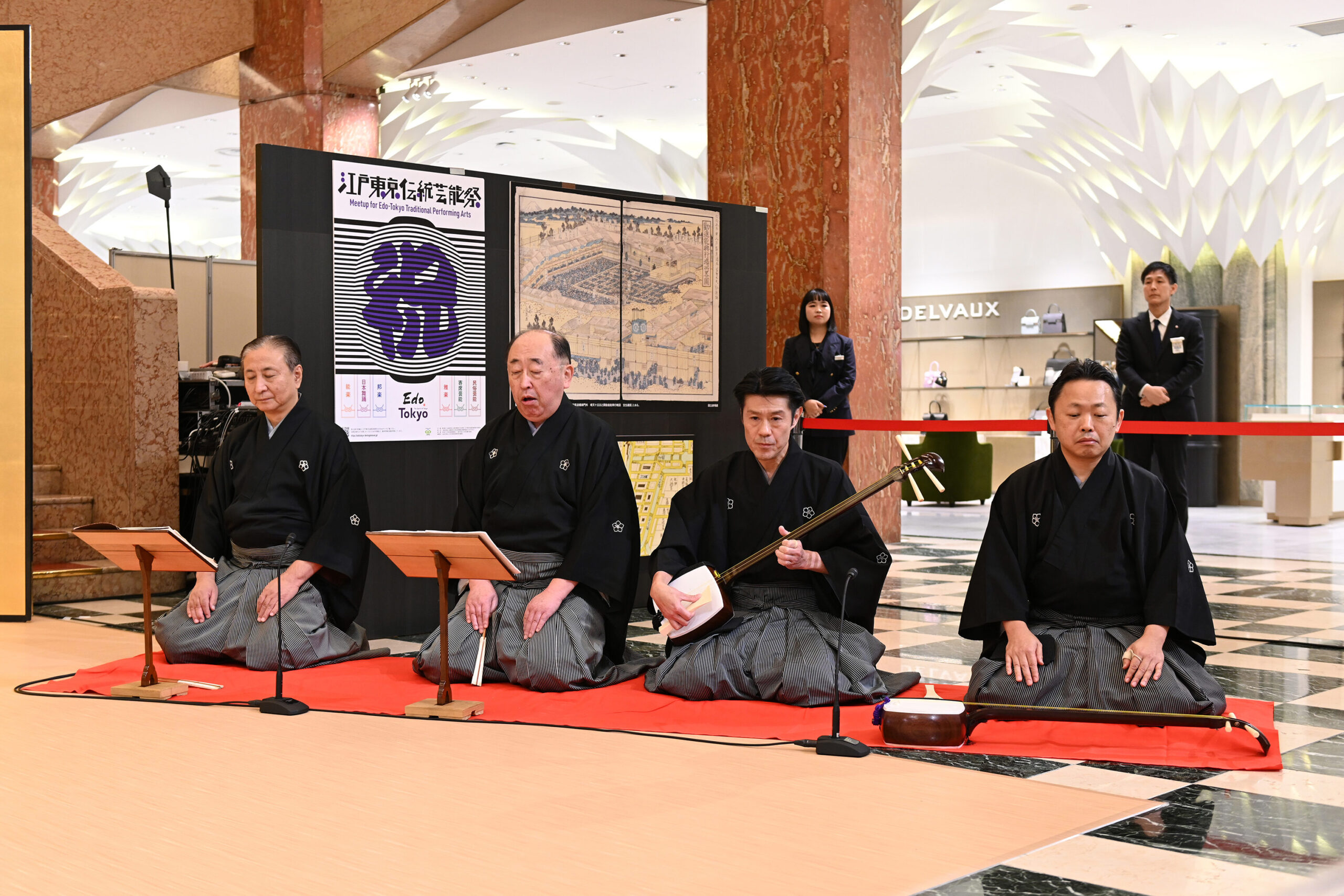
Next up was a performance of Edo-period joruri by Nagauta performers. It was "Osatsuma" from "Kagamijishi." The clear tone and powerful voices, played on a thin-necked shamisen, were overwhelmingly powerful! While joruri tells a story, nagauta developed as an accompaniment to kabuki. In response to Kasai's question, "Is there a difference in the way joruri and nagauta are sung?", singer Toon Nishigaki Kazuhiko replied, "Joruri is more difficult, while nagauta allows you to release your energy." Today was a wonderful opportunity to compare the two styles!
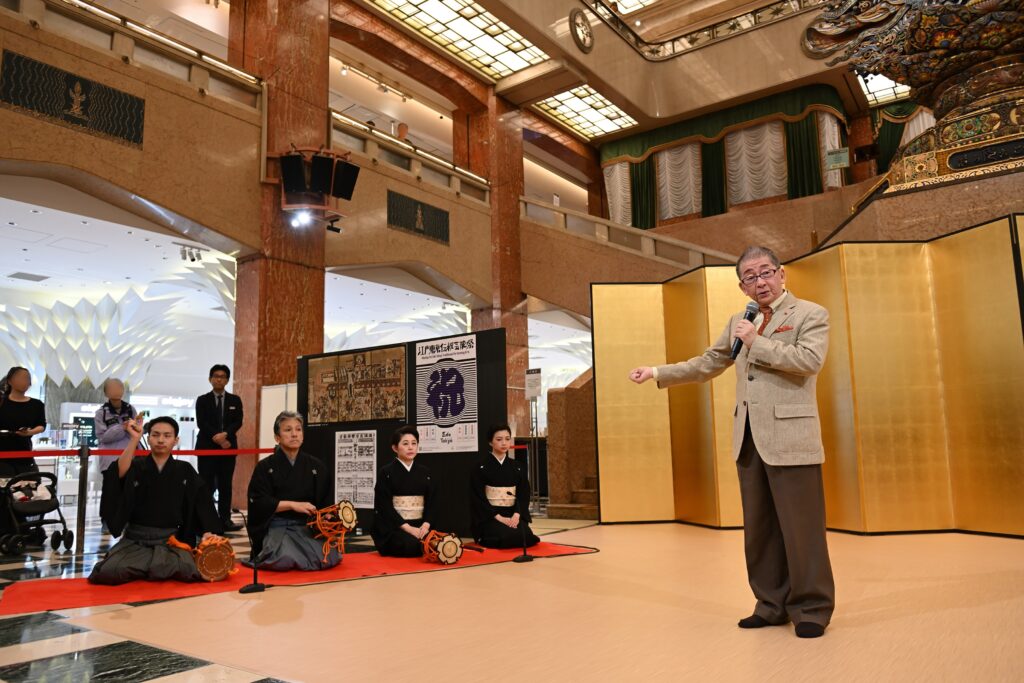
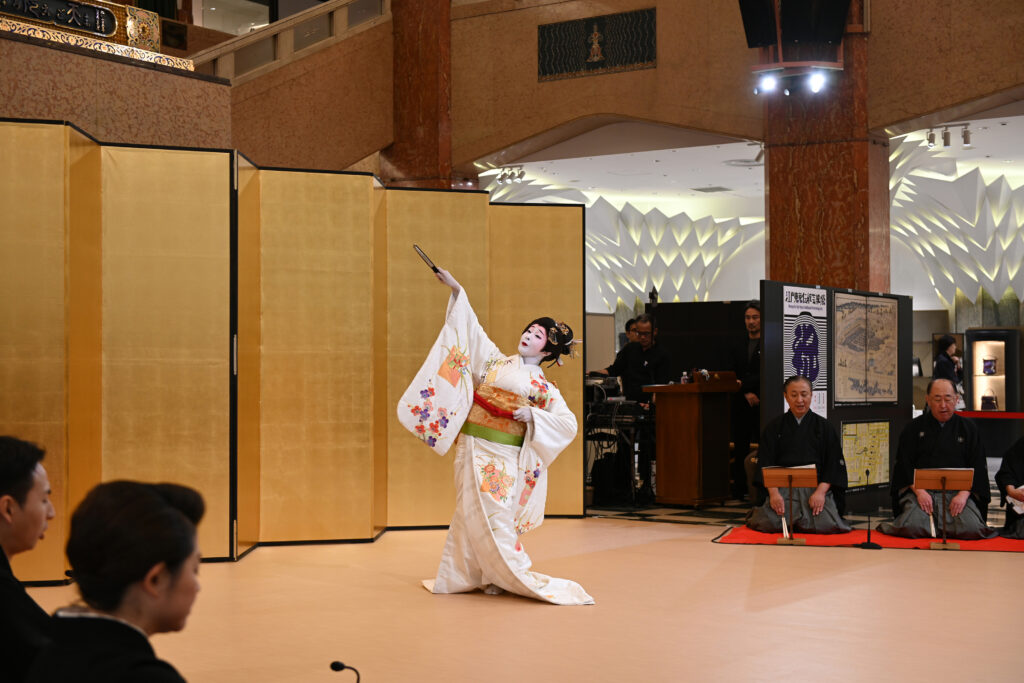
Accompanied by musical accompaniment, they performed a Japanese dance called "Kimigayo Shochikubai." This time, they performed the pine and plum section of the pine tree, which includes a dance by a heavenly maiden. "I am very happy to have had the opportunity to dance in front of this historic statue of the Heavenly Maiden," said Wakayagi Kyoko. There are many schools of Japanese dance, and "this time we danced to the Azuma-ryu choreography instead of the Wakayagi-ryu. I hope you enjoy the cute choreography that is unique to the Azuma-ryu."
Kasai also explained how the addition of the ohayashi music made the sound much more vibrant. "Shamisen and tsuzumi have in common that they both have leather stretched on both sides of a wooden body. While the shamisen is a stringed instrument, it also has elements of a percussion instrument," he said.
The finale will be the popular Kabuki play "Kanjincho" --
The final piece performed on the day was "Kanjincho," a Kabuki masterpiece and popular Nagauta piece. "It's one of the most popular Kabuki pieces, but that's because of the dramatic performance of Nagauta and the ohayashi," said Kasai. Based on the Noh piece "Ataka," the shamisen joined in midway through, creating a tense and powerful performance that brought the excitement to a climax! The entire central hall of Nihonbashi Mitsukoshi Main Store was filled with applause as the "Prosperity of Edo Japanese Music and Dance" event came to a close.
A look into the world of traditional Japanese music and dance - Information on noteworthy performances this spring
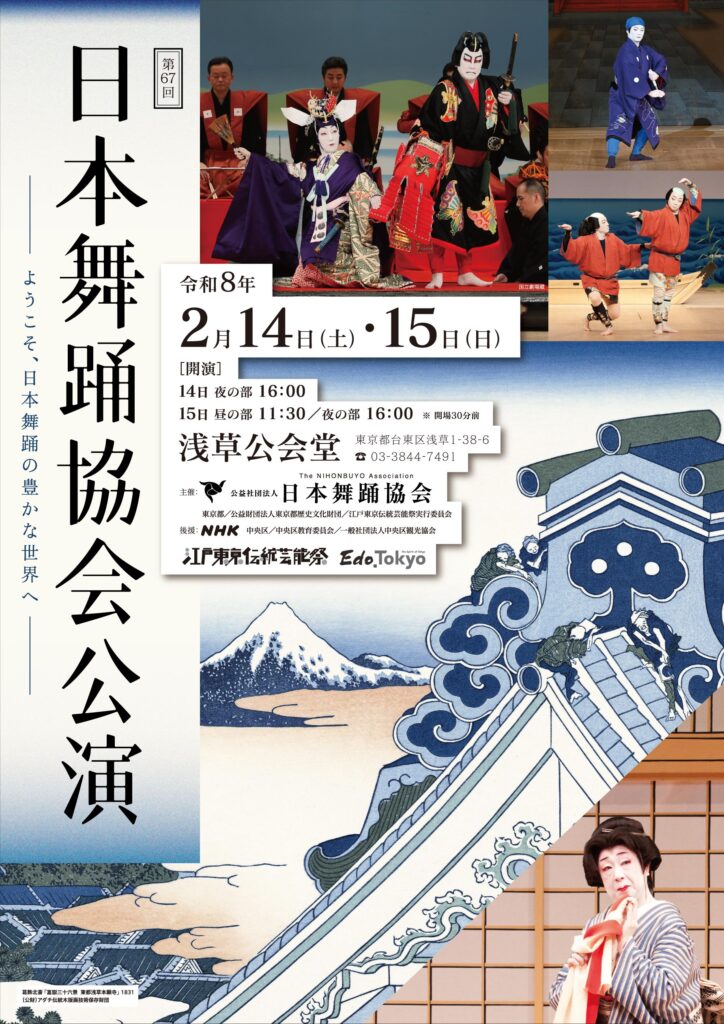
Upcoming performances are planned as part of the Edo Tokyo Traditional Performing Arts Festival: The 67th Japanese Dance Association Performance (February 14 and 15, 2026, Asakusa Public Hall) and the 55th Japanese Music Concert (March 7, 2026, Mitsukoshi Theater).
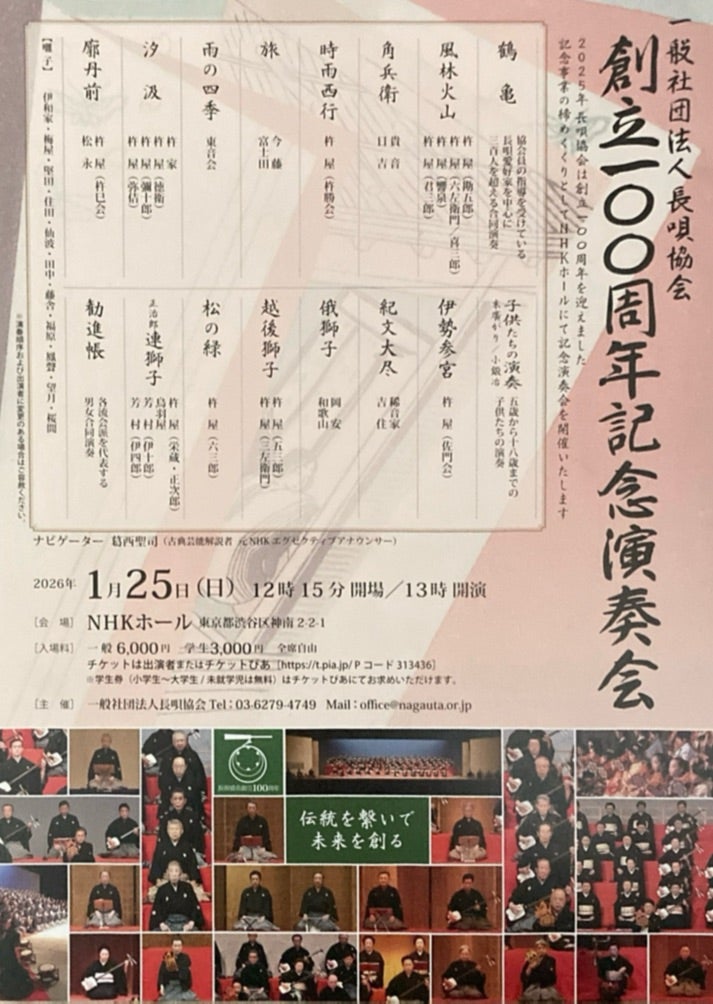
Also planned are a Shinnai-bushi concert, a Japanese music performance sponsored by the National Theater, and a concert by the Nagauta Association, which will celebrate its 100th anniversary in 2026. Shinnai-bushi Okamoto Miyanosuke's Performance (December 14, 2025, Asakusa Public Hall) , a Japanese Music Performance (January 24, 2026, New National Theater), and a Nagauta Association Commemorative Concert (January 25, 2026, NHK Hall).
This rare opportunity to enjoy a performance up close while listening to commentary is a rare treat, and the power of the live voices and sounds, along with the intense tension that permeates the venue, make for a truly special experience. Even if you're not familiar with Japanese music, this is a chance to fully appreciate a part of its appeal. With more knowledge gained, you'll want to attend a performance or concert. If you're even slightly interested, why not check out the performance information?
The 67th Japanese Dance Association Performance
Held at Asakusa Public Hall on Saturday and Sunday, February 14th and 15th, 2026!
Over two days, you can enjoy
a wide variety of performances unique to Japanese dance, from popular classical dance to modern and contemporary creative dance, and even Kamigata dance From veterans to young artists in the Japanese dance world, leading dancers from various schools will perform together.
Come to the theater and enjoy the rich charm of Japanese dance, which has been vibrantly passed down to the present day
Born in Tokyo in 1993 and raised in Hokkaido. Writes articles about walking around town and listening to stories of shops in monthly magazines such as "Stroll Master." His hobby of looking at topographical maps and old maps has led him to study Edo culture.
Edo Tokyo Traditional Performing Arts Festival - Event Pickup -
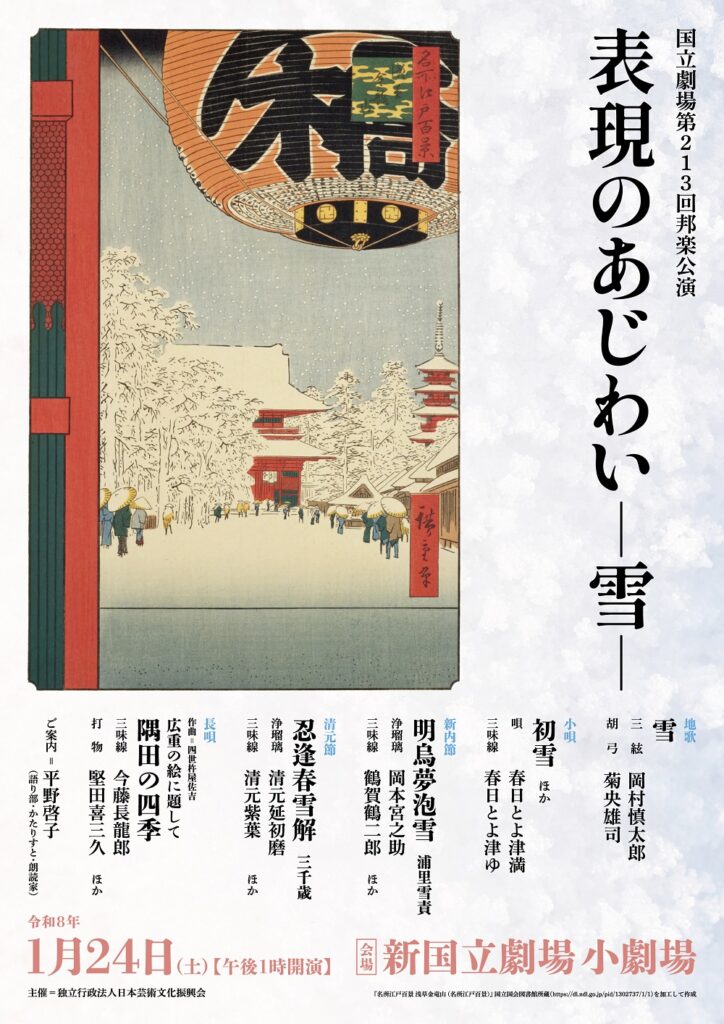
National Theatre's 213th Japanese Music Performance: Taste of Expression – Snow –
will be held at the New National Theatre Small Theatre on Saturday, January 24, 2026! This performance will allow you to fully appreciate the expressive mechanisms of traditional Japanese music. Please enjoy the melody that symbolizes snow accompanied by a guided performance by Keiko Hirano.