About the Edo-Tokyo Traditional Performing Arts Festival
ABOUT US
The Edo Tokyo Traditional Performing Arts Festival, which will begin in 2025, will inherit the Tokyo Metropolitan Arts Festival, which has been popular for over half a century, and will be reborn as a festival specializing in traditional Japanese performing arts such as Noh theater, Japanese dance, traditional Japanese music, vaudeville performances, and folk performing arts.From full-scale stage performances to easy-to-participate, hands-on workshops, it will be enjoyable for a wide range of generations, from children to adults.
Inquiries regarding the Edo Tokyo Traditional Performing Arts Festival in general
Edo Tokyo Traditional Performing Arts Festival Executive Committee Secretariat
This moment of art is truly a precious experience.
In this single chant, I feel as if I can hear the ancient principles.
See, art reflects a person's soul.
I'd love to be a comedian as cool as that someday.
I wonder what kind of beautiful world tonight's dance will show us.
The time spent performing arts is an irreplaceable luxury.
This moment of art is truly a precious experience.
In this single chant, I feel as if I can hear the ancient principles.
See, art reflects a person's soul.
I'd love to be a comedian as cool as that someday.
I wonder what kind of beautiful world tonight's dance will show us.
The time spent performing arts is an irreplaceable luxury.
2025.12.25
Sponsored Events
performance
Experience Gagaku in the sky! Live report on "Tokyo Tower Gagaku in the Sky"
Written by: Naoko Hasegawa (Secretary General of the Gagaku Association) | Photos by: Kota Sugawara
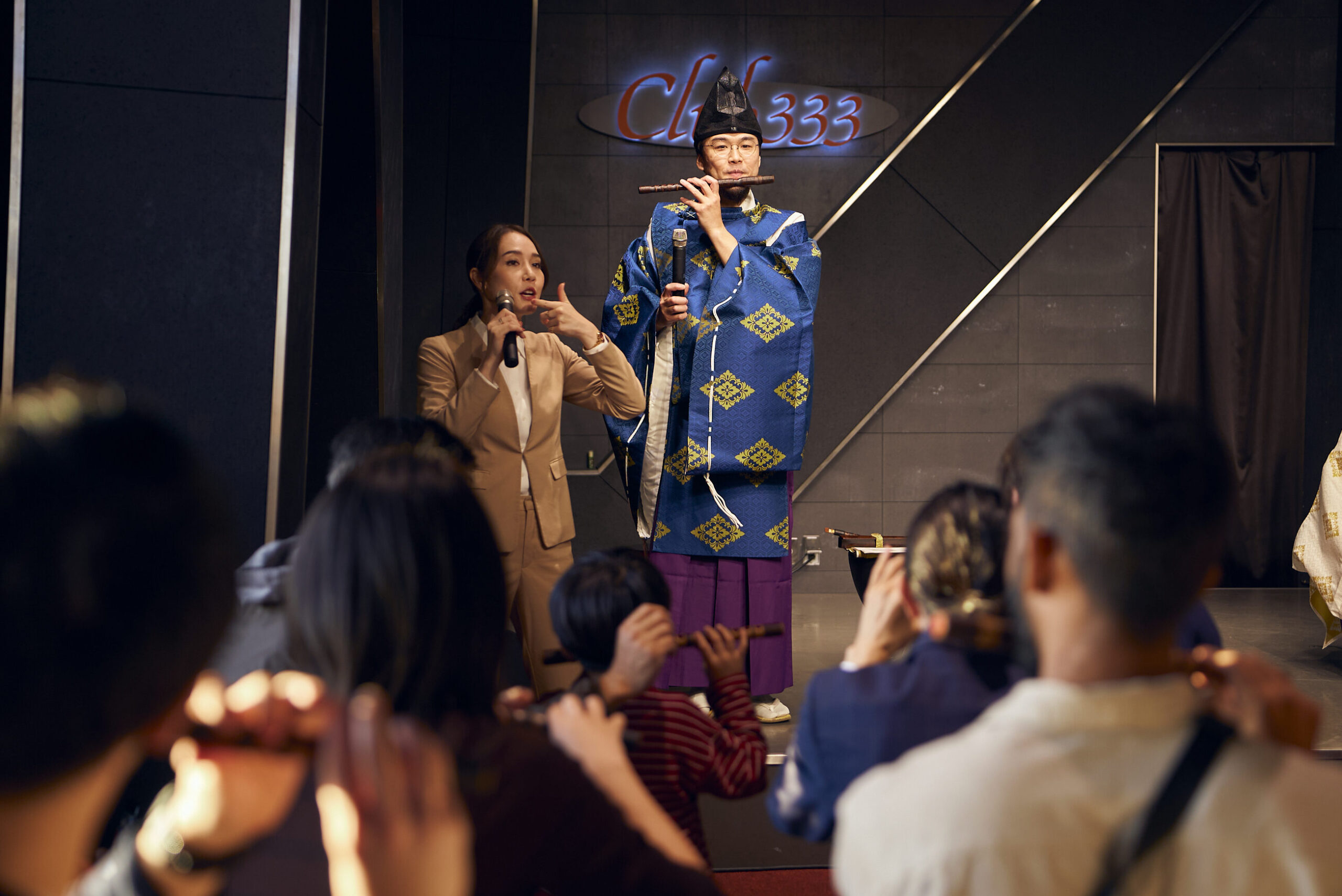
The Edo Tokyo Traditional Performing Arts Festival allows you to experience arts that have been passed down for generations, including Noh, Kabuki, Japanese dance, traditional Japanese music, Gagaku, vaudeville performances, and folk performing arts. As a pre-event, "Tokyo Tower Gagaku in the Sky" was held on Monday, November 24th (a holiday) at Club333 on the first floor of Tokyo Tower's main deck. This event introduced Gagaku through performances, talks, and even instrument experiences. We bring you a report on the moment that unfolded in this special space in the sky!
The sounds of gagaku music spread across the sky —
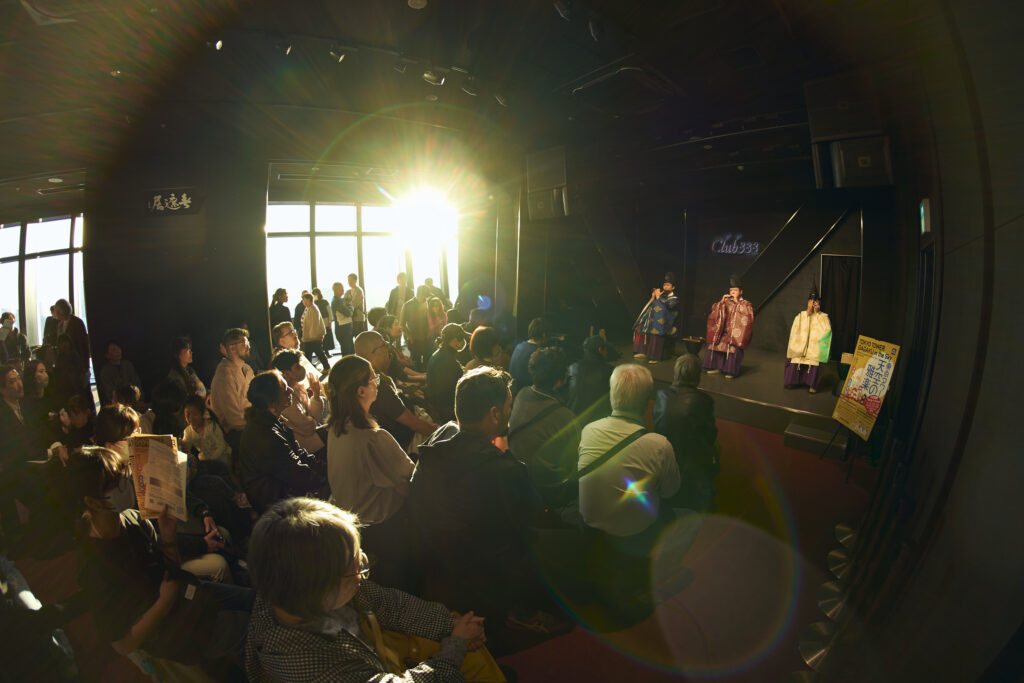
On a clear, refreshing autumn day in November, "Tokyo Tower Gagaku in the Sky" was held at Club333, the main deck of Tokyo Tower, which is 150 meters high. With the Tokyo cityscape spreading out below, visitors gathered to enjoy Gagaku music, and the venue quickly filled to capacity. The program began in an extraordinary atmosphere, overlooking the high sky and cityscape
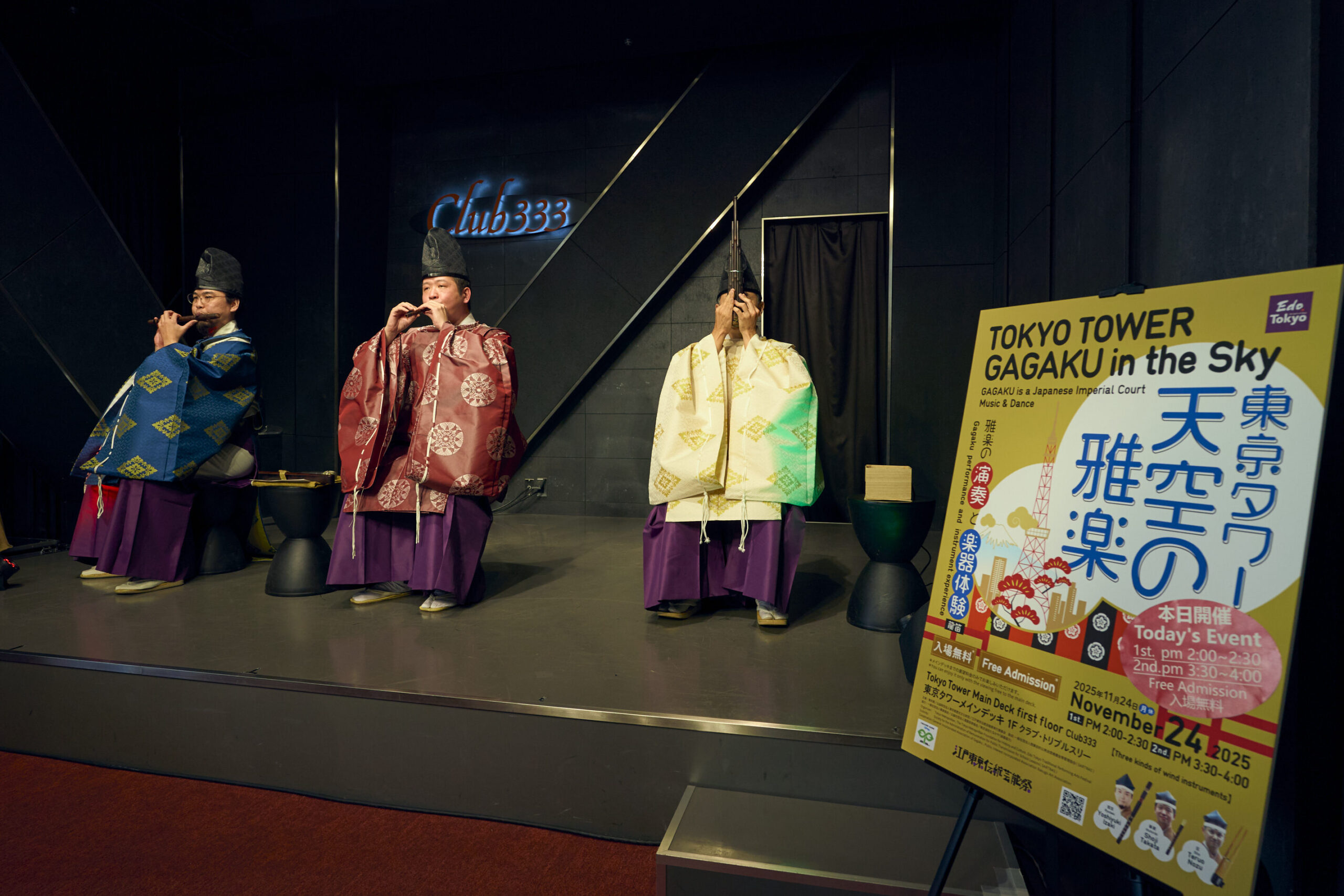
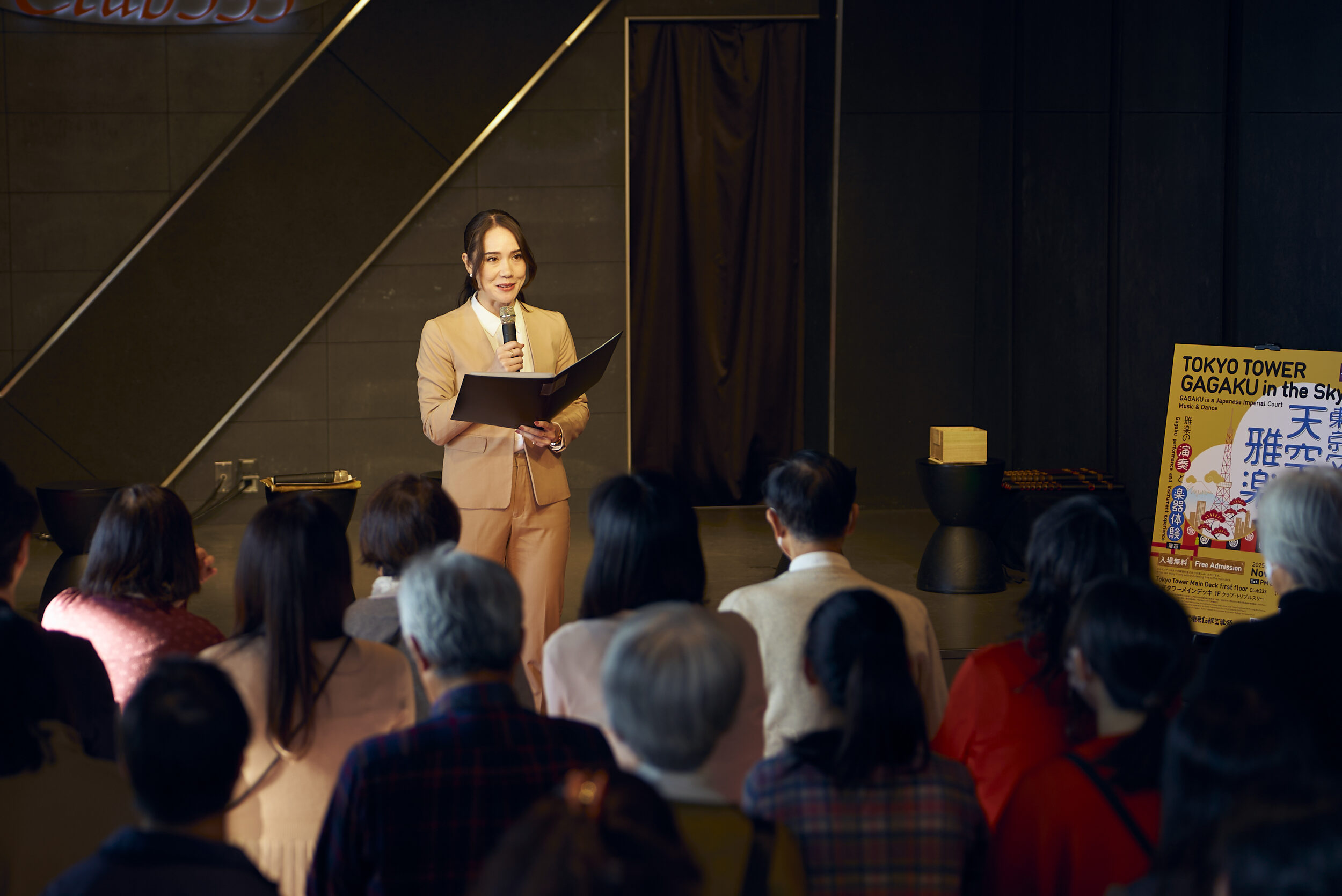
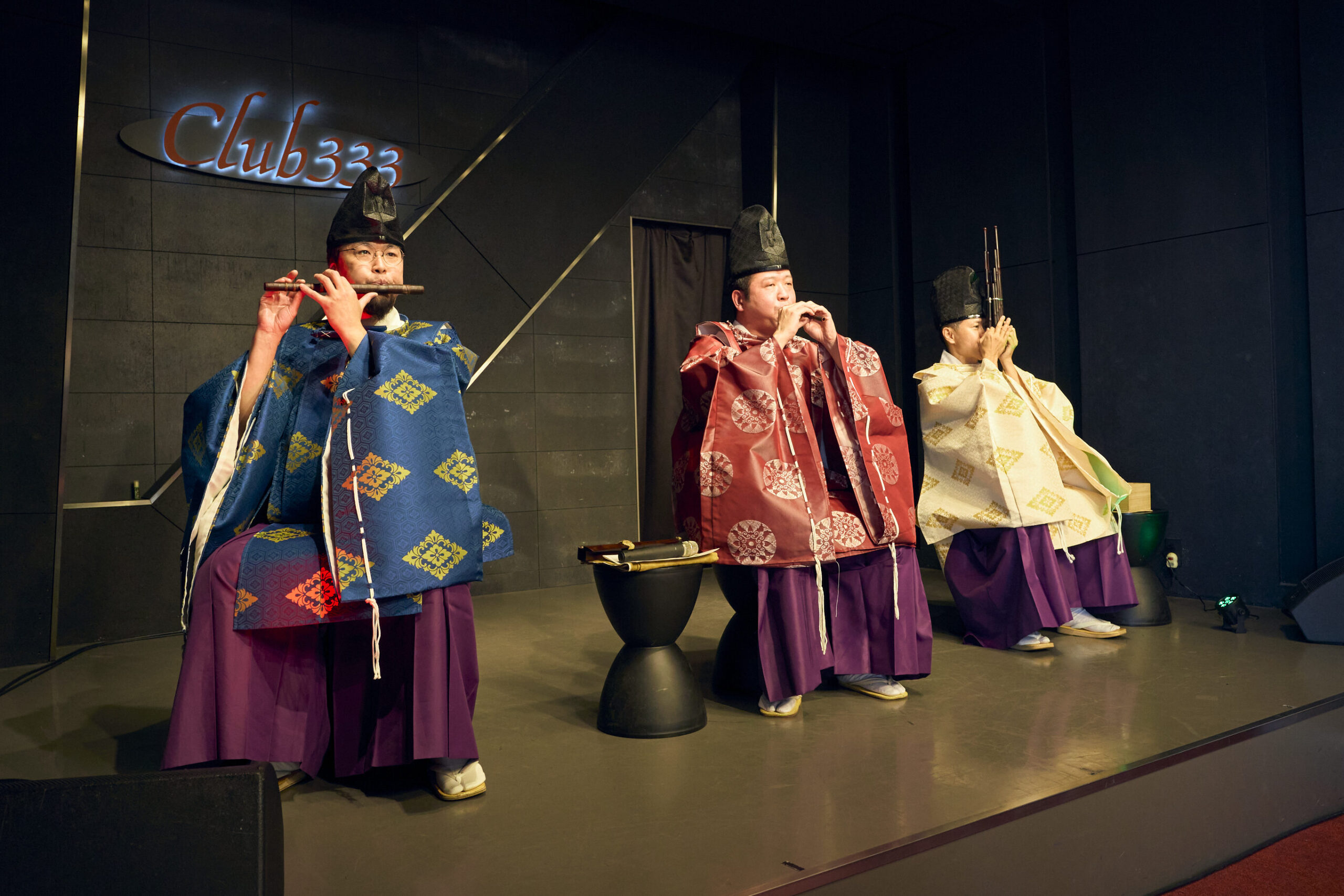
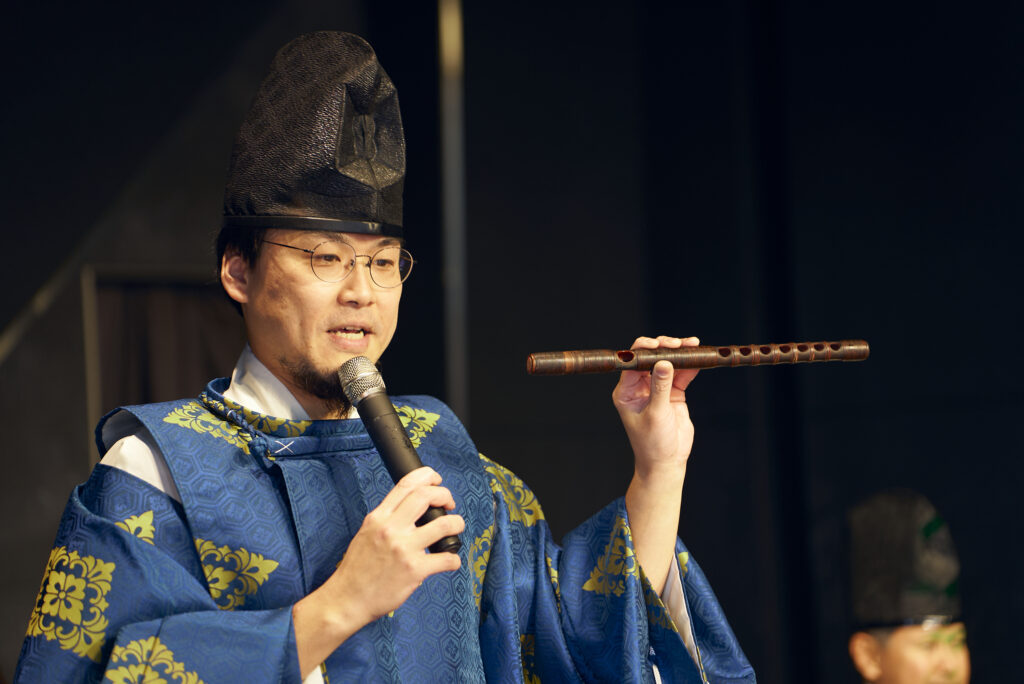
With the words of Duncan Remi, Japanese-English interpreter and host, "We will present Gagaku, Japan's oldest traditional performing art, handed down for approximately 1,300 years," three performers in vibrant kariginu (traditional Japanese hunting attire) appeared on stage. They held three wind instruments: the sho, hichiriki, and ryuteki. The sho was played by Teruo Nozu, the hichiriki by Shoji Takada, and the ryuteki by Yoshiyuki Izaki. The first piece performed was "Yusei," the first piece from the suite "Spring Nightingale Song." It is said that "Spring Nightingale Song" was composed by an ancient Chinese king after hearing the song of a Japanese bush warbler. Beginning with a beautiful flute melody, a bright, carefree performance reminiscent of the song of a playful nightingale filled the venue. The free-flowing rhythm of the intertwining sho, hichiriki, and ryuteki flutes perfectly embodied the title "Gagaku in the Sky." The sound seemed to blend into the clear autumn sky, filling the main deck.
Learn about the world of gagaku through video and talks ——
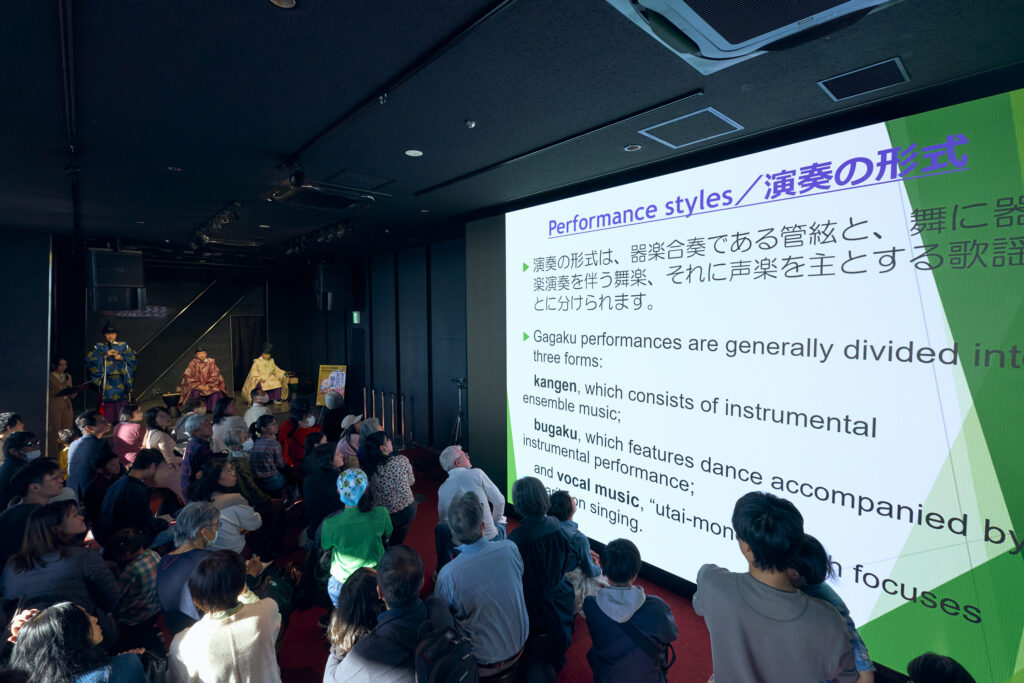
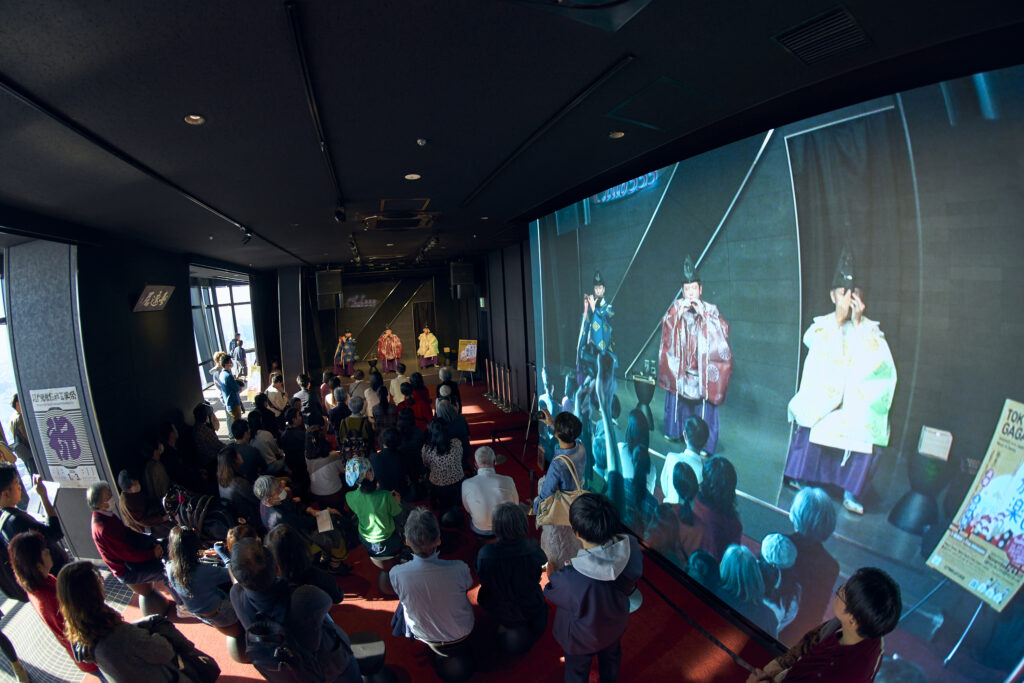
Next, Izaki gave a talk on gagaku music using the large monitors in the venue. "Gagaku is a performing art that was perfected during the Heian period, combining ancient Japanese songs and dances with music and dances introduced from the ancient Asian continent and adapted to Japanese culture," he explained. Instruments were displayed across the entire screen, providing clear introductions to the sho, which produces sound when blown or sucked; the hichiriki, which produces an unimaginable volume despite its small size of just 15cm; and the ryūteki, a simple flute made of perforated bamboo. The next piece was "Juha" from "Haru no Uguisu Zuzu." In contrast to the free-rhythm "Yusei," this piece has a set beat. This piece, with its colorful melody reminiscent of a nightingale's song, will be performed in a lighter, slightly more aggressive style, rather than the standard, leisurely tempo. The entire audience, 150 meters above the ground, listened intently to the sounds of gagaku music.
The charm of gagaku, experienced through sound —
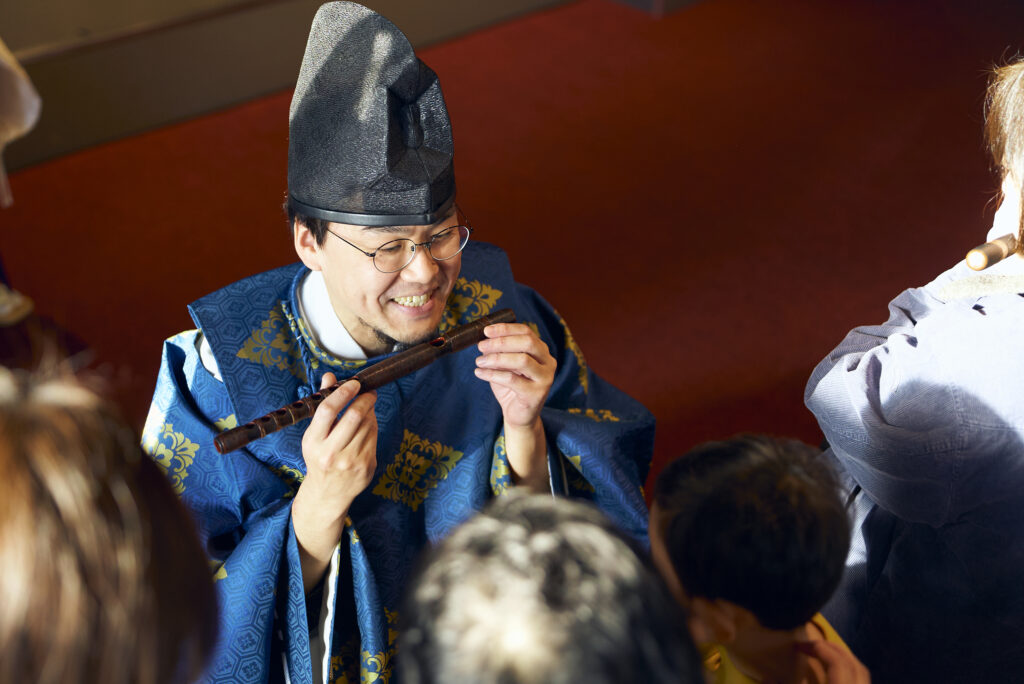
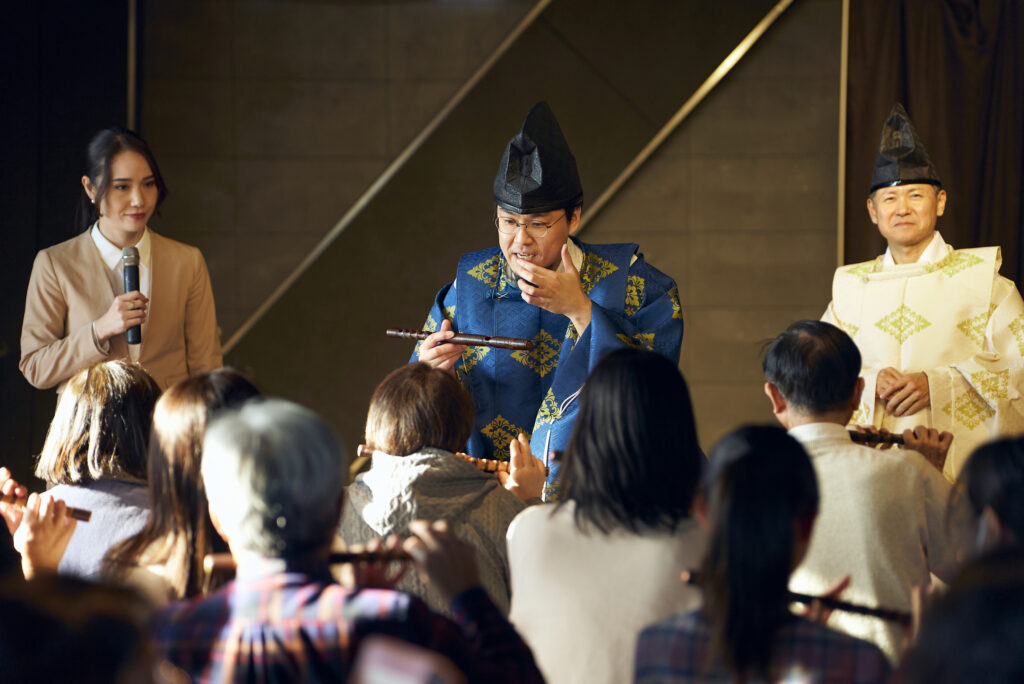
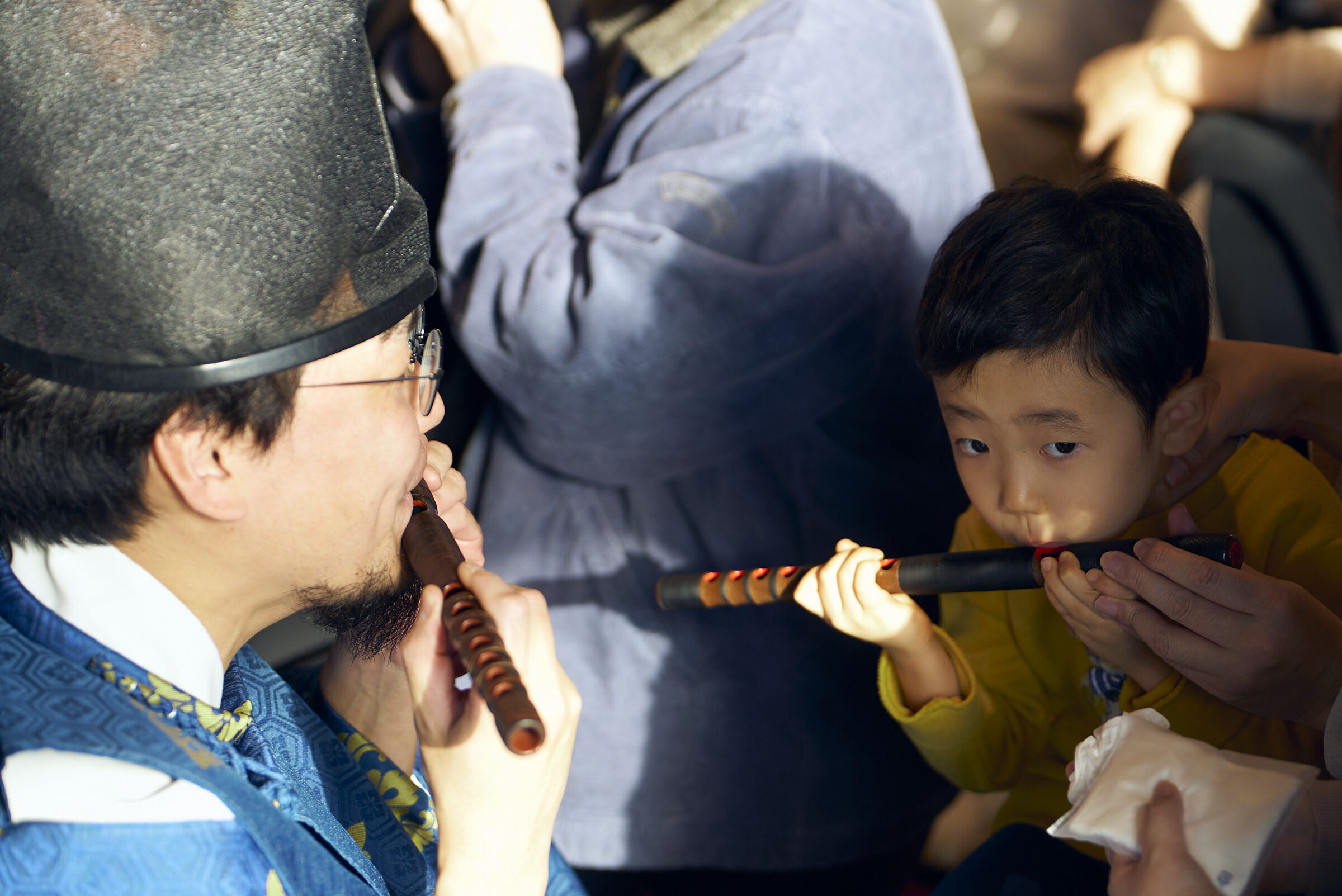
And finally, the event ended with a chance to try out the Ryuteki flute, which is said to sound like the roar of a dragon soaring through the sky! There were many inbound visitors at the venue, and everyone, from adults to children, picked up a Ryuteki flute. "The Ryuteki flute is a difficult instrument to play," said Izaki, as he carefully gave advice on how to blow into it. The moment the sound came out, smiles spread all around. It was a final event that brought Gagaku, said to be the origin of Japanese performing arts, much closer to home
A look into the world of gagaku— Notable performance information this spring—
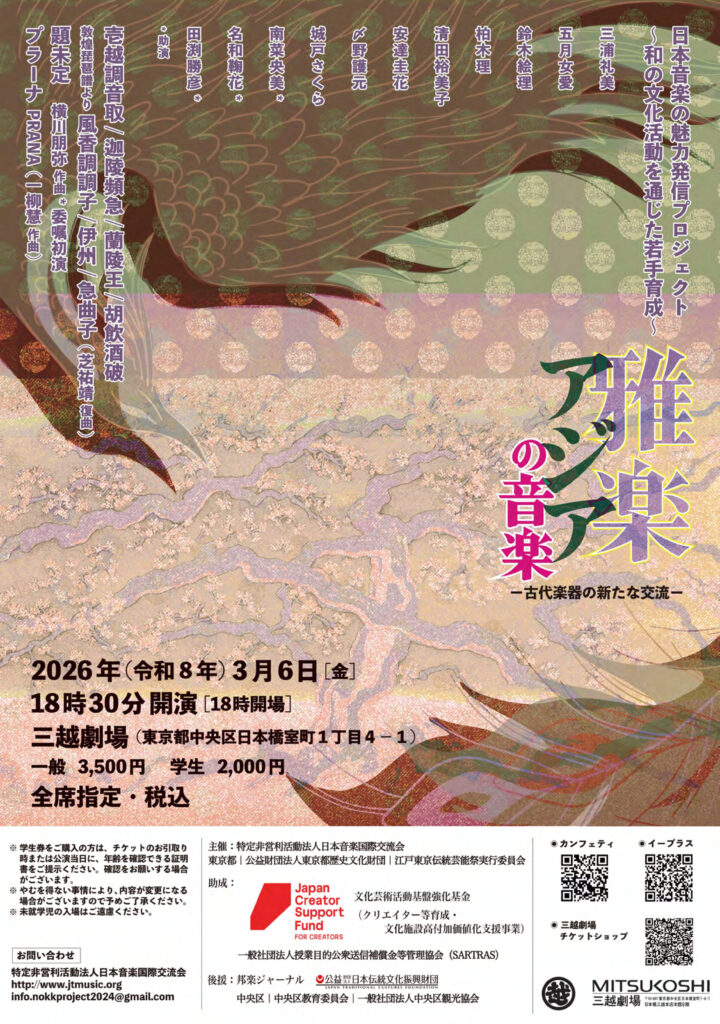
Gagaku was once not a popular art form, but rather performed as ceremonial music at the Imperial Court and temples and shrines. Today, it can be enjoyed in a variety of places, including theaters. On March 6, 2026, as part of the Edo Tokyo Traditional Performing Arts Festival, Mitsukoshi Theater will host "Gagaku and Asian Music: A New Exchange of Ancient Instruments." This is a chance for those who have never heard gagaku to experience its charm! Don't miss it!
Gagaku and Asian Music : A New Exchange of Ancient Instruments
Held at Mitsukoshi Theater on Friday, March 6, 2026! Gagaku, a form of music with over a thousand years of history, was introduced to Japan from ancient Asia and has developed in a variety of ways over the years. This performance will bring together young, talented musicians who will carry on the tradition, performing a wide range of pieces, from classics to contemporary commissioned works. Please enjoy the Asian sounds woven by these young performers to your heart's content.
Secretary General of the Gagaku Association. Graduated with a Master's degree in Aesthetics and Art History (Arts Management) from the Graduate School of Letters, Keio University. He is busy every day trying to contribute to improving the environment surrounding Japanese culture and the arts. He has great respect for Gagaku, which has a history of over 1,000 years and has influenced various traditional performing arts in Japan.