About the Edo-Tokyo Traditional Performing Arts Festival
ABOUT US
The Edo Tokyo Traditional Performing Arts Festival, which will begin in 2025, will inherit the Tokyo Metropolitan Arts Festival, which has been popular for over half a century, and will be reborn as a festival specializing in traditional Japanese performing arts such as Noh theater, Japanese dance, traditional Japanese music, vaudeville performances, and folk performing arts.From full-scale stage performances to easy-to-participate, hands-on workshops, it will be enjoyable for a wide range of generations, from children to adults.
Inquiries about the Edo Tokyo Traditional Performing Arts Festival
Edo Tokyo Traditional Performing Arts Festival Executive Committee Secretariat
This moment of art is truly a precious experience.
In this single chant, I feel as if I can hear the ancient principles.
See, art reflects a person's soul.
I'd love to be a comedian as cool as that someday.
I wonder what kind of beautiful world tonight's dance will show us.
The time spent performing arts is an irreplaceable luxury.
This moment of art is truly a precious experience.
In this single chant, I feel as if I can hear the ancient principles.
See, art reflects a person's soul.
I'd love to be a comedian as cool as that someday.
I wonder what kind of beautiful world tonight's dance will show us.
The time spent performing arts is an irreplaceable luxury.
2025.10.26
Sponsored Events
performance
Learn about the profound world of Kabuki and experience the sounds that color it! A live report from the Edo Tokyo Traditional Performing Arts Festival pre-event
Written by: Nakamura Koyori | Photographed by: Shingu Yumi
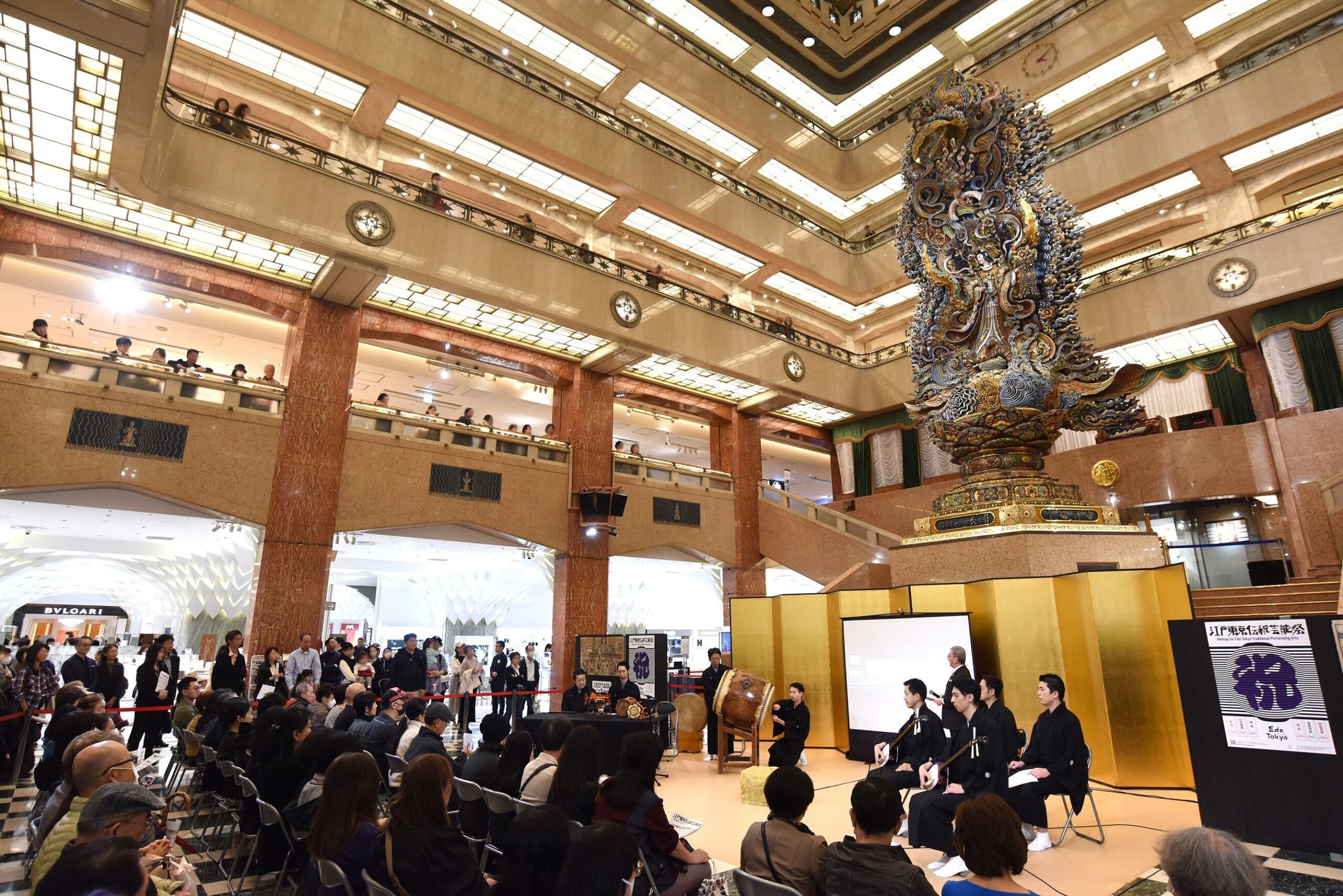
The Edo Tokyo Traditional Performing Arts Festival allows you to experience arts that have been passed down for generations, including Noh, Kabuki, Japanese dance, traditional Japanese music, gagaku, vaudeville, and folk performing arts. As a pre-event, the "Flowering Edo Traditional Performing Arts Festival! Let's Get Started!" was held in the central hall of Nihonbashi Mitsukoshi Main Store over three days from Friday, October 24th to Sunday, October 26th. The theme of the third day was "The Charm of Kabuki, Its Music, and the Theater." We bring you a live report of the talk events that delved into the appeal of Kabuki, with guests including a Kabuki actor for the first session and a Kabuki music performer for the second session!
The history of Nihonbashi's theaters and Mitsukoshi
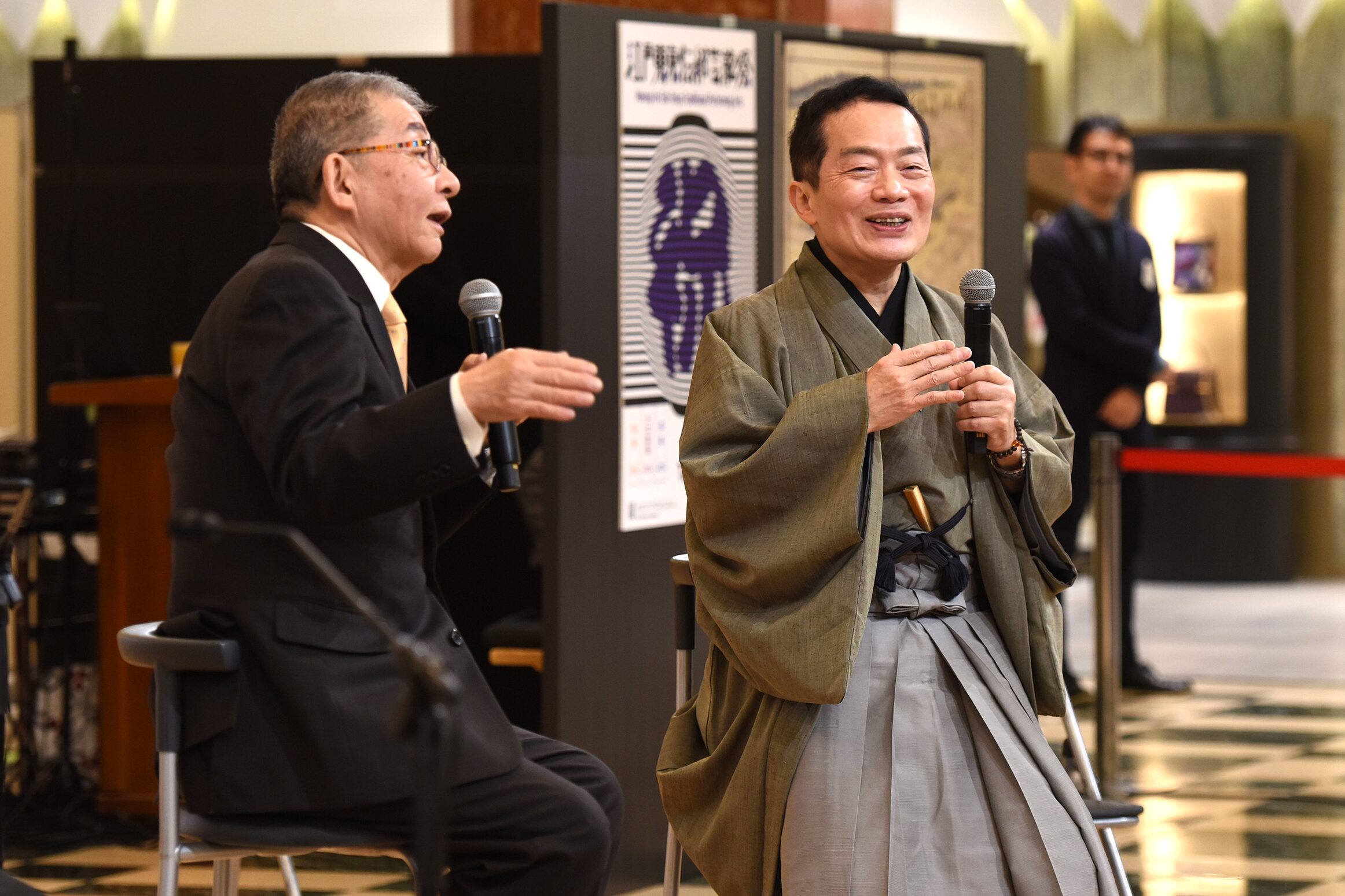
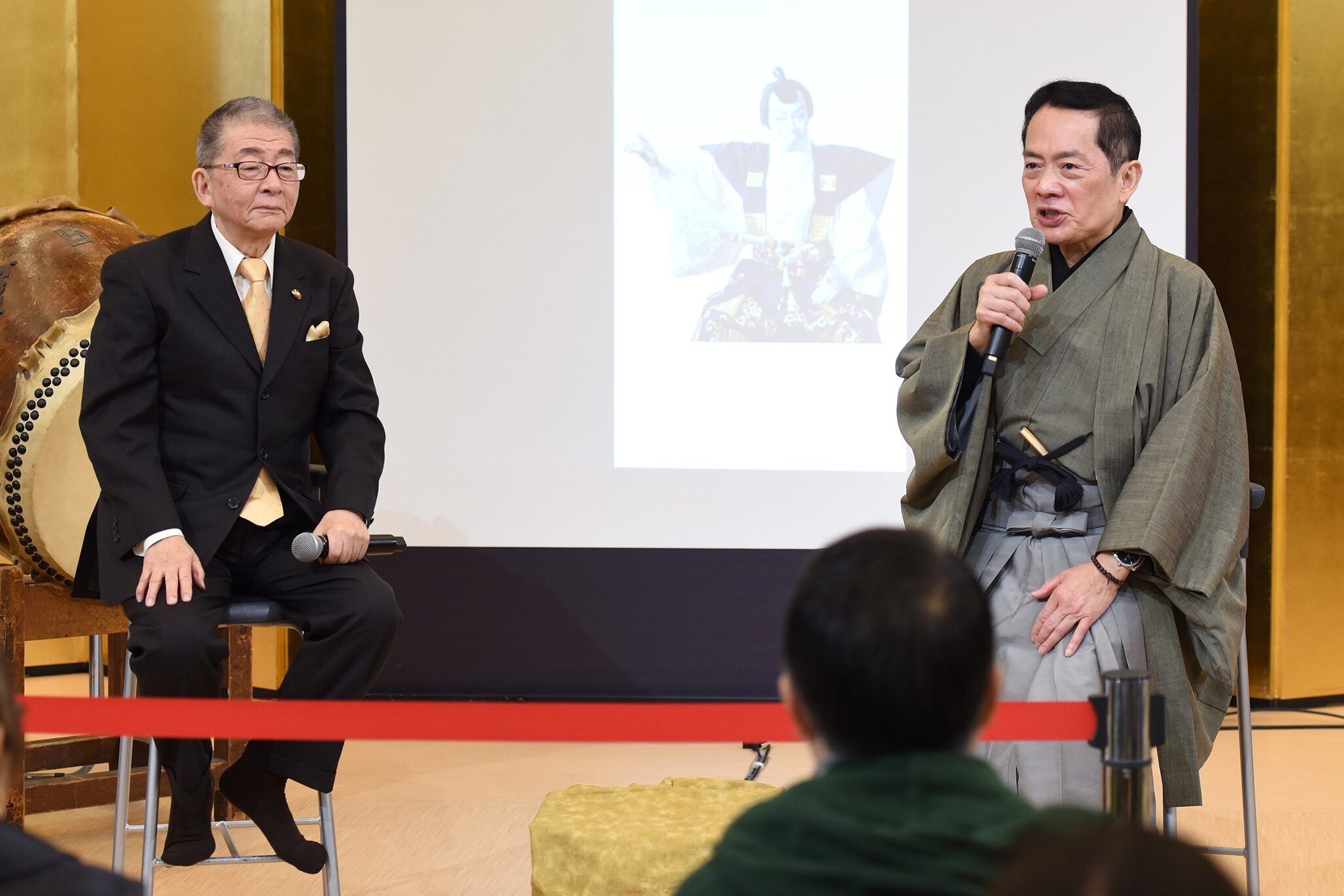
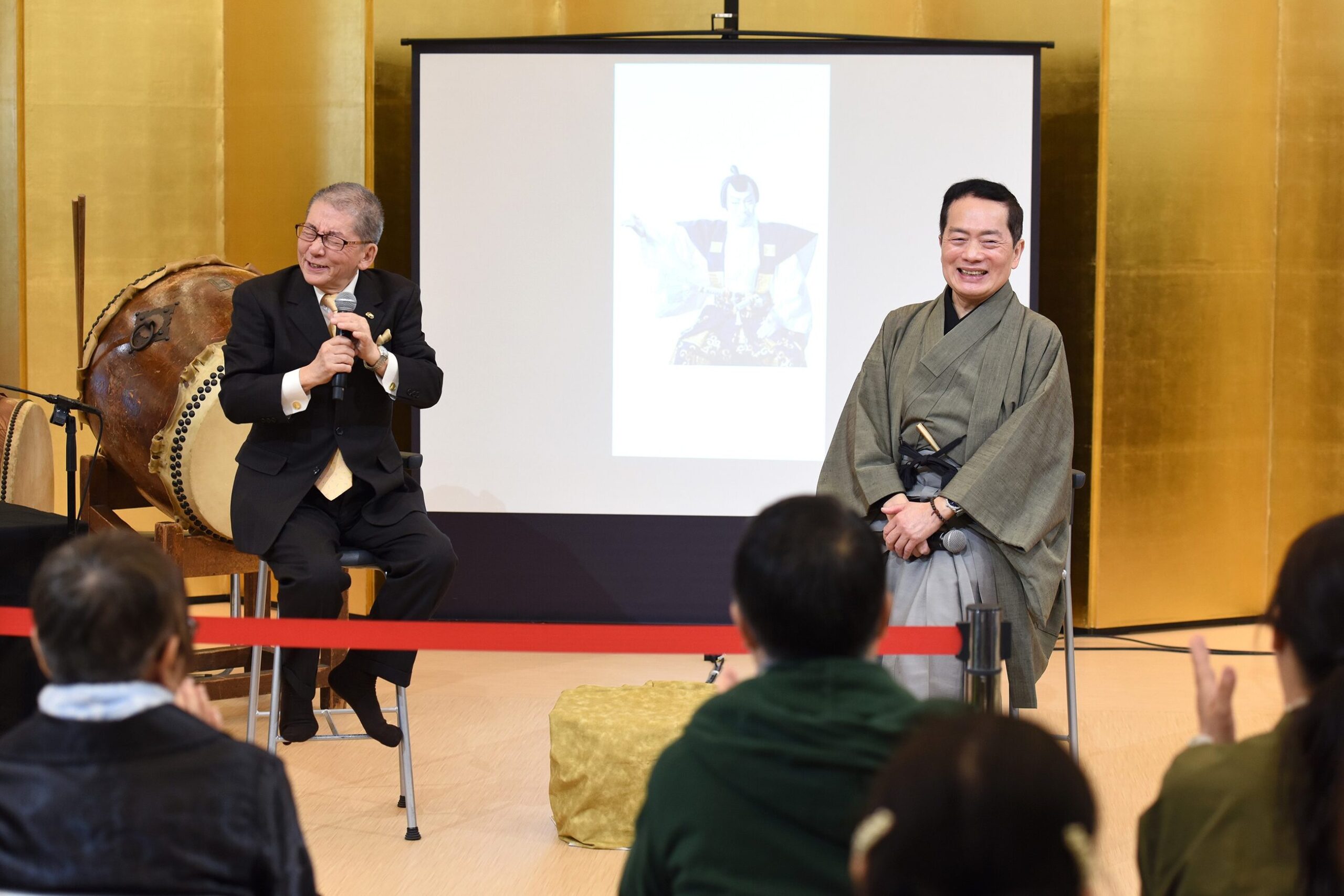
In the central hall, a towering statue of a heavenly maiden stands in a high atrium, quietly watching over the visitors who stream in one after another. On this day, the guide was Kasai Seiji, a commentator on classical performing arts, and the first session was a discussion with Kabuki actor Nakamura Kyozo.
The first thing mentioned was the importance of Nihonbashi, the location of the venue, the Mitsukoshi Main Store. "There were many theaters in the Nihonbashi area. There is still one there, the Mitsukoshi Theater," Kyozo explained. "After the Kabukiza burned down during the war, kabuki performances were held at the Mitsukoshi Theater and the Togeki Theater in Tsukiji for five or six years until it was rebuilt. This was the place that supported kabuki after the war." After the war, the Mitsukoshi Theater, which became known as "Mitsukoshi Kabuki" and where many famous actors trained, will celebrate its 100th anniversary in 2027. Nakamura Kyozo's teacher, Nakamura Jakuemon IV, a Living National Treasure and female actor, initially trained as a leading actor, and it seems that it was at the Mitsukoshi Theater that he made his debut as a female actor! Its history and history are deeply moving. Kyozo has a deep connection with Mitsukoshi, and after graduating from university he worked part-time at the Mitsukoshi Theater office for a year before applying to the National Theater Training School. He also mentioned that he has appeared in TV commercials for the accounting software "Kanjo Bugyo" for many years, and when he delivered his familiar line, "Leave it to us!", the audience erupted in applause.
There are also attempts to stage French tragedies in a Japanese style.
However, Kyozo is a female actor. Several photos of Kyozo playing female roles were also shown, including one in "Kyoka no Ko Musume Dojoji," one of the most famous Kabuki dance pieces. "'Musume Dojoji' is a piece that every female actor wants to dance at least once in their lifetime. The costumes change one after another, and my master repeatedly taught me that I have to change my dancing style to match the color of the costume," Kyozo said. Kyozo has taken on a wide range of roles, including playing the witches in Yukio Ninagawa's "NINAGAWA Macbeth," and performing a Japanese-style version of the French tragedy "Phèdre," inspired by Greek mythology. He has also performed overseas frequently, giving lectures on Kabuki and promoting Japanese culture around the world. The two also touched on the process of applying makeup to female actors, saying, "The wigs and costumes are incredibly heavy, so it takes a lot of physical strength," to which Kyozo nodded in agreement, saying, "Kabuki is all about transformation, after all." The conversation, interspersed with amusing anecdotes, gave a sense of the depth, difficulty, and vast possibilities of Kabuki.
Black curtain music that you don't usually get to see --
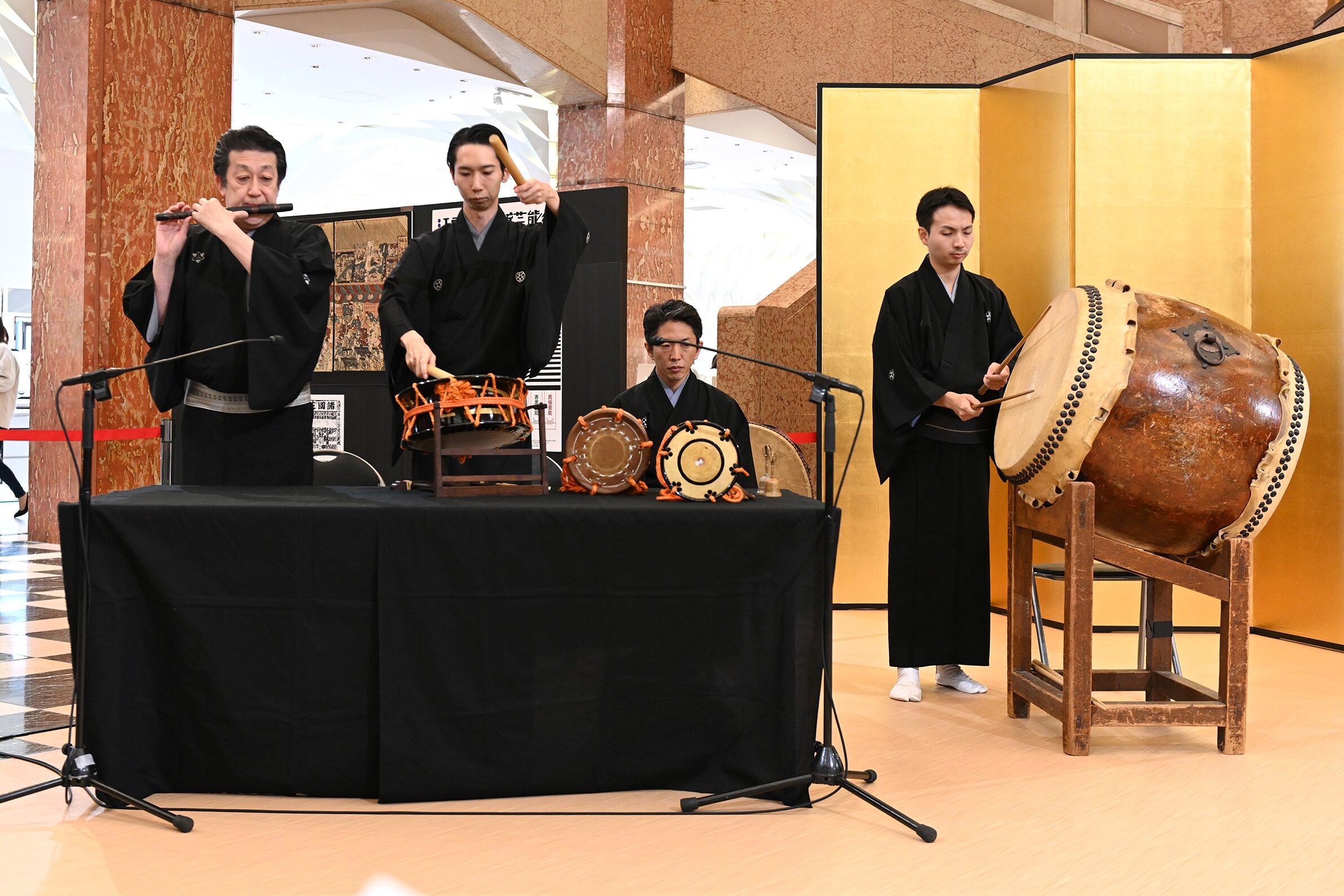
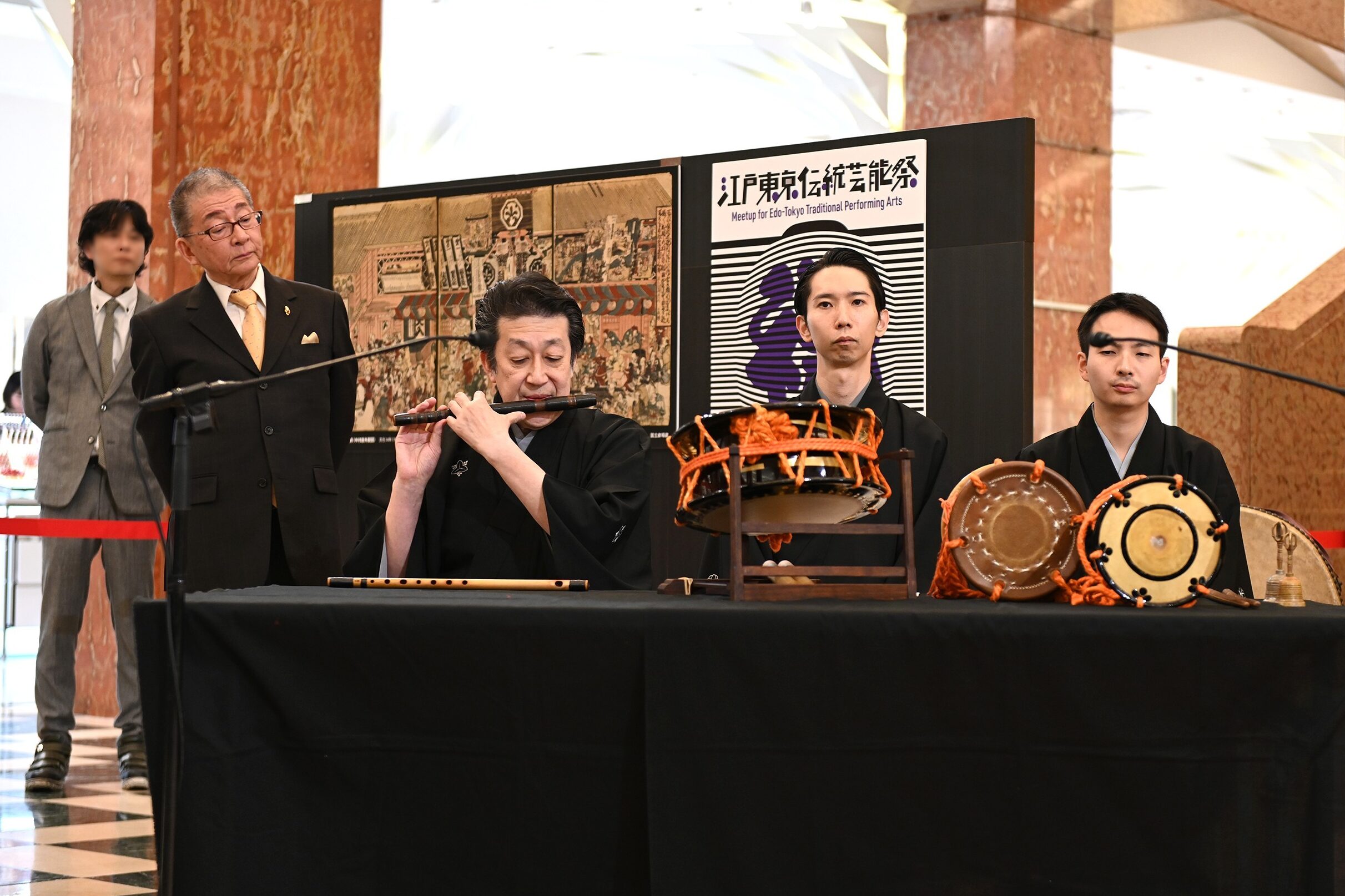
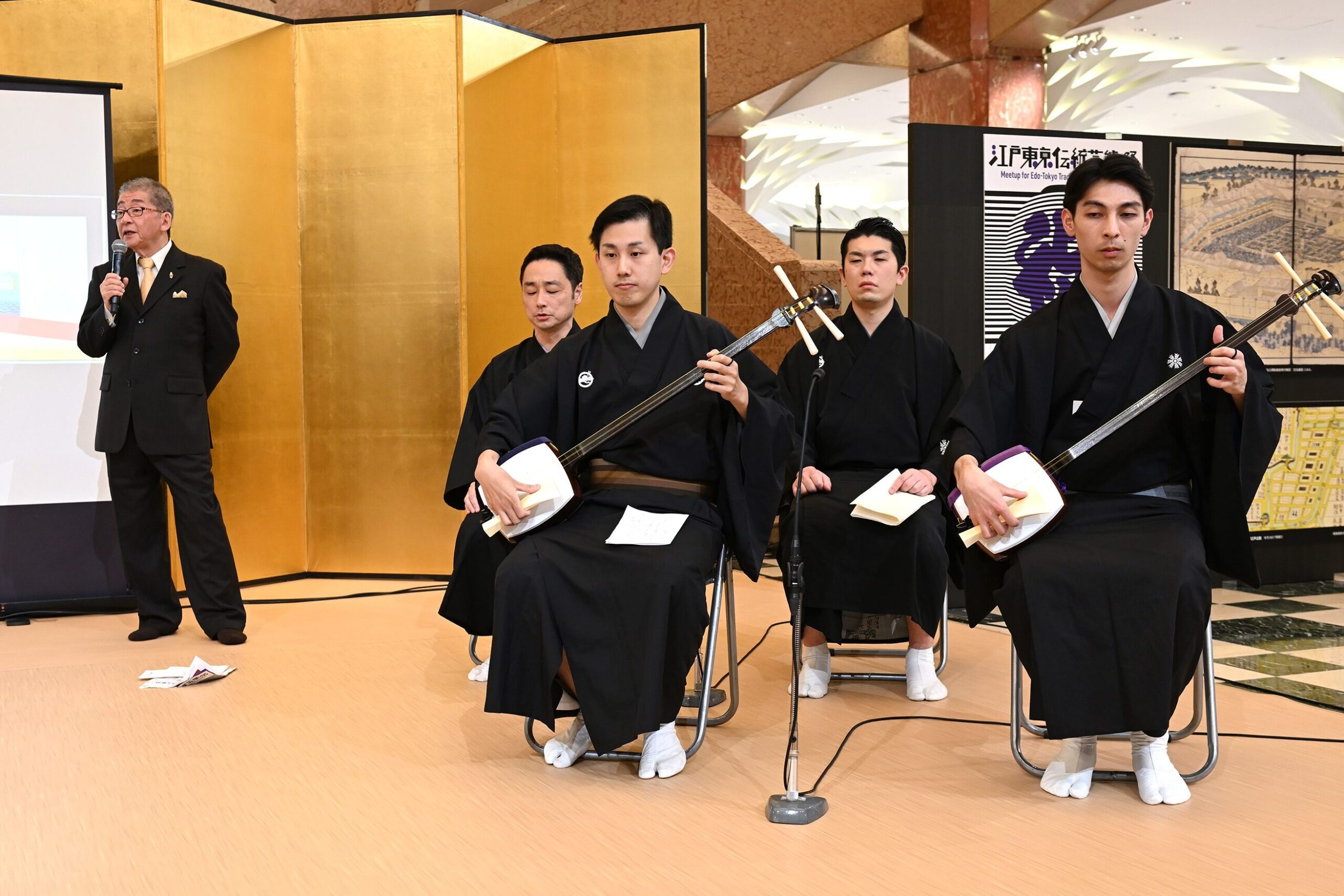
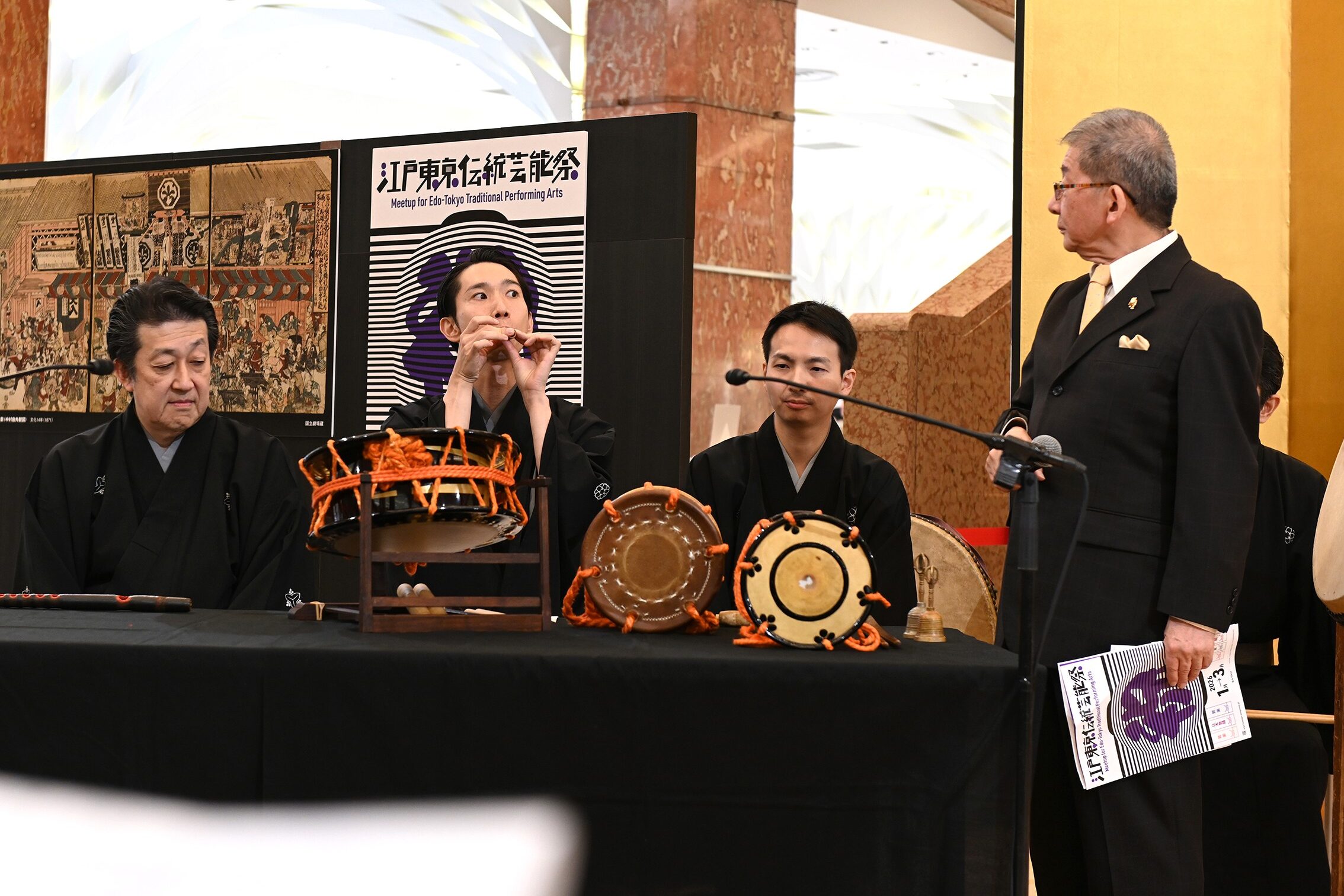
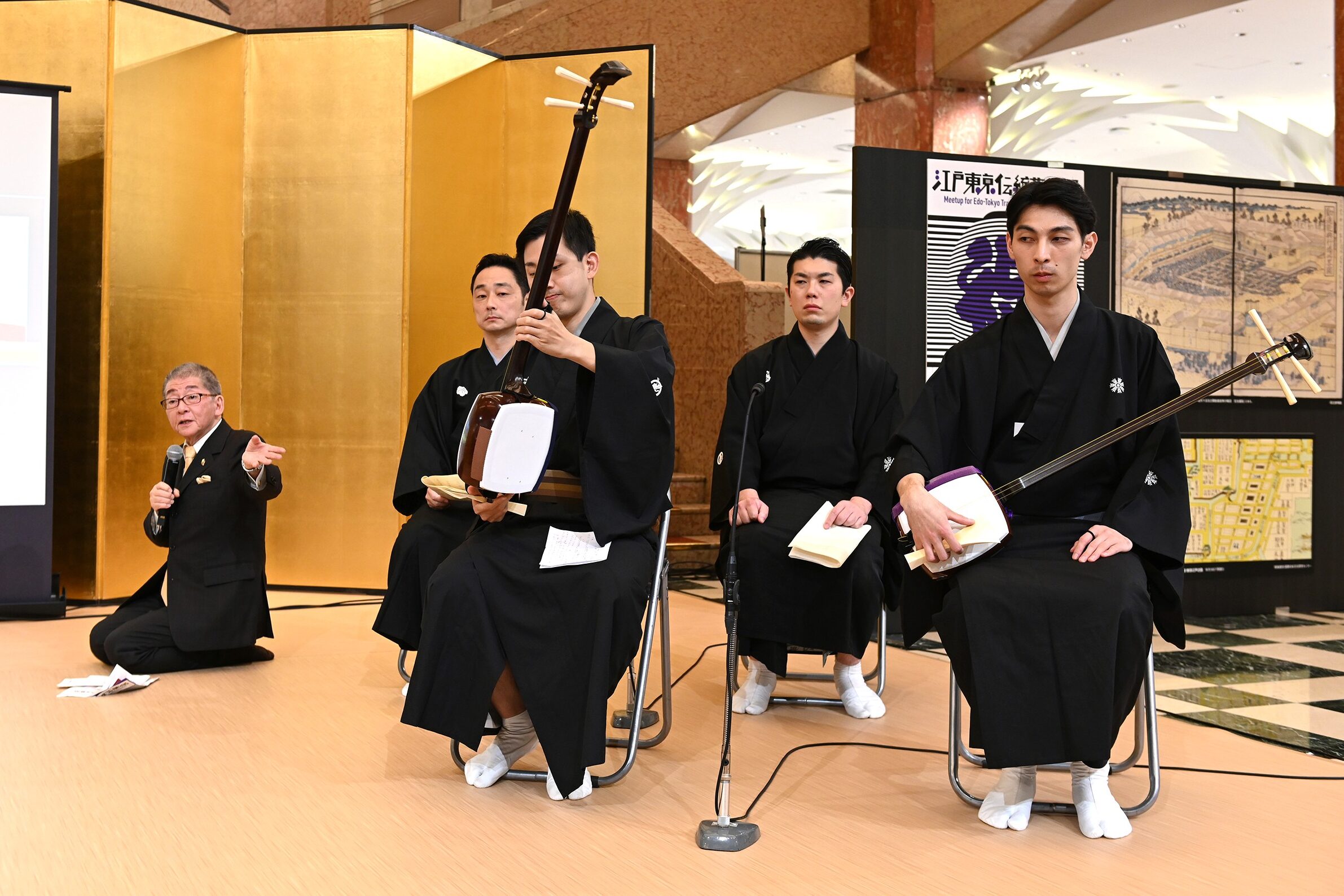
The second session focused on the Kuromisu Ongaku music (black blind music) that adds color to the Kabuki stage. Members of the Tobaya Sanemon Company appeared on stage and began with a performance of "Chakuto," a piece played 30 minutes before the start of a performance at the Kabukiza. The elegant sounds of the taiko drums and Noh flutes created an exciting and uplifting atmosphere! The taiko drums with the rhythm of "Donto Koi" (Come on!) that are played when the doors open were also introduced. "There is music in various scenes in Kabuki, but the music performed behind the black curtain is called Kuromisu Ongaku," said Kasai. "Kabuki is truly three-dimensional, and the sounds we hear in our daily lives are portrayed using the taiko drums, flutes, and shamisen." The sounds of wind and rain are expressed with the use of taiko drums, the "Tsukuda no Aikata" (Tsukuda no Aikata) which, together with the addition of shamisen, expresses the scenery of the Sumida River, and the calls of birds and insects played on flutes. The sound of snow, expressed by changing the sticks of the taiko drums, is mysterious in how it conveys the quiet silence of falling snow. They also performed songs that include singing. They performed scenes that included rural landscapes, the sounds of the Yoshiwara brothel, and scenes of a glittering palace, and each scene was accompanied by an explanation. Apparently, during the actual performance, the speed and other adjustments are made to the performance to match the actors' performances.
Is the shamisen a percussion instrument? ——The surprising similarities between these instruments——
Furthermore, pay attention to the instruments themselves. The flute played in the opening "Chikuto" ("Arrival") has a high, sharp tone called "hishigi." The shamisen also has a buzzing sound called sawari. It's not just a straightforward sound, but complex overlapping sounds that are important. "The shamisen is actually made of a wooden body with leather stretched on both sides, just like a taiko drum. Because the sound is like a percussion instrument, struck with a stick on the leather surface, it shares a sound with ohayashi music. The flute also plays a melody while also marking intervals," Kasai explains. The performance concluded with a performance depicting the vibrant bustle of Yoshiwara. It completely changed the way I perceive sound and hear the resonance of the instruments, and it's an experience that will likely add a new level of enjoyment to your kabuki and traditional Japanese music viewing.
A look into the world of Kabuki - Information on notable performances this spring
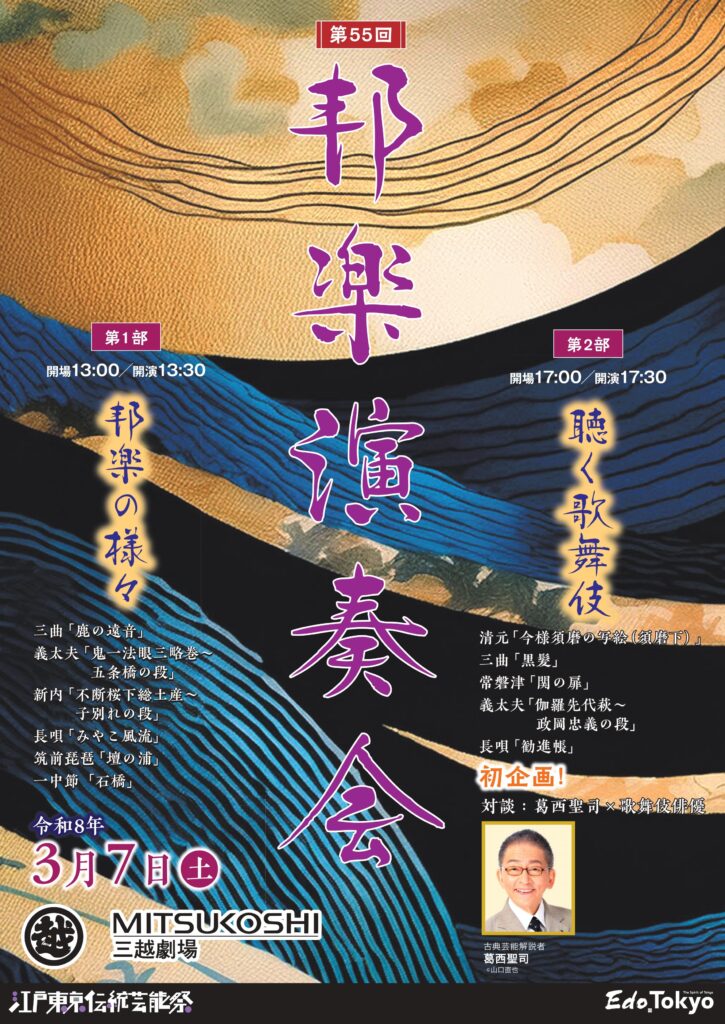
In recent years, there have been efforts to revitalize Nihonbashi, the town of Kabuki, and it has also attracted attention with the film "National Treasure." The 55th Japanese Music Concert is scheduled for March 7, 2026, at the Mitsukoshi Theater, and a corner will be set up where you can try out Japanese musical instruments. Don't miss this chance to experience the charm of Kabuki and discover the profound depth of the music that adds color to it!
The 55th Japanese Music Concert
will be held at Mitsukoshi Theater on Saturday, March 7, 2026! This performance will allow you to enjoy multiple genres of traditional Japanese music, including shamisen, koto, and shakuhachi, all in one performance.
Enjoy a program that allows you to experience the unique sounds of each instrument and style, including shamisen music, koto music, and shakuhachi will introduce you to the profound charm of traditional Japanese music, including powerful yet delicate rhythms, flowing melodies, and highly improvisational expressions
Born in Tokyo in 1993 and raised in Hokkaido. Writes articles about walking around town and listening to stories of shops in monthly magazines such as "Stroll Master." His hobby of looking at topographical maps and old maps has led him to study Edo culture.